Key points
- Gut symptoms like bloating, pain and bowel changes are common with endometriosis and can resemble IBS.
- In a 2017 study, 72% of women with IBS and endometriosis reported major bowel symptom relief on a low-FODMAP diet.
- A 2025 randomized trial found 60% responded to low-FODMAP eating versus 26% on a control plan.
- The evidence is promising but small, and food changes are not a treatment for endometriosis itself.
- Work with your gynecologist and a FODMAP-trained dietitian rather than cutting foods on your own.
Can a low-FODMAP diet help endometriosis bloating?
For many people with endometriosis who also have IBS-type gut symptoms, a low-FODMAP approach may ease bloating, abdominal pain and bowel changes. The evidence is early but encouraging. In a 2017 study, 72% of women with both IBS and endometriosis reported more than a 50% improvement in bowel symptoms at four weeks of low-FODMAP eating, compared with 49% of women with IBS alone (Moore et al., 2017). A 2025 randomized trial from Monash University found similar benefits for gut symptoms (Varney et al., 2025).
What low-FODMAP eating doesn’t do is treat endometriosis itself. It targets the gut symptoms that often come with it. Endometriosis care belongs with your gynecologist, and a dietary change works best as one part of that wider plan, guided by a registered dietitian.
Why endometriosis and gut symptoms overlap
Endometriosis is best known for pelvic pain, painful periods and fertility challenges, but it can affect the gut too. The US National Institute of Child Health and Human Development lists pain in the intestines or lower abdomen, painful bowel movements during periods, and digestive symptoms that resemble a bowel disorder among its symptoms (NICHD).
Because the symptoms look so similar, people with endometriosis are often told they have IBS for some time. Researchers point to visceral hypersensitivity, where the gut and pelvic organs are more sensitive to normal sensations like stretching and gas, as a feature shared by both conditions (Moore et al., 2017).
In the same 2017 study of 160 women with IBS at a specialist clinic in New Zealand, 36% also had endometriosis. Certain features were more common in the women with endometriosis:
- Pain during sex
- Referred pain, felt away from where it starts
- Bowel symptoms that got worse with periods
- A family history of endometriosis
If your gut symptoms shift with your cycle, note it in a food and symptom diary. That pattern is useful information for your gynecologist and gastroenterologist.
What the research shows
Two studies are most often cited. They are useful, but they’re small, so it helps to know what each one can and can’t tell us.
| Study | Who took part | What it found | Limits |
|---|---|---|---|
| Moore et al., 2017 | 160 women with IBS, 59 of whom also had endometriosis | 72% with endometriosis vs 49% without reported more than 50% improvement in bowel symptoms at four weeks | Looked back at clinic records; not randomized; one specialist clinic |
| Varney et al., 2025 (EndoFOD) | 35 women with endometriosis and poorly controlled gut symptoms | 60% responded on low-FODMAP eating vs 26% on a control plan; pain, bloating, stool form and quality of life improved | Small; meals were supplied; 28 days per plan; real-world confirmation needed |
In the EndoFOD trial, each participant followed both a low-FODMAP plan and a control plan for 28 days each, in random order, with a break between. Both plans were nutritionally matched; only the FODMAP content differed. Gut symptoms kept improving across the four weeks, with meaningful gains by week two (Monash FODMAP). Stress, anxiety and depression scores did not improve overall, and endometriosis-specific pain wasn’t measured directly (Varney et al., 2025).
The limits of the evidence
It’s worth being clear-eyed about what we don’t yet know. The European Society of Human Reproduction and Embryology (ESHRE) guideline on endometriosis reviewed non-medical approaches, including nutrition, and concluded that no recommendations can be made for any specific one to reduce endometriosis pain (ESHRE guideline).
- Small numbers. The trials so far involve dozens of people, not thousands.
- Short timeframes. Four weeks shows short-term change, not how things go over months.
- Controlled settings. Supplied meals are easier to follow than everyday cooking, work lunches and eating out.
- Gut symptoms, not the disease. The evidence is about bloating, pain and bowel habits, not lesions, fertility or disease progression.
There is also a practical question of who these results apply to. Both studies looked at people whose gut symptoms were significant enough to seek help, and most participants were recruited through specialist clinics or research centers in Australia and New Zealand. Your experience may be different, especially if your main symptoms are pelvic pain rather than bloating or bowel changes. That’s one more reason to treat low-FODMAP eating as an experiment you run with your care team, with clear check-in points, rather than a long-term rule.
It also helps to remember that a low-FODMAP approach is demanding. It asks you to check labels, plan meals and sometimes skip foods you love, and the restrictive phase is meant to be short. If symptoms don’t improve with a fair trial, that is useful information too, and your dietitian can help you step back out of it and explore other options.
You’ll see many “endo eating plans” online promising more than this. If a plan claims to cure or shrink endometriosis, treat that with caution, and bring it to your care team.
How low-FODMAP eating works for endometriosis gut symptoms
FODMAPs are fermentable carbohydrates found in many everyday foods. In a sensitive gut, they can draw in water and produce gas as they ferment, which may trigger bloating and pain. Common examples include garlic and onion (fructans), wheat, some legumes, apples and pears, and milk. Our guide to high-FODMAP foods and swaps covers the main groups, and hidden garlic and onion helps with the most common hidden sources.
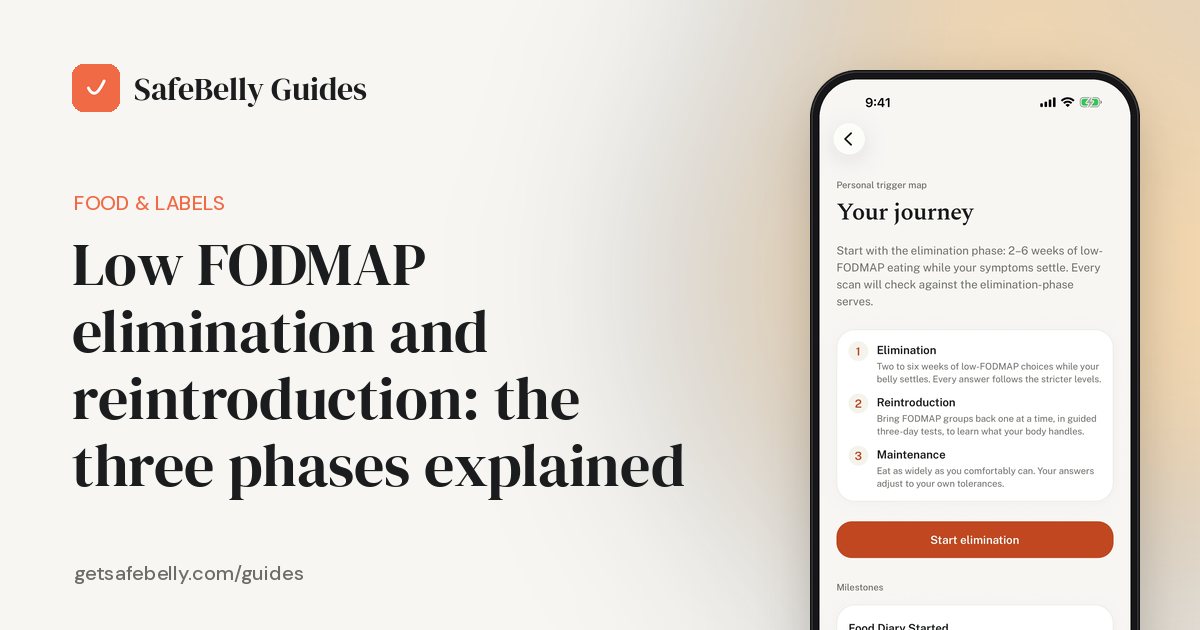
The approach is a short-term learning process in three phases, not a permanent way of eating:
- Elimination: a few weeks of swapping high-FODMAP foods for lower-FODMAP options to see whether symptoms settle.
- Reintroduction: testing FODMAP groups one at a time to learn which ones are your triggers and how much you tolerate.
- Personalization: bringing back as many foods as you comfortably can, so your eating stays varied and nourishing.
Our guide to the low-FODMAP phases explains each step, and FODMAP portion sizes explains why amount matters as much as the food. If you have IBS too, see IBS and low-FODMAP eating.
Everyday swaps that are often easier on endo bloating
If you and your dietitian decide to try a low-FODMAP approach, the aim is to swap rather than simply remove, so meals stay satisfying and nourishing. The table shows commonly published examples. Portion sizes matter a great deal, so check amounts with your dietitian or a FODMAP app rather than assuming a swap is always low in FODMAPs.
| Often high in FODMAPs | FODMAP group | Swaps many people tolerate |
|---|---|---|
| Garlic and onion | Fructans | Garlic-infused oil, chives, the green tops of spring onions |
| Wheat bread and pasta | Fructans | Spelt sourdough, gluten-free bread, rice, oats, quinoa |
| Cow’s milk, soft cheese, ice cream | Lactose | Lactose-free milk and yogurt, firm and aged cheeses |
| Apples, pears, mango | Excess fructose, polyols | Oranges, kiwifruit, strawberries, firm bananas |
| Honey | Excess fructose | Maple syrup |
| Large servings of beans and lentils | GOS (galacto-oligosaccharides) | Firm tofu, small servings of canned lentils or chickpeas |
Garlic and onion are the trickiest because they hide in stocks, sauces, spice blends and restaurant meals. Our guide to hidden garlic and onion shows where to look on labels, and eating out with IBS has tips for asking about ingredients.
A few gentle habits can also help you make sense of your symptoms while you test foods:
- Change one thing at a time, so you can tell what made a difference.
- Note where you are in your cycle each day, because symptoms that rise with your period may not be food-related.
- Keep fiber up with low-FODMAP grains, vegetables, nuts and seeds, so constipation doesn’t creep in. Our guide to eating with constipation can help.
- Plan for reintroduction from the start. The goal is the widest range of foods you comfortably enjoy.
Working with your gynecologist and a dietitian
Monash researchers advise people with endometriosis who want to try this approach to see a dietitian trained in delivering the FODMAP diet (Monash FODMAP). A dietitian can keep the elimination phase short, protect your fiber and nutrient intake, and guide reintroduction so you don’t restrict more than you need to.
- Talk to your gynecologist about your gut symptoms. New or changing bowel symptoms deserve a proper check rather than assuming they’re part of endometriosis.
- Ask for a referral to a registered dietitian with FODMAP experience.
- Track your cycle alongside symptoms, so you can see whether changes relate to food, your period, or both.
- Be gentle with yourself. Living with chronic pain and food worries is tiring. If eating starts to feel stressful, our guide to food anxiety may help.
Seek medical care promptly for blood in your stool, severe or worsening pain, fever, vomiting, or unexplained weight change. These aren’t symptoms to manage with food alone.
How SafeBelly helps
Know before you eat.
SafeBelly scores foods for endometriosis using its low-FODMAP engine and shows the answer at small, typical and large portions, because dose matters. The Guided Journey walks you through elimination, reintroduction and maintenance, and the diary lets you note how your belly feels so you can share patterns with your gynecologist or dietitian.
SafeBelly is in final testing on iPhone and Android. Leave your email and we'll send one note the day it's in the App Store and on Google Play.
Frequently asked questions
Does low FODMAP help endometriosis?+
Research suggests a low-FODMAP approach can ease gut symptoms such as bloating, abdominal pain and bowel changes in many people with endometriosis. In a 2025 randomized trial, 60% responded compared with 26% on a control plan. It doesn’t treat endometriosis itself, and it works best with a FODMAP-trained dietitian.
What is endo belly?+
“Endo belly” is an informal name people use for the bloating and abdominal swelling that can come with endometriosis. It isn’t a medical diagnosis, and its causes aren’t fully understood. Tracking when it happens, including where you are in your cycle, can help you and your doctor spot patterns.
Can endometriosis be mistaken for IBS?+
Yes. The symptoms can look very similar, and researchers note that women with endometriosis are often told they have IBS for some time. Some people have both. If your bowel symptoms worsen with your period or you have pelvic pain, raise it with your doctor.
How long should I try low FODMAP for endometriosis?+
Studies have used four weeks for the elimination phase, and the EndoFOD trial saw meaningful gains by week two. The elimination phase is meant to be short and followed by reintroduction. A dietitian can help you set a timeframe that suits you.
Can food changes cure endometriosis?+
No. There is no evidence that any eating plan cures endometriosis, and the ESHRE guideline makes no recommendation for nutrition to reduce endometriosis pain. Food changes may help gut symptoms, alongside medical care from your gynecologist.
Sources
- Endometriosis in patients with irritable bowel syndrome: Specific symptomatic and demographic profile, and response to the low FODMAP diet (Moore JS, Gibson PR, Perry RE, Burgell RE; Aust N Z J Obstet Gynaecol 2017;57(2):201–205) · Australian and New Zealand Journal of Obstetrics and Gynaecology
- Clinical Trial: Effect of a 28-Day Low FODMAP Diet on Gastrointestinal Symptoms Associated With Endometriosis (EndoFOD) · Alimentary Pharmacology & Therapeutics (via PubMed Central)
- New Research Publication: Endometriosis and the Low FODMAP Diet · Monash University FODMAP
- What are the symptoms of endometriosis? · Eunice Kennedy Shriver National Institute of Child Health and Human Development (NICHD)
- ESHRE guideline: endometriosis · Human Reproduction Open (via PubMed Central)
SafeBelly is a food information app, not a medical device, and no substitute for professional medical advice. Talk to your doctor or a registered dietitian before making changes to how you eat, and seek urgent care for severe or sudden symptoms.