Key points
- Fiber helps most when it rises slowly and comes with enough fluid.
- Kiwifruit, prunes, rye bread and psyllium have trial evidence behind them.
- Soluble fiber softens stool; insoluble fiber adds bulk. Most people do well with a mix.
- Prunes are high in sorbitol, a FODMAP, so they can bring bloating for people with IBS.
- Bleeding, constant pain, vomiting, fever or unexplained weight change need a doctor promptly.
Which foods help constipation?
The foods with the most direct evidence for easing constipation are kiwifruit, prunes, rye bread and psyllium fiber, together with enough fluid. More broadly, fiber from whole grains, legumes, fruit, vegetables and nuts helps many people, as long as it is increased gradually. Recent guidelines from the British Dietetic Association, built on four systematic reviews covering 75 randomized trials, endorsed kiwifruit, prunes, rye bread, psyllium and high-mineral water for adults with chronic constipation (BDA).
Constipation usually means fewer than three bowel movements a week, or stools that are hard, dry, lumpy, difficult or painful to pass, or a feeling that you haven’t fully emptied (NIDDK). When it keeps coming back without another cause, doctors may call it functional constipation.
Food is one piece of the picture. Movement, toilet routine, medications and other conditions all play a part, which is why it’s worth talking with a doctor or registered dietitian if constipation is ongoing, especially if you’re thinking about cutting out whole food groups.
Soluble vs insoluble fiber: why the type matters
Not all fiber behaves the same way in your gut. Monash University’s dietitians describe three groups that are useful to know (Monash FODMAP):
| Fiber type | What it does | Where you find it |
|---|---|---|
| Soluble | Forms a gel with water that softens stool | Oats, legumes, nuts, seeds, some fruit and vegetables, psyllium |
| Insoluble | Adds bulk, which helps keep things moving | Skins of fruit and vegetables, wheat bran, whole grain cereals |
| Resistant starch | Feeds the bacteria in your large bowel | Legumes, cold cooked potatoes, firm bananas |
US guidance suggests adults aim for 22 to 34 grams of fiber a day, depending on age and sex, from foods such as whole wheat bread and pasta, oatmeal, bran flakes, lentils, beans, chickpeas, berries, apples with skin, pears, carrots, broccoli, peas and nuts (NIDDK).
One honest nuance: the BDA review found there wasn’t enough trial evidence to recommend a general “high-fiber diet” with unspecified fiber sources specifically for constipation. That doesn’t mean fiber lacks value; it means specific foods and psyllium have clearer evidence than “just eat more fiber” (BDA).
Kiwifruit, prunes and rye bread: what the research shows
A handful of specific foods have been tested head to head in trials. Here is what the evidence supports, in plain terms.
- Kiwifruit. In a multicenter trial across New Zealand, Japan and Italy, two green kiwifruit a day increased complete bowel movements more than psyllium in people with functional constipation or IBS with constipation. Symptoms were mild at the start, the study wasn’t blinded and it was funded by a kiwifruit marketer, so it has limits (American College of Gastroenterology). The BDA guidelines suggest 2 to 3 kiwifruit daily (BDA).
- Prunes. Prunes act as a gentle osmotic laxative because they contain sorbitol, which draws water into the bowel. They were the first specific food shown in trials to increase bowel movements (American College of Gastroenterology). The BDA guidelines suggest 8 to 10 prunes daily.
- Rye bread. The BDA guidelines include rye bread, though the amount studied (6 to 8 slices a day) may not be realistic for everyone.
- High-mineral water. The BDA guidelines also endorse water with a high mineral content, at 0.5 to 1.5 liters a day.
Try one change at a time for a couple of weeks so you can tell what is actually helping. A food and symptom diary makes this much easier.
How to increase fiber without more bloating
Adding a lot of fiber at once is a common reason people give up. A sudden jump can bring bloating, gas, cramps and even more constipation, which is why the CDC advises taking it slow (CDC). NIDDK gives the same advice: add fiber a little at a time (NIDDK).
- Pick one addition, such as oats at breakfast or a piece of fruit with skin, and keep it steady for several days.
- Drink water and other fluids alongside it. Fluids help fiber do its job, and how much you need depends on your size, activity, health and climate, so ask your clinician for a personal target.
- If you try psyllium, the BDA guidance is to start low and build up gradually toward at least 10 grams a day, with extra fluid.
- Add the next change only once the first feels comfortable.
- Notice how your belly responds. Some gas is normal as your gut adjusts; ongoing pain is a reason to pause and check in with a professional.
Monash also points to daily movement and responding to the urge to go promptly, rather than holding on, as practical habits that support regularity (Monash FODMAP). Laxatives are best used as your doctor advises rather than self-prescribed long term.
The FODMAP tension: when fiber-rich foods are also your triggers
Here’s the tricky part for many people. Some of the most fiber-rich foods are also high in FODMAPs, the fermentable carbohydrates that can trigger bloating and pain in people with IBS. Many legumes are high in FODMAPs, and prunes are high in sorbitol, so the same foods that help one person go can leave another uncomfortable (American College of Gastroenterology).
Monash dietitians note that people with constipation-type IBS often find a low-FODMAP approach alone doesn’t fully settle their symptoms, and that the elimination phase can reduce fiber intake if swaps aren’t planned (Monash FODMAP). Their suggestions for keeping fiber up include:
- Smaller portions of canned legumes, which tend to be better tolerated than larger servings.
- Firm tofu as a gentle legume-based protein.
- At least three kinds of vegetables a day, spread across meals.
- A variety of whole grains, such as oats, quinoa, brown rice and spelt sourdough.
- Nuts and seeds daily, whole or as spreads.
Kiwifruit is worth discussing with your dietitian here, since the kiwifruit trial included people with IBS with constipation. If you’re working through the low-FODMAP phases or managing IBS, a FODMAP-trained dietitian can help you keep fiber up without undoing your progress. Portion size matters too; our guide to FODMAP portion sizes explains why.
Putting it together: a gentle, fiber-friendly day
You don’t need a complicated plan. Small, steady additions spread across the day tend to be easier on your gut than one very high-fiber meal. Here’s one way a day could look, using fiber-rich foods from NIDDK’s list (NIDDK) and the habits Monash dietitians suggest (Monash FODMAP). Adjust it to your own triggers and tastes.
| Moment | Ideas | Why it helps |
|---|---|---|
| Breakfast | Oatmeal with berries and a spoon of seeds, or bran flakes with milk or a milk alternative | Soluble fiber from oats softens stool; seeds add variety |
| Mid-morning | Two kiwifruit, or a pear or apple with the skin on | Kiwifruit has trial evidence; fruit skins add insoluble fiber |
| Lunch | Whole wheat or rye bread sandwich with salad, or a lentil or vegetable soup | Whole grains and legumes add bulk |
| Snack time | A small handful of almonds, peanuts or pecans | Nuts add fiber in a small portion |
| Dinner | Brown rice or whole wheat pasta with carrots, broccoli, peas or greens, plus a protein you enjoy | At least two or three vegetables across the day |
| Through the day | Water, clear soups and other drinks you enjoy | Fluids help fiber do its job |
If you follow a low-FODMAP approach, some of these foods, such as apples, pears, wheat bread and lentils, may not suit you during elimination. Our guide to high-FODMAP foods and swaps suggests alternatives, and bloating and food covers why some fiber-rich foods cause more gas than others.
NIDDK also notes that foods with little or no fiber, such as chips, fast food and many highly processed or prepared meals, can make it harder to get enough fiber when they make up most of what you eat. That doesn’t make them off-limits. It’s simply a reason to pair them with a fruit, vegetable or whole grain when you can.
Older adults sometimes eat less fiber because their appetite changes, according to NIDDK. Soft options like oatmeal, cooked vegetables, soups and canned fruit can make fiber easier.
When constipation needs a doctor
Food changes are a reasonable first step for everyday constipation, but some signs mean you should see a doctor promptly. NIDDK lists these warning signs alongside constipation (NIDDK):
- Bleeding from the rectum or blood in your stool
- Constant pain in your abdomen
- Being unable to pass gas
- Vomiting
- Fever
- Lower back pain
- Unexplained weight change
It’s also worth booking an appointment if symptoms don’t improve with self-care, if your bowel habits change in a way that’s new for you, or if you have a family history of colon or rectal cancer. If constipation alternates with loose stools, our guide to eating with chronic diarrhea may also be useful.
How SafeBelly helps
Know before you eat.
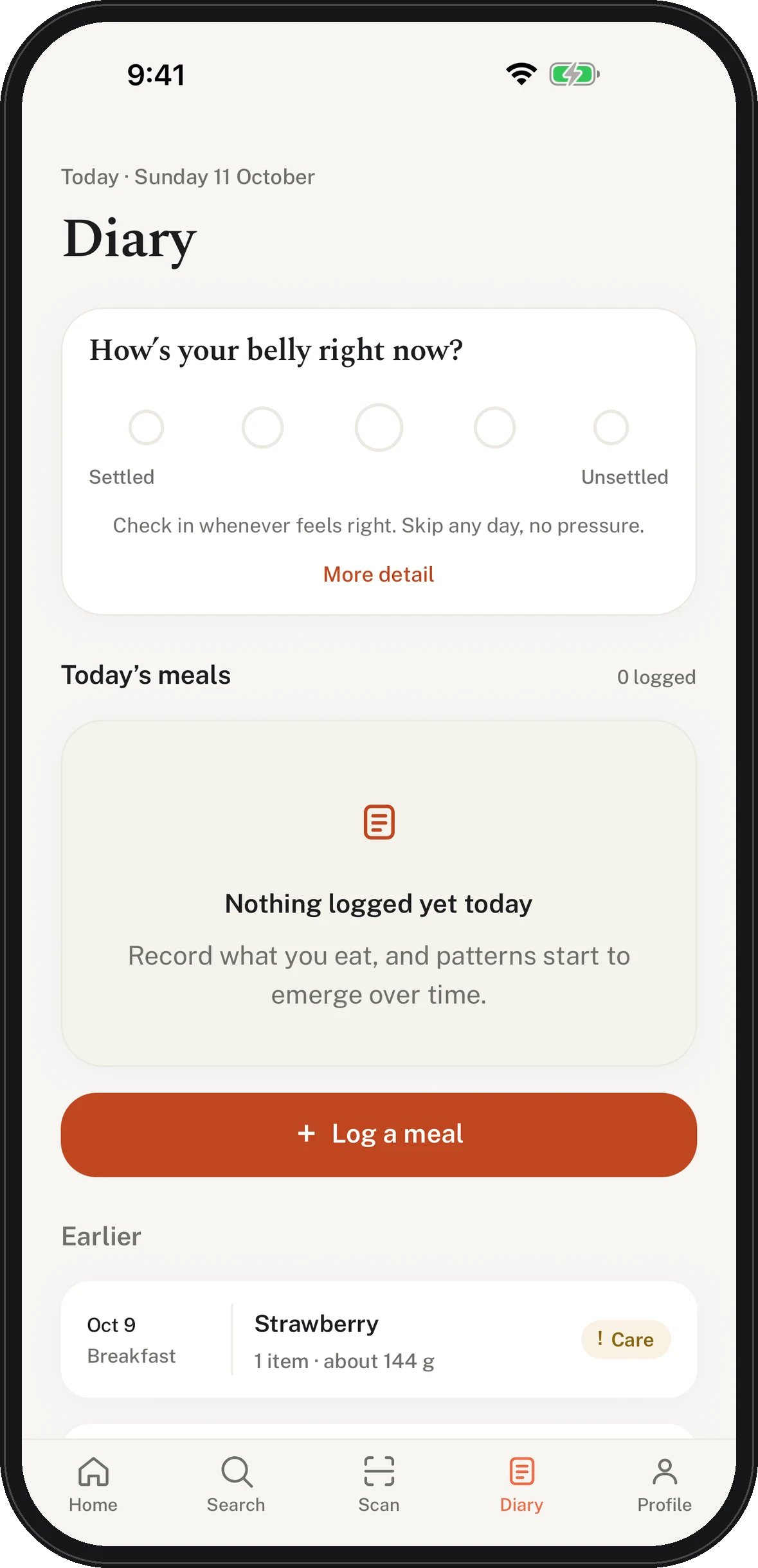
SafeBelly checks foods against functional constipation alongside any other conditions you choose, so you can see whether a fiber-rich food is also one of your FODMAP triggers. For FODMAP-based conditions it shows the answer at small, typical and large portions, and the diary and one-tap “How’s your belly?” check-in help you spot which changes actually help.
SafeBelly is in final testing on iPhone and Android. Leave your email and we'll send one note the day it's in the App Store and on Google Play.
Frequently asked questions
What can I eat to relieve constipation quickly?+
There’s no instant food fix, but kiwifruit and prunes have the strongest trial evidence among whole foods, and drinking enough fluid helps fiber work. Prunes contain sorbitol, which draws water into the bowel. If you need faster relief or symptoms are severe, speak with a pharmacist or doctor.
How many kiwis a day help with constipation?+
Trials have used two green kiwifruit a day, and the British Dietetic Association guidelines suggest 2 to 3 daily. In one trial, kiwifruit increased complete bowel movements more than psyllium, though participants had mild symptoms. Give it a few weeks and track how you feel.
Can fiber make constipation worse?+
It can if you add a lot quickly or don’t drink enough fluid. A sudden increase may bring bloating, gas, cramps or more constipation. Raise fiber gradually, one food at a time, and talk to a dietitian if more fiber seems to make things harder.
Are prunes OK if I have IBS?+
Prunes are high in sorbitol, a FODMAP, so they can cause bloating and discomfort for some people with IBS. Some people tolerate a small amount; others do better with kiwifruit or psyllium. A FODMAP-trained dietitian can help you find what suits you.
How much fiber should I eat for constipation?+
US guidance suggests 22 to 34 grams a day for adults, depending on age and sex. Most adults eat less than this. Build up slowly and pair fiber with fluids rather than jumping to a target overnight.
When should I see a doctor about constipation?+
See a doctor promptly if constipation comes with rectal bleeding, constant abdominal pain, vomiting, fever, being unable to pass gas, lower back pain or unexplained weight change. Also check in if self-care isn’t helping or you have a family history of colon or rectal cancer.
Sources
- Eating, Diet, & Nutrition for Constipation · National Institute of Diabetes and Digestive and Kidney Diseases (NIDDK)
- Symptoms & Causes of Constipation · National Institute of Diabetes and Digestive and Kidney Diseases (NIDDK)
- The first BDA evidence-based dietary guidelines for chronic constipation in adults: from evidence to practice · British Dietetic Association
- Kiwifruit: A Specific Food to Improve Stool Frequency in Patients With Mild Constipation (Evidence-Based GI commentary) · American College of Gastroenterology
- Tips for managing constipation type IBS (IBS-C) · Monash University FODMAP
- Fiber: The Carb That Helps You Manage Diabetes · Centers for Disease Control and Prevention (CDC)
SafeBelly is a food information app, not a medical device, and no substitute for professional medical advice. Talk to your doctor or a registered dietitian before making changes to how you eat, and seek urgent care for severe or sudden symptoms.