Key points
- Chronic diarrhea means loose stools regularly for more than four weeks, and it deserves a medical check.
- Caffeine, sugar alcohols, fructose, lactose, alcohol and rich or fried meals are common contributors.
- Soluble fiber, such as oats or psyllium, can help firm stools for some people.
- Replace fluids and electrolytes, not just water, and know the signs of dehydration.
- Blood in stool, fever, severe pain or six or more loose stools a day need prompt care.
What should you eat with chronic diarrhea?
With chronic diarrhea, the most useful first step is usually finding and easing back on the foods and drinks that speed your gut up, rather than eating a very restricted menu. The common contributors are caffeine, sugar alcohols in sugar-free products, large amounts of fructose, lactose, alcohol and rich or fried meals. Alongside that, keep up fluids and electrolytes, and consider gentle sources of soluble fiber such as oats or psyllium, which add bulk and can slow transit (Cleveland Clinic).
Chronic diarrhea means having loose stools regularly for more than four weeks (Cleveland Clinic). It has many possible causes, from food intolerances and IBS to celiac disease, inflammatory bowel disease, infections and medications. That’s why it needs a proper medical assessment, not only food changes. When tests don’t find another cause and the pattern continues, doctors may describe it as functional diarrhea.
Please don’t start a gluten-free approach until you’ve been tested for celiac disease. Removing gluten first can make the test results unreliable. Our celiac guide explains more.
Common food and drink contributors
These are the triggers most often named by gastroenterology sources. Everyone is different, so treat this as a list of things to test, not a list of foods to fear.
| Contributor | Why it can loosen stools | Where it hides |
|---|---|---|
| Caffeine and coffee | Speeds up movement through the colon, so stool leaves too quickly to firm up. Decaf coffee can have a similar effect | Coffee, tea, chocolate, many sodas, coffee- or chocolate-flavored foods |
| Sugar alcohols | Poorly absorbed, so they draw water into the bowel | Sugar-free gum and candy (sorbitol, mannitol, xylitol), some medications |
| Fructose | In larger amounts, can pull water into the gut | Apples, pears, applesauce, juice, regular soda |
| Lactose | Hard to digest for people with lactose intolerance, the most common sugar intolerance | Milk, soft cheese, ice cream |
| Dietary fat | When fat isn’t absorbed well, it reaches the colon and prompts fluid release | Fried foods, creamy dishes, rich sauces and curries |
| Alcohol | Speeds gut movement, especially on an empty stomach | Beer, wine, spirits, cocktails |
Sources: Cleveland Clinic and Harvard Health. Harvard notes that many people get diarrhea when they take in more than 40 to 80 grams of fructose a day, and that a 16-ounce regular cola alone has close to 30 grams.
If dairy seems to be involved, our guides to lactose intolerance and lactose-free vs dairy-free can help. If fruit and juice are a pattern, read about fructose malabsorption.
How to find your own triggers
NIDDK suggests keeping a food journal of what you eat and drink, your symptoms and when they happen, then sharing it with your doctor (NIDDK). A simple, steady approach works best:
- Track meals, drinks and stools for one to two weeks without changing anything, so you have a baseline.
- Look for patterns: coffee in the morning, sugar-free gum through the day, rich meals in the evening.
- Ease back on one suspect at a time for a week or two and note what changes.
- Bring your notes to your doctor or a registered dietitian, who can help you interpret them and decide on next steps.
If several carbohydrates seem to be involved, a structured elimination approach such as the low-FODMAP diet can help isolate food intolerances, ideally with a dietitian (Cleveland Clinic). It is a short-term learning tool, not a forever plan. Our guides to IBS and low-FODMAP eating and the low-FODMAP phases walk through how it works. A food and symptom diary makes the whole process easier.
Soluble fiber: a gentle helper for loose stools
Fiber isn’t only for constipation. Soluble fiber attracts water and turns to a gel during digestion, which slows things down (MedlinePlus). Fiber supplements such as psyllium add bulk to stool and slow its transit, which is why they are sometimes suggested for chronic diarrhea (Cleveland Clinic).
- Soluble fiber sources: oat bran, oats, barley, nuts, seeds, beans, lentils, peas, some fruits and vegetables, and psyllium (MedlinePlus).
- Insoluble fiber from wheat bran and whole grains adds bulk and helps food move more quickly, so some people with loose stools find large amounts less comfortable.
- FODMAP note: beans, lentils and some fruits are also high in FODMAPs, so they may not suit everyone. Oats and psyllium are often easier places to start.
Add fiber slowly. A sudden increase can bring gas, bloating, cramps or changes in stool (CDC). Check with your doctor or pharmacist ahead of starting a supplement, especially if you take other medications.
Staying hydrated with chronic diarrhea
Diarrhea takes fluid and electrolytes with it. Water alone doesn’t replace electrolytes, so an electrolyte mix can help (Cleveland Clinic). Broths and soups also add fluid and salt in a gentle way.
NIDDK suggests limiting caffeinated drinks, alcohol and drinks high in simple sugars while you have diarrhea, since these can make it worse (NIDDK). Know the signs of dehydration in adults (NIDDK):
- Extreme thirst or a dry mouth
- Urinating less often than usual, or dark-colored urine
- Feeling tired, dizzy or lightheaded
- Skin that stays tented when pinched
- Sunken eyes or cheeks
Some practical ways to keep fluids up through the day: keep a bottle or glass within reach and sip regularly rather than drinking a lot at once, include soups and broths with meals, and have an electrolyte drink handy on days with more frequent stools. If plain water feels hard to drink, a slice of citrus or cucumber can make it more appealing, as long as these foods agree with you.
Pay particular attention to fluids in hot weather, during travel, and when you are more active, since your body needs more fluid then. People who are older, pregnant or have a weakened immune system are more likely to have complications from diarrhea, so it is worth agreeing a plan with your doctor for days when symptoms flare (NIDDK). If you can’t keep fluids down, seek medical care.
Keeping meals nourishing while you work it out
Most experts don’t recommend fasting or a very restricted menu for diarrhea (NIDDK). The aim is to keep eating foods you tolerate so your body stays nourished. Some practical ideas:
- Build meals around foods that sit comfortably for you, such as plain rice, oats, potatoes, eggs, plain chicken or fish, tofu and cooked vegetables you tolerate.
- Choose gentler cooking methods like baking, steaming or grilling if rich or fried meals seem to be a pattern.
- Try lactose-free milk or yogurt if dairy seems involved, so you don’t miss out on calcium-rich foods entirely.
- Check sugar-free gum, mints and candy for sorbitol, mannitol or xylitol, and read ingredient lists for other sugar alcohols.
- Eat smaller, regular meals if large meals tend to set things off.
If you have food allergies, read the label every time, as recipes change. Our guide to reading food labels for allergens explains what to look for.
Medications and supplements that can loosen stools
Sometimes the trigger isn’t food at all. Cleveland Clinic lists a range of medications and supplements that can cause or worsen chronic diarrhea (Cleveland Clinic), including:
- Anti-inflammatory painkillers (NSAIDs) and proton pump inhibitors for reflux
- Antibiotics
- Herbal supplements such as senna, and overused laxatives
- High-dose vitamin C or magnesium supplements, and magnesium-containing antacids
- Some antidepressants (SSRIs), beta-blockers and metformin
- Chemotherapy
Please don’t stop a prescribed medication on your own. If you think a medicine might be playing a part, bring a list of everything you take, including supplements, to your doctor or pharmacist. They can help you weigh the options.
It’s also worth knowing that several digestive conditions can show up as ongoing loose stools, including IBS, celiac disease, inflammatory bowel disease, SIBO, bile acid malabsorption and microscopic colitis (Cleveland Clinic). Food changes can ease symptoms while you wait for answers, but they aren’t a substitute for finding the cause.
Cleveland Clinic also lists histamine intolerance among food-related contributors. If symptoms seem linked to aged, fermented or leftover foods, our guide to histamine intolerance explains what’s known.
Red flags: when to get medical help
Diarrhea lasting a month or longer needs a healthcare professional’s attention (Cleveland Clinic). See a doctor right away if you have any of the following (NIDDK):
- Black, tarry or bloody stools, or stools with pus
- Severe belly or rectal pain
- High fever
- Six or more loose stools in a day
- Frequent vomiting
- Any signs of dehydration
- Confusion, irritability or unusual lack of energy
Cleveland Clinic also lists unexplained weight change, paleness, weakness and fatigue as reasons to be seen promptly. People who are pregnant, over 65, taking antibiotics or have a weakened immune system should stay in close contact with their doctor.
How SafeBelly helps
Know before you eat.
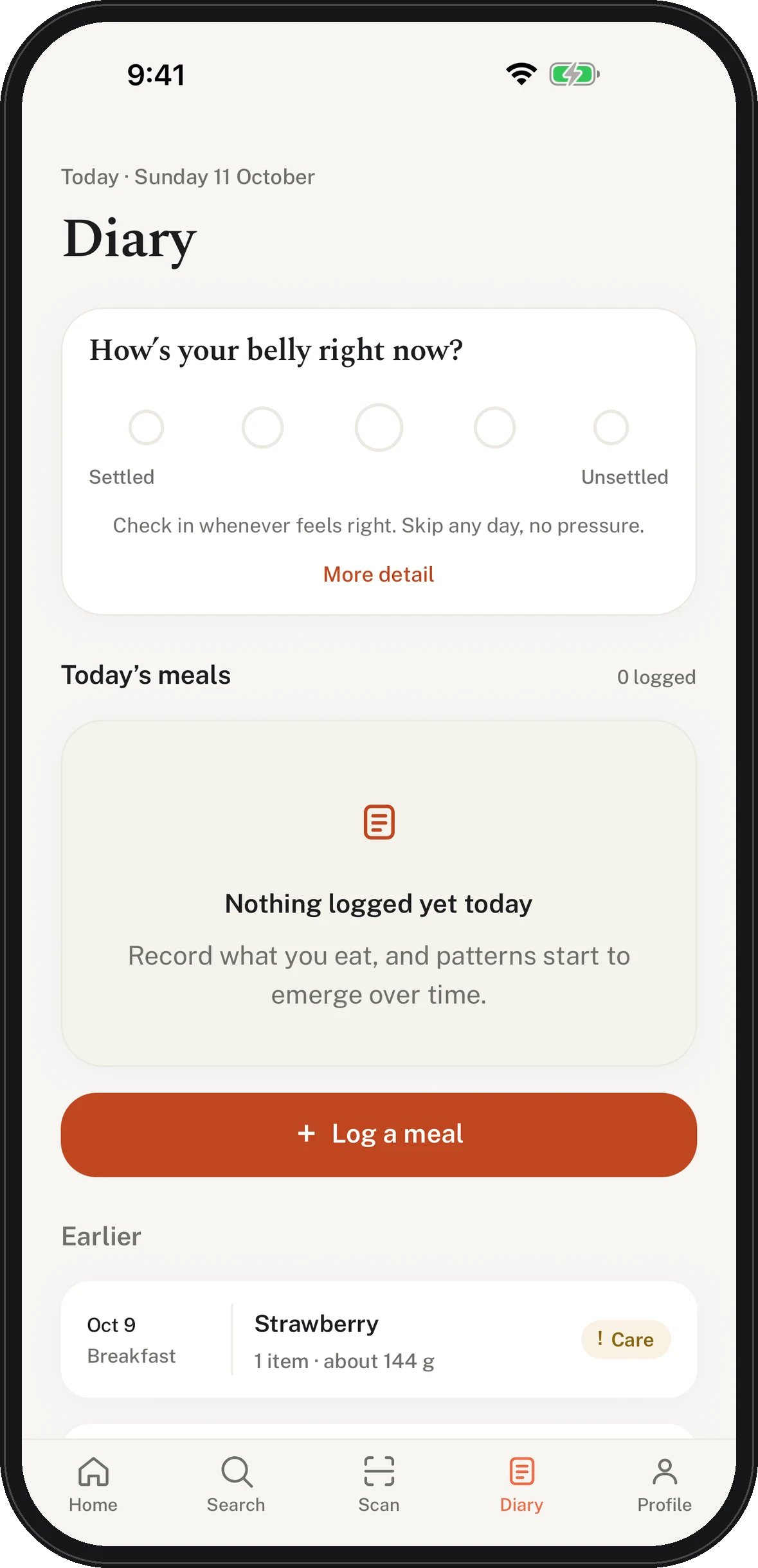
When you add functional diarrhea to your profile, SafeBelly checks each food against it and your other conditions and allergens, and explains the reason behind every answer. The diary and one-tap “How’s your belly?” check-in help you build the kind of food journal your doctor or dietitian can use, and you can export it as a CSV.
SafeBelly is in final testing on iPhone and Android. Leave your email and we'll send one note the day it's in the App Store and on Google Play.
Frequently asked questions
What foods stop diarrhea?+
No single food stops diarrhea, but some are easier on the gut. Many people tolerate plain starches like rice, oats and potatoes, and soluble fiber such as oats or psyllium can add bulk and slow transit. Easing back on caffeine, sugar alcohols, alcohol and rich meals often helps more than adding a specific food.
Can coffee cause chronic diarrhea?+
It can for some people. Coffee speeds movement through the colon, so stool may leave too quickly to firm up. Decaf coffee and caffeinated tea can have a similar effect, so try easing back for a week or two and see what changes.
Why does sugar-free gum give me diarrhea?+
Sugar-free gum and candy often contain sugar alcohols such as sorbitol, mannitol and xylitol. Your body absorbs these poorly, so they draw water into the bowel and can loosen stools, especially in larger amounts. Check ingredient lists on sugar-free products.
Does fiber help or hurt diarrhea?+
It depends on the type. Soluble fiber forms a gel and can help firm stools, while large amounts of insoluble fiber may speed things up for some people. Add any fiber gradually and check with your doctor ahead of starting a supplement.
What should I drink when I have diarrhea?+
Water plus an electrolyte drink or broth, since water alone doesn’t replace electrolytes. Limit caffeinated drinks, alcohol and very sugary drinks while symptoms are active. Seek care if you notice signs of dehydration such as dark urine or dizziness.
How long is too long for diarrhea?+
Diarrhea that lasts more than four weeks is considered chronic and needs a healthcare professional’s attention. For adults, NIDDK advises seeing a doctor if diarrhea lasts more than two days, or right away with blood in stool, high fever, severe pain or signs of dehydration.
Sources
- Chronic Diarrhea: Causes, Symptoms, Treatment · Cleveland Clinic
- Is something in your diet causing diarrhea? · Harvard Health Publishing
- Eating, Diet, & Nutrition for Diarrhea · National Institute of Diabetes and Digestive and Kidney Diseases (NIDDK)
- Symptoms & Causes of Diarrhea · National Institute of Diabetes and Digestive and Kidney Diseases (NIDDK)
- Soluble vs. insoluble fiber · MedlinePlus, U.S. National Library of Medicine
- Fiber: The Carb That Helps You Manage Diabetes · Centers for Disease Control and Prevention (CDC)
SafeBelly is a food information app, not a medical device, and no substitute for professional medical advice. Talk to your doctor or a registered dietitian before making changes to how you eat, and seek urgent care for severe or sudden symptoms.
Keep reading

Conditions
Lactose intolerance: foods to avoid, hidden lactose and what you can still enjoy

Conditions
Fructose malabsorption foods: what to watch, what to swap and why

Conditions
The low FODMAP diet for IBS: a beginner’s guide
Living with it
How to keep a food and symptom diary for IBS (without it taking over)