Key points
- The low FODMAP approach has three phases: a short low FODMAP (elimination) phase, reintroduction, then personalization.
- Reintroduction tests one FODMAP group at a time, usually over about three days, with a break between challenges.
- Your everyday meals stay low FODMAP during reintroduction so each result is clear.
- The end goal is the widest, most varied way of eating that keeps your symptoms settled.
- Each phase works best with a FODMAP-trained dietitian guiding the plan.
How do low FODMAP elimination and reintroduction work?
Low FODMAP elimination and reintroduction are the first two of three phases. In elimination (about 2–6 weeks), you swap high FODMAP foods for lower FODMAP alternatives to see whether your symptoms settle. In reintroduction (about 6–8 weeks), you test each FODMAP group one at a time to learn which ones trigger your symptoms and at what amount. In the third phase, personalization, you bring back everything you tolerate and limit only your own triggers (Monash FODMAP).
Researchers sometimes call these phases restriction, reintroduction and personalization (Bertin et al., 2024). Whatever the names, the shape is the same: a short, careful narrowing, followed by a longer, deliberate widening.
Start this process with your doctor and, ideally, a dietitian trained in FODMAPs. If you’re new to the topic, our beginner’s guide to the low FODMAP diet for IBS explains what FODMAPs are first.
Phase 1: the low FODMAP (elimination) phase
Monash University, which developed the approach, describes the first phase as substitution rather than elimination: you replace a higher FODMAP food with a lower FODMAP one from the same food group, such as an orange instead of an apple, or chives instead of onion (Monash FODMAP). That framing matters. The aim is to keep meals full, varied and nourishing while lowering the FODMAP load.
- How long: about 2–6 weeks (Monash FODMAP). Cleveland Clinic notes some people improve quickly while others take longer (Cleveland Clinic).
- What you’re looking for: whether your symptoms are FODMAP-sensitive at all. Monash says about three in four people with IBS improve, and about one in four don’t (Monash FODMAP).
- If nothing changes: there’s no need to continue. Monash lists other approaches your care team may suggest, including stress management, gut-directed hypnotherapy, fiber supplements and prescription medicines (Monash FODMAP).
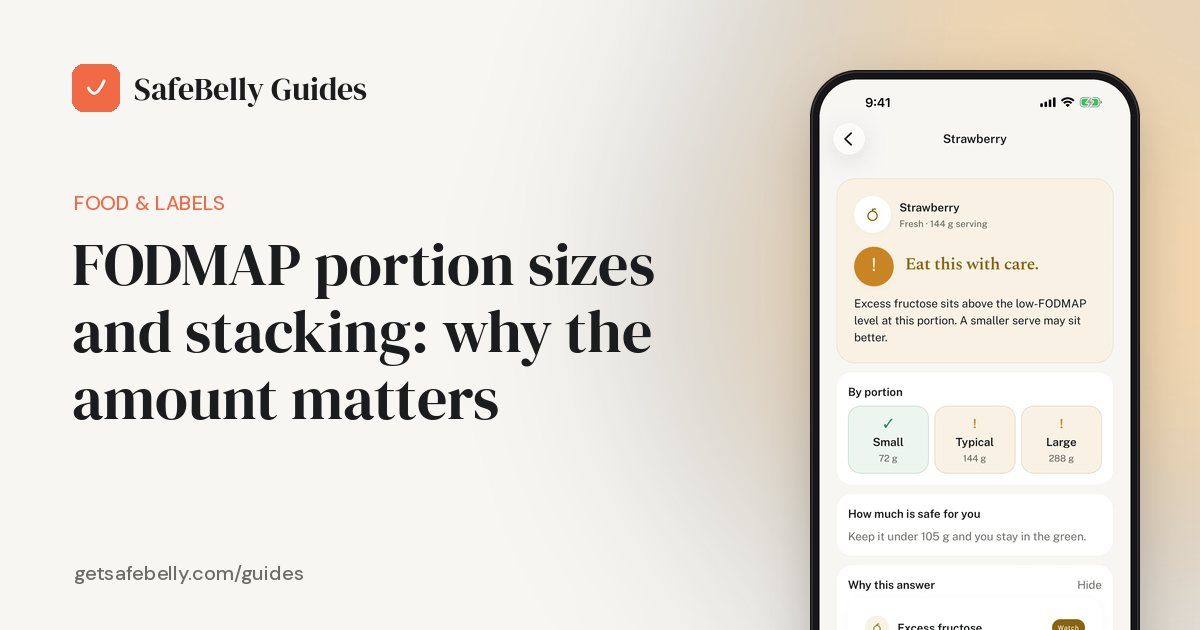
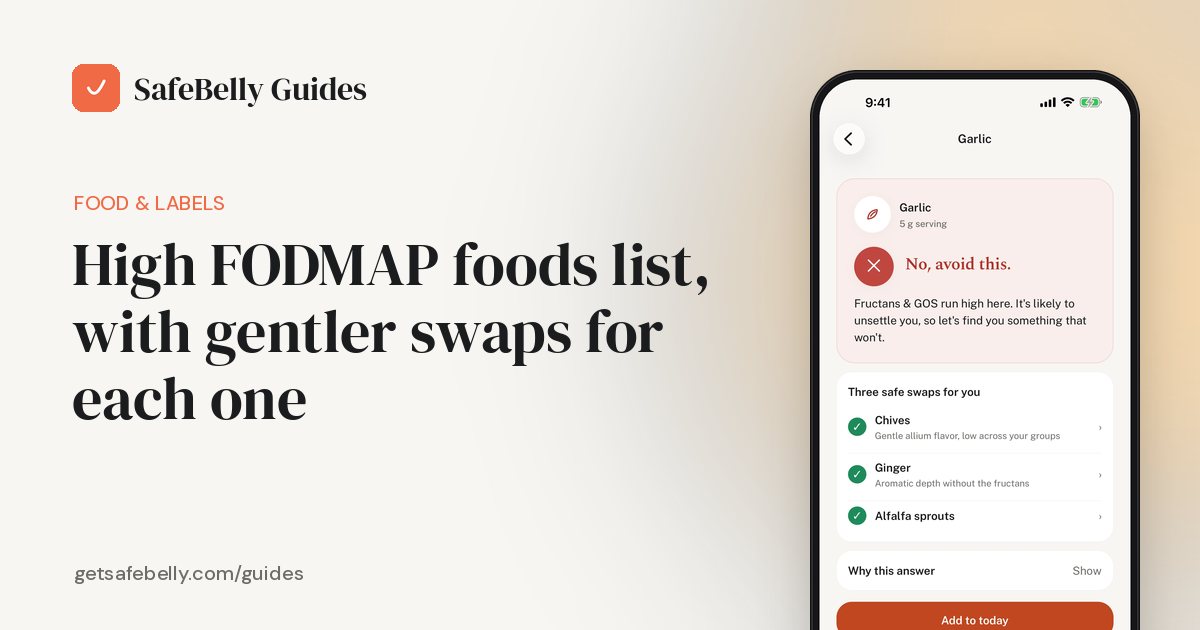
Portion size counts in this phase too, because many foods are low FODMAP at one serving and higher at another. See FODMAP portion sizes and stacking and our list of high FODMAP foods and swaps.
Phase 2: how a reintroduction challenge is structured
Reintroduction is where you learn the most. Instead of guessing, you test each FODMAP group on its own, because tolerance varies between groups (Monash FODMAP). Someone might react strongly to lactose and not at all to fructans, or the other way around.
Monash’s research dietitians describe a typical challenge like this (Monash FODMAP):
- Wait until your symptoms are well controlled on your low FODMAP meals.
- Pick one challenge food that is high in a single FODMAP group, and keep everything else you eat low FODMAP.
- Day 1: eat a moderate serving of the challenge food.
- Day 2: eat a larger serving.
- Day 3: eat a larger serving again, or your usual serving of that food.
- Record what you ate and how you felt each day, in an app or a paper diary.
- Take a break of 2–3 days, or until symptoms settle, eating low FODMAP again before the next challenge.
Try to eat the challenge food at about the same time each day, and do only one challenge at a time (Monash FODMAP). The specific foods and amounts come from the Monash FODMAP app or your dietitian, and your dietitian may adjust the schedule for you.
Some everyday foods are high in two FODMAP types, such as apple, pear, certain legumes and wheat products. Monash includes these as optional extra challenges once you’ve tested the single groups (Monash FODMAP).
| Group to test | Commonly published example foods |
|---|---|
| Fructans | Wheat and rye products, onion, garlic |
| GOS | Legumes and pulses |
| Lactose | Milk, soft cheeses, yogurt |
| Excess fructose | Honey |
| Polyols (sorbitol, mannitol) | Some fruits and vegetables |
Your dietitian will choose the actual challenge foods and amounts, since many foods contain more than one FODMAP. Examples here come from Monash’s overview of where FODMAPs are found (Monash FODMAP).
A mild reaction is useful information, not failure. It tells you something about your threshold, and Monash notes that many people manage moderate and some larger servings without symptoms once their approach is personalized (Monash FODMAP). Talk through any result that worries you with your dietitian.
Reading your results
There’s no single pass mark. A dietitian helps you interpret the pattern across the three days: whether a group caused no symptoms, symptoms only at the largest serving, or symptoms even at a moderate one (Monash FODMAP). Those answers shape phase 3.
- No symptoms at any serving: that group can usually come back freely.
- Symptoms only at the largest serving: smaller servings may suit you well.
- Symptoms at a moderate serving: that group may be one of your triggers, worth limiting for now and retesting later.
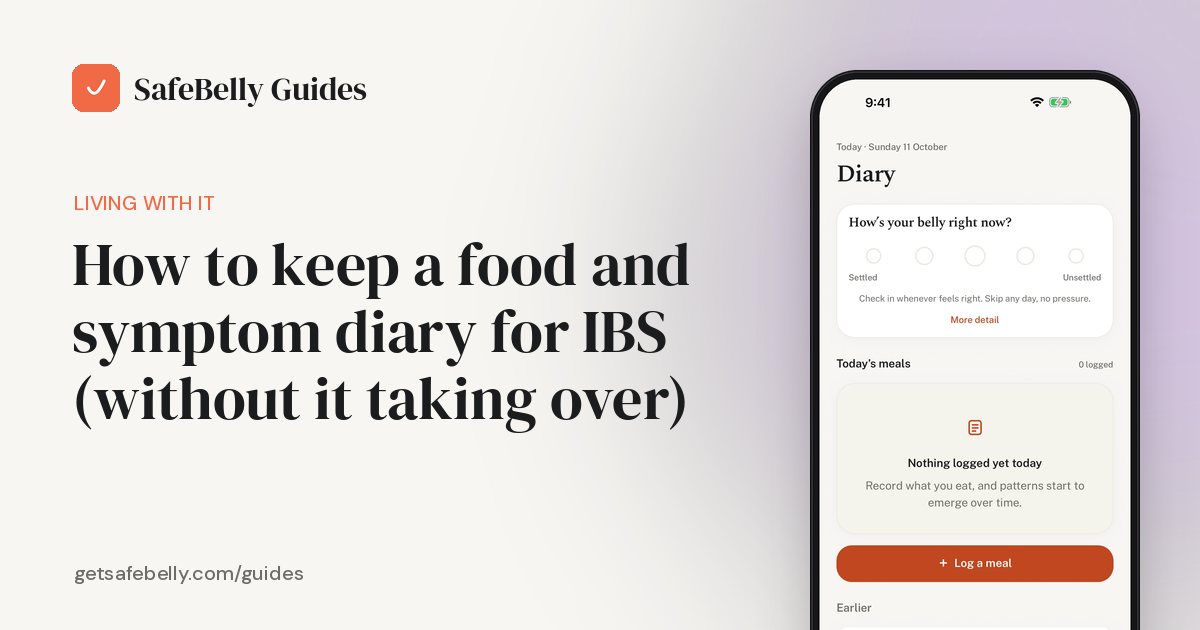
A food and symptom diary makes this far easier. Write down the food, the amount, the time, and how you felt, and anything else notable that day, such as stress.
The full reintroduction usually takes about 6–8 weeks (Monash FODMAP). It can feel slow. That pace is what makes each result trustworthy.
Phase 3: personalization and maintenance
Personalization is the long-term phase. You reintroduce well-tolerated foods and FODMAP groups, and keep limiting the ones that trouble you, only to the level that keeps your symptoms settled (Monash FODMAP). Cleveland Clinic calls this maintenance: a personalized pattern you can keep long term or revisit later (Cleveland Clinic).
- Retest over time. Tolerance can change, so Monash suggests retesting foods you didn’t tolerate well in a few months (Monash FODMAP).
- Think in amounts, not banned lists. Many people manage moderate and some larger servings once they know their thresholds (Monash FODMAP).
- Plan for real life. Eating out, travel and social meals are part of maintenance. Our guide to eating out with IBS can help.
Why the strict phase isn’t meant to last forever
It can be tempting to stay in the low FODMAP phase once you feel better. There are good reasons not to:
- Nourishment and variety. Short-term restriction can lower intake of fiber, calcium, iron, vitamin D and some B vitamins (Bertin et al., 2024). Many FODMAP-containing foods, such as certain vegetables, fruits and whole grains, are nourishing (Cleveland Clinic).
- Gut bacteria. Low FODMAP eating tends to lower Bifidobacteria; the same review notes levels may return to baseline after reintroduction and personalization (Bertin et al., 2024).
- Your relationship with food. The review links prolonged restriction with disordered eating risks and recommends screening before starting (Bertin et al., 2024). If food feels increasingly stressful, see our guide to food anxiety and digestive conditions.
Completing all three phases appears to pay off. Monash summarizes a 12-month follow-up of 18 adults with IBS who went through every phase with dietitian counseling: about two-thirds reported adequate long-term symptom relief, and Bifidobacteria levels did not change significantly. The authors suggested that reintroducing fructans and GOS may have helped, and called for larger studies (Monash FODMAP).
Sticking with the later phases is the hard part. In one case series summarized in the 2024 review, adherence fell from 78% in phase 1 to 48% in phase 2 and 40% in phase 3, and was higher across every phase for people supported by a dietitian (Bertin et al., 2024).
How SafeBelly helps
Know before you eat.
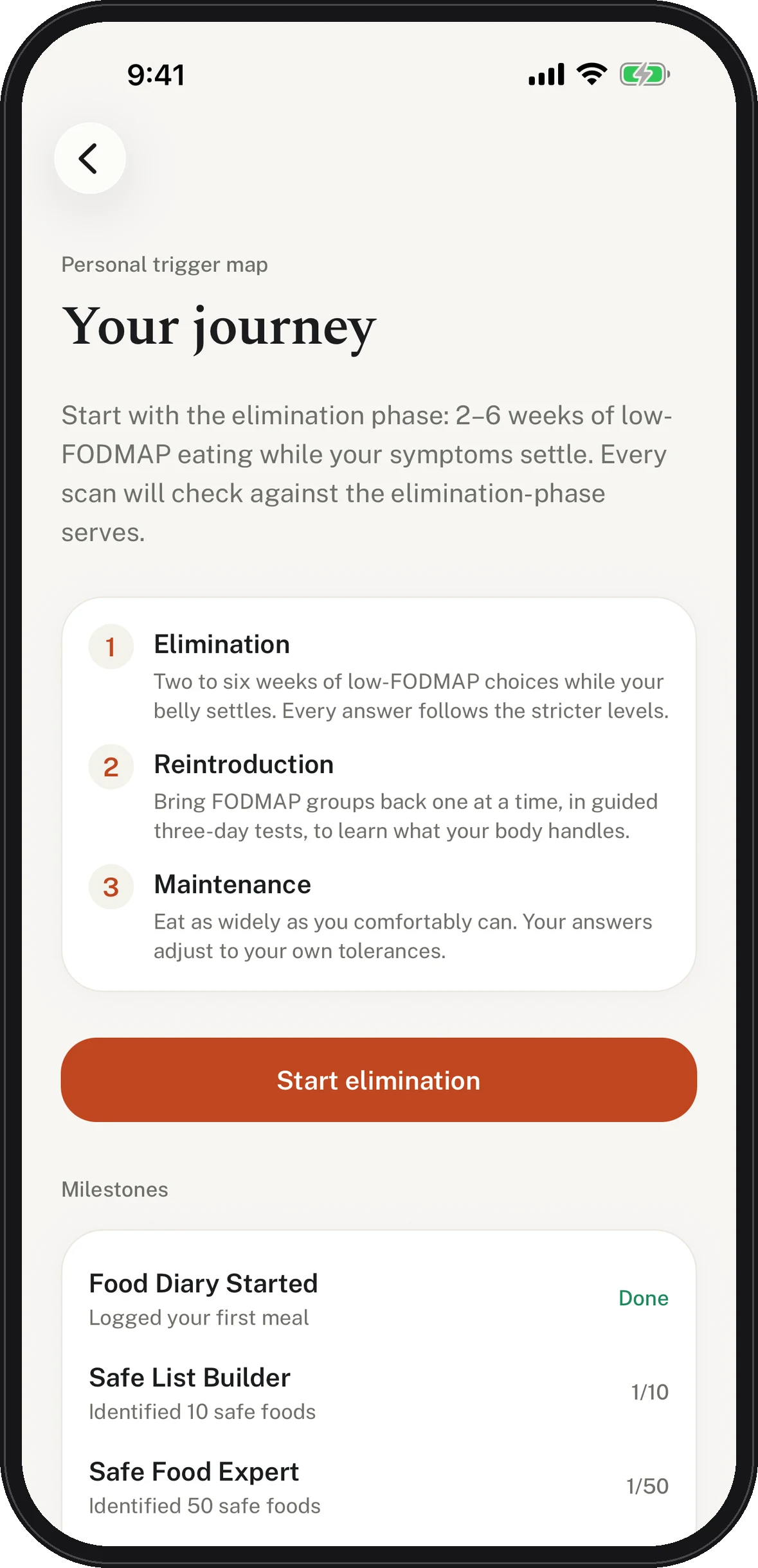
SafeBelly’s Guided Journey walks you through low-FODMAP elimination, reintroduction and maintenance, with a meal diary and a one-tap “How’s your belly?” check-in to record each challenge day. You can export your data as CSV to review results with your dietitian. It’s a food information app, not a medical device, and it’s designed to support, not replace, that guidance.
SafeBelly is in final testing on iPhone and Android. Leave your email and we'll send one note the day it's in the App Store and on Google Play.
Frequently asked questions
How long is the low FODMAP elimination phase?+
Monash University suggests about 2–6 weeks. If your symptoms haven’t improved by then, there’s usually no benefit in continuing, and your doctor or dietitian can suggest other approaches.
How long does FODMAP reintroduction take?+
Monash estimates the whole reintroduction phase takes about 6–8 weeks. Each challenge runs over about three days, with a break of 2–3 days, or until symptoms settle, before the next one.
What order should I reintroduce FODMAPs in?+
Monash doesn’t set a fixed order. Your dietitian will choose an order and specific challenge foods based on your symptoms, the foods you miss most, and what is practical for you.
What if I react during a reintroduction challenge?+
Return to your low FODMAP meals and wait until symptoms settle before the next challenge. A reaction tells you about your threshold for that group, and it’s worth discussing with your dietitian, who may suggest retesting at a smaller amount later.
Do I stay low FODMAP during reintroduction?+
Yes. Your background meals stay low FODMAP throughout reintroduction so that any symptoms can be linked to the one group you are testing.
Can I stay on the low FODMAP diet long term?+
The strict phase isn’t designed for long-term use. Restriction can narrow nutrient intake and lower some beneficial gut bacteria, so the aim is to reintroduce as much as you tolerate and limit only your own triggers.
Sources
- The 3 steps of the FODMAP diet · Monash University FODMAP
- Practical tips for FODMAP Reintroduction · Monash University FODMAP
- Starting the Low FODMAP Diet · Monash University FODMAP
- FODMAPs and Irritable Bowel Syndrome · Monash University FODMAP
- FODMAP stacking: can I overeat 'green' foods? · Monash University FODMAP
- Research update: Long term effects of following a personalised low FODMAP diet · Monash University FODMAP
- Low-FODMAP Diet · Cleveland Clinic
- The Role of the FODMAP Diet in IBS (Bertin et al., 2024) · Nutrients via PubMed Central
SafeBelly is a food information app, not a medical device, and no substitute for professional medical advice. Talk to your doctor or a registered dietitian before making changes to how you eat, and seek urgent care for severe or sudden symptoms.