Key points
- Worry about eating is a common, understandable response to living with IBS, and it is not a personal failing.
- The gut and brain talk to each other constantly, so stress and fear can make gut symptoms feel stronger.
- Avoiding more and more foods can quietly shrink your plate and your social life without easing symptoms.
- ARFID is a recognized eating disorder that can grow out of fear of gut symptoms; specialist help works best early.
- The goal is a wider, more nourishing range of foods, rebuilt step by step with a doctor, dietitian or therapist.
What is food anxiety with IBS?
Food anxiety with IBS is a persistent worry that eating will set off symptoms like pain, bloating, urgency or diarrhea, strong enough that it shapes what, when and where you eat. It often starts as a sensible response to real discomfort. Over time, the worry can grow larger than the symptoms themselves, leading to skipped meals, a shrinking list of foods that feel safe for you, and avoiding meals with other people.
If this sounds familiar, you are far from alone. Avoiding foods out of worry about symptoms is common in IBS, and researchers now study it directly, including in a study of 955 adults with IBS. Feeling this way says nothing about your strength or willpower. It is a predictable response to a gut that has been unpredictable.
This guide explains why the fear takes hold, how to notice when avoidance is starting to cost more than it protects, and how to rebuild a wider, more nourishing way of eating with the right support. It is general information, not medical advice.
The gut-brain connection: why worry and symptoms feed each other
The U.S. National Institute of Diabetes and Digestive and Kidney Diseases (NIDDK) describes IBS as a disorder of brain-gut interaction: the brain and gut do not coordinate as smoothly as they could, which can change how fast food moves through the digestive tract and how strongly sensations register (NIDDK). NIDDK notes that some people with IBS feel pain from a normal amount of gas or stool in the gut.
NIDDK also lists anxiety and depression among the factors more common in people with IBS. That does not mean IBS is "all in your head." It means the two directions of the gut-brain axis are real: gut symptoms can raise anxiety, and anxiety can make the gut more sensitive.
- Anticipation: you expect a meal to hurt, so your body is braced and tense as you eat.
- Heightened attention: you scan for every gurgle and twinge, and normal sensations feel alarming.
- Confirmation: a symptom shows up, perhaps unrelated to the food, and the fear feels proven.
- Avoidance: the food goes on the "never" list, and the next meal brings even more anticipation.
Noticing this loop is not the same as blaming yourself for it. The loop is a normal nervous-system response, and it can be gently loosened with the right tools.
The avoidance spiral: when protecting yourself starts to cost more
Cutting out a food that clearly triggers symptoms can be reasonable, especially with guidance. The trouble begins when avoidance spreads faster than the evidence. A single uncomfortable evening can be enough to drop a food, and over months the list of foods that feel possible can become very short.
In the same study of 955 adults, 13.2% reported severe food avoidance and restriction. That group had lower quality of life across the board and more severe psychological, gut and whole-body symptoms, and in a subset who kept food records, lower protein and carbohydrate intake (Melchior et al., 2022). The study shows an association, not cause and effect, but it is a useful reminder that narrowing your plate does not reliably calm your gut.
Monash University's FODMAP team describes signs that eating patterns around IBS may be tipping into something harder to manage (Monash FODMAP):
- Fixating on food choices and how each one might affect symptoms
- Constantly monitoring and recording everything you eat
- Thinking about food in black-and-white terms, with no middle ground
- Avoiding eating out and social occasions because of food
- Unintended changes in your weight, energy or appetite
If you recognize several of these, it is worth raising with your doctor or dietitian. You do not need to be in crisis to ask for help.
ARFID: when avoidance becomes an eating disorder
Avoidant/Restrictive Food Intake Disorder (ARFID) is a diagnosis in the DSM-5. According to the National Eating Disorders Association (NEDA), people with ARFID limit the amount or variety of food they eat, and unlike some other eating disorders, this is not driven by concerns about body shape or size. Instead it is driven by lack of interest in food, sensory sensitivity, and/or fear of aversive consequences such as choking or vomiting (NEDA). NEDA notes that studies estimate ARFID affects between 0.5% and 5% of children and adults, and that it can begin at any age.
Fear of gut symptoms appears to be a common route into ARFID for people with digestive conditions. In a Massachusetts General Hospital study of 410 adults referred to a neurogastroenterology clinic, 23.6% had ARFID symptoms, and of those, 93% were motivated by fear of gut consequences such as nausea, bloating, pain or vomiting (Mass General Advances). Only one of those patients had been diagnosed with ARFID by their gastroenterologist, which is why the researchers recommend screening.
Only a qualified professional can say whether ARFID applies to you. Things worth bringing up with your doctor include:
- Your range of foods that feel possible is getting narrower over time
- You rely on a small handful of foods, or on supplements, to get through the day
- Eating is interfering with work, school, relationships or social life
- You feel very afraid at meals, even with foods that have not caused symptoms
- You are tired, dizzy, cold or unwell in ways your doctor has not explained
Where to get help in the US: NEDA offers a free, confidential online screening and a directory of eating disorder treatment providers, in person and online, at nationaleatingdisorders.org. NEDA describes treatment as a team effort that may include a physician, psychiatrist, therapist and dietitian, and stresses that early support improves outcomes. If you are in emotional crisis, you can call or text 988 or chat at 988lifeline.org, free and confidential, any time (988 Lifeline).
Gently widening your food choices, with support
Here is the tension many people feel: some IBS approaches, like the low-FODMAP diet, involve removing foods for a while, while recovery from food fear is about bringing foods back. The Mass General researchers point out exactly this tension. The answer is not to choose one over the other alone, but to work with professionals who can balance both.
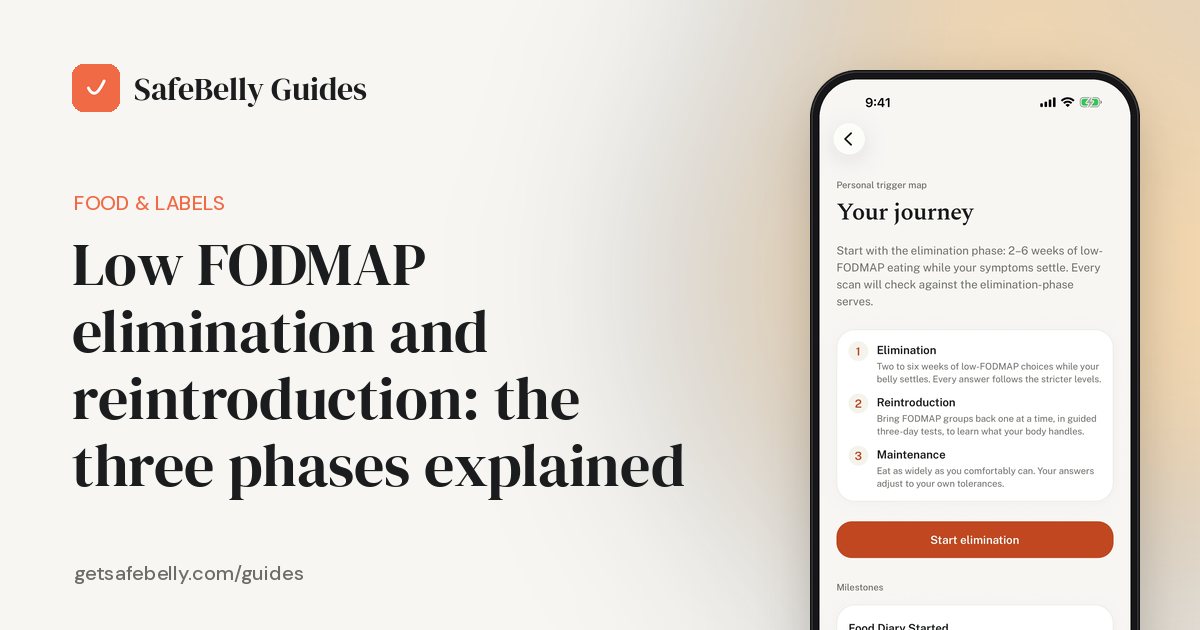
Monash recommends treating the elimination step of the low-FODMAP approach as short-term (it suggests 2 to 6 weeks), followed by reintroduction to expand what you eat, and working with a dietitian on the least restrictive plan that works (Monash FODMAP). Monash also notes that people with an active eating disorder may need approaches that don't involve cutting out foods. Our guide to the low-FODMAP phases explains why reintroduction is the point of the whole process.
- Tell your care team about the fear, not just the symptoms. "I'm scared to eat" is important clinical information.
- Write down the foods you have stopped eating and why. Seeing the list helps you and your dietitian decide which to revisit first.
- Start with foods that feel only a little uncertain. Small, familiar steps build trust faster than big leaps.
- Try a small portion at a calm time, at home, on a day without big plans. Dose often matters with gut symptoms; see FODMAP portion sizes.
- Let one mild symptom be just information. A little wind or bloating is a normal part of digestion, not proof a food is off-limits forever.
- Return to shared meals gradually. Eating with people you trust can turn food back into connection rather than a test.
Progress is rarely a straight line. A difficult day does not undo the foods you have already brought back.
Therapies that work with the gut-brain axis
Because the gut and brain influence each other, some of the most helpful support for IBS works on the brain side of the connection. These are evidence-based treatments for gut symptoms, not a suggestion that your symptoms are imagined.
- Gut-directed hypnotherapy: Monash reports that around 70% of people improved with face-to-face gut-directed hypnotherapy in studies, a similar rate to the low-FODMAP diet, and app-based programs have also shown benefit (Monash FODMAP).
- Cognitive behavioral therapy (CBT): Monash lists CBT and stress management among the options beyond food changes that dietitians can offer. For ARFID specifically, NEDA describes a tailored form called CBT-AR.
- A dietitian experienced in both IBS and eating disorders: someone who can help you reintroduce foods while keeping meals nourishing and flexible.
Ask your doctor which of these are available to you. Some are offered online, which can help if specialist care is far away.
Small habits that make meals feel safer
- Eat regularly. Skipping meals out of fear can leave you very hungry later and make your gut more reactive.
- Slow the meal down. Sit, breathe out slowly a few times, and give yourself time to eat.
- Plan, don't police. Looking at a menu ahead of time can ease worry; our guide to eating out with IBS has practical tips.
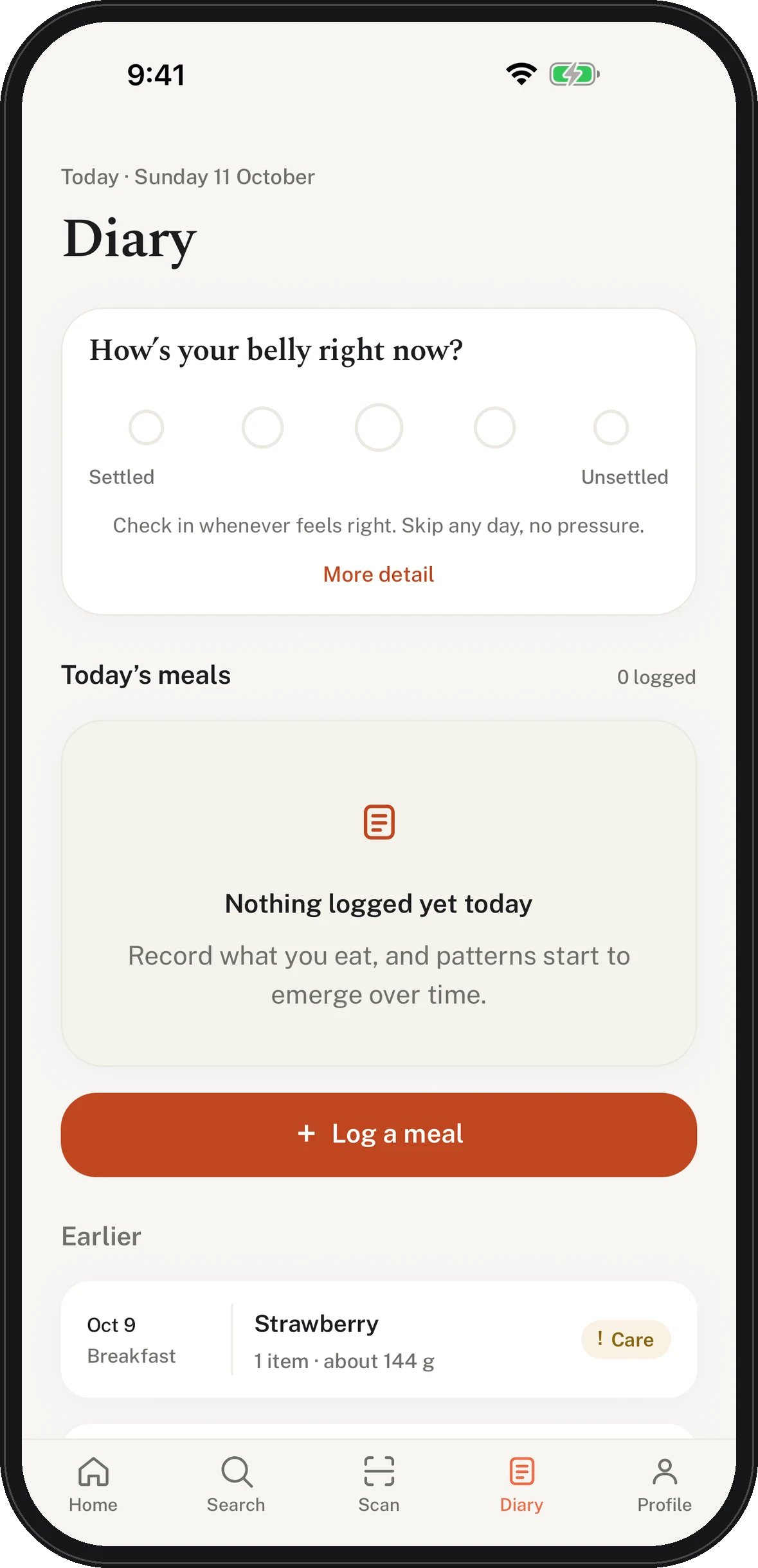
- Keep any food diary light. If tracking starts to feel compulsive, pause it. See keeping a food and symptom diary for a gentler approach.
- Name the feeling. Saying "this is anxiety, not danger" can take some of the charge out of a meal.
Some symptoms need a doctor promptly rather than managing alone. The NHS lists rectal bleeding or bloody diarrhea, unexplained changes in your weight, and a lump or swelling in your abdomen among signs to get checked urgently (NHS).
How SafeBelly helps
Know before you eat.
SafeBelly is designed to reduce guesswork, not add rules: it answers "Can I eat this?" for your chosen conditions and shows how the answer changes at small, typical and large portions, which can make trying a small amount feel more manageable. Its Guided Journey puts the emphasis on reintroduction, so the aim is a wider range of foods, not a shorter one. It is a food information app, not a medical device, and works best alongside your care team.
SafeBelly is in final testing on iPhone and Android. Leave your email and we'll send one note the day it's in the App Store and on Google Play.
Frequently asked questions
Is it normal to be scared of eating with IBS?+
Yes. Worry about eating is a common response when your gut has been unpredictable, and studies show many people with IBS avoid foods or skip meals because of symptoms. If the fear is shaping your days, it is worth raising with your doctor or dietitian.
Can anxiety make IBS symptoms worse?+
NIDDK describes IBS as a problem with how the brain and gut work together, and lists anxiety among the factors more common in people with IBS. Stress and fear can make the gut more sensitive, and gut symptoms can increase anxiety, so the two often feed each other.
What is the difference between IBS food avoidance and ARFID?+
Many people with IBS avoid some foods. ARFID is a diagnosable eating disorder in which restriction leads to problems like nutritional gaps, reliance on supplements, or major disruption to daily life. Only a qualified professional can make that distinction, and NEDA offers a free online screening as a starting point.
Where can I get help for ARFID in the US?+
NEDA (nationaleatingdisorders.org) has a confidential online screening and a directory of eating disorder providers, including online options. Your primary care doctor or gastroenterologist can also refer you. If you are in crisis, call or text 988.
Can the low-FODMAP diet cause food anxiety?+
Monash University notes that restrictive approaches for IBS can contribute to disordered eating in some people. They recommend keeping the elimination step short, reintroducing foods to widen your eating, and working with a dietitian. If you already struggle with food fear, tell your care team so they can plan an approach that suits you.
How do I start eating foods I've been avoiding?+
Start with a food that feels only a little uncertain, in a small portion, at a calm time. Treat a mild symptom as information rather than a verdict. A dietitian or therapist can help you plan the steps so you are not doing it alone.
Sources
- Symptoms & Causes of Irritable Bowel Syndrome · National Institute of Diabetes and Digestive and Kidney Diseases (NIDDK)
- Avoidant Restrictive Food Intake Disorder (ARFID) · National Eating Disorders Association (NEDA)
- Avoidant/Restrictive Food Intake Disorder Very Common with Neurogastroenterology Symptoms · Massachusetts General Hospital, Advances in Motion
- Food Avoidance and Restriction in Irritable Bowel Syndrome: Relevance for Symptoms, Quality of Life and Nutrient Intake (Melchior et al., 2022) · Clinical Gastroenterology and Hepatology (PubMed)
- Disordered Eating in Irritable Bowel Syndrome · Monash University FODMAP
- Gut-directed hypnotherapy for IBS: what is it and what are the options? · Monash University FODMAP
- Irritable bowel syndrome (IBS): Symptoms · NHS
- 988 Suicide & Crisis Lifeline · 988 Lifeline
SafeBelly is a food information app, not a medical device, and no substitute for professional medical advice. Talk to your doctor or a registered dietitian before making changes to how you eat, and seek urgent care for severe or sudden symptoms.