Key points
- Common high FODMAP foods include garlic, onion, wheat and rye products, legumes, milk, honey, apples and pears.
- For almost every high FODMAP food there’s a lower FODMAP swap from the same food group.
- Serving size matters: check the Monash FODMAP app for exact amounts.
- Garlic, onion, honey and “-ol” sweeteners often hide in sauces, stocks, processed meats and sugar-free products.
- Swaps here are about FODMAPs only; if you have an allergy or celiac disease, check every label for your own needs.
Which foods are high in FODMAPs?
Commonly listed high FODMAP foods include garlic, onion, leek, artichoke, asparagus and mushrooms; apples, pears, mango, cherries, stone fruits and watermelon; wheat and rye products; most legumes; cow’s milk, yogurt and ice cream; and honey and high-fructose corn syrup (Monash FODMAP food list; NIDDK). For nearly all of them, there’s a gentler swap from the same food group, which keeps meals varied and nourishing.
Monash University, which developed the low FODMAP approach, frames the first phase as substitution, not elimination: an orange instead of an apple, chives instead of onion (Monash FODMAP). That’s the spirit of this list.
Monash says it’s essential to consult a dietitian before starting a FODMAP approach (Monash FODMAP food list). This list is general information, and your own triggers may be quite different. Our beginner’s guide explains the bigger picture.
A quick guide to the FODMAP groups
It helps to know which FODMAP a food is high in, because people often react to some groups and not others. Monash lists these main sources for each group (Monash FODMAP):
| FODMAP group | Main sources |
|---|---|
| Fructans (oligosaccharides) | Wheat, rye, onion, garlic |
| GOS (oligosaccharides) | Legumes and pulses |
| Lactose (disaccharide) | Milk, soft cheeses, yogurt |
| Excess fructose (monosaccharide) | Honey, apples, high-fructose corn syrup |
| Polyols: sorbitol, mannitol | Some fruits and vegetables; used as sweeteners |
Some foods are high in more than one group. Monash names apple, pear, certain legumes and wheat products as common examples (Monash FODMAP).
Vegetables and fruit: high FODMAP foods and swaps
| Often high FODMAP | Gentler swaps to consider |
|---|---|
| Garlic, onion, leek | Chives; garlic-infused oil |
| Artichoke, asparagus, green peas, mushrooms | Green beans, eggplant, bok choy, carrot, cucumber, lettuce, potato |
| Red bell pepper (capsicum) | Green bell pepper |
| Cauliflower, cabbage (NIDDK lists both) | Carrot, bok choy, lettuce |
| Apples, pears, apple juice | Orange, mandarin, kiwifruit |
| Mango, cherries, watermelon | Pineapple, cantaloupe, blueberries |
| Peaches, nectarines, plums, dried fruit | Kiwifruit, orange, blueberries |
Sources: Monash FODMAP food list, NIDDK, Monash FODMAP.
Why garlic-infused oil works: the fructans in garlic and onion dissolve in water but not in oil, so the flavor carries into oil without the fructans. Oils carrying Monash’s Low FODMAP Certified logo have been lab tested (Monash FODMAP). Garlic and onion also hide in many packaged foods; see our guide to hidden garlic and onion.
Bananas are a good example of how ripeness and amount matter. Cleveland Clinic notes ripe bananas are high in fructose, but a smaller portion, or a less-ripe banana, may be tolerated (Cleveland Clinic). Cleveland Clinic also lists grapes, strawberries and pineapple as generally acceptable fruits.
Dairy, grains and proteins: high FODMAP foods and swaps
| Often high FODMAP | Gentler swaps to consider |
|---|---|
| Cow’s milk, evaporated or sweetened condensed milk | Lactose-free milk; almond milk; soy milk made from soy protein; hard cheeses, brie, camembert, feta |
| Yogurt, custard, ice cream | Lactose-free dairy products |
| Wheat, rye and barley breads, cereals, crackers and snacks | Wheat-, rye- and barley-free breads; sourdough spelt bread; oats; quinoa flakes; plain rice cakes |
| Wheat pasta | Rice, quinoa or corn pasta |
| Most legumes and pulses | Eggs, firm tofu, tempeh, plain cooked meat, poultry and seafood |
| Some marinated and processed meats | Plain cooked meats, poultry and seafood |
| Soy milk made from whole soybeans | Soy milk made from soy protein |
Sources: Monash FODMAP food list, NIDDK, Cleveland Clinic.
- Choose calcium-fortified plant milks if you’re swapping away from dairy milk, as Monash advises (Monash FODMAP food list).
- Processed and marinated meats can be high FODMAP because of added ingredients such as garlic and onion (Monash FODMAP food list; Cleveland Clinic).
- Low FODMAP is not the same as gluten-free. Sourdough spelt bread contains gluten and is not suitable for anyone with celiac disease. If celiac disease is a possibility, ask your doctor about testing before changing what you eat; see celiac disease and gluten-free eating.
- Lactose-free isn’t dairy-free. Lactose-free products still contain milk protein, which matters for a milk allergy. See lactose-free vs dairy-free.
Sweeteners, snacks and nuts: high FODMAP foods and swaps
| Often high FODMAP | Gentler swaps to consider |
|---|---|
| Honey | Maple syrup, rice malt syrup, table sugar |
| High-fructose corn syrup | Maple syrup, rice malt syrup, table sugar |
| Sugar-free candy and gum with sorbitol, mannitol, xylitol or maltitol | Dark chocolate |
| Cashews, pistachios | Macadamias, peanuts, walnuts, pumpkin seeds |
Sources: Monash FODMAP food list, NIDDK.
The NIDDK suggests watching for sugar alcohols ending in “-ol” on labels, such as sorbitol, mannitol, xylitol and maltitol (NIDDK).
Allergy safety first. These are FODMAP swaps only and say nothing about allergens: several suggested swaps contain peanuts, tree nuts, soy, milk or wheat. If you have a food allergy, read the label every time (ingredients change), take “may contain” statements seriously, and carry any medication you’ve been prescribed. A severe reaction is an emergency: call emergency services. See our guide to food allergies and the major allergens.
Serving size still matters
These lists describe foods at typical servings. A food listed as a gentler swap can become moderate or high in FODMAPs at a larger serving; Monash gives sweet potato, red cabbage and eggplant as examples. Others, like carrot, stay low even in large amounts (Monash FODMAP).
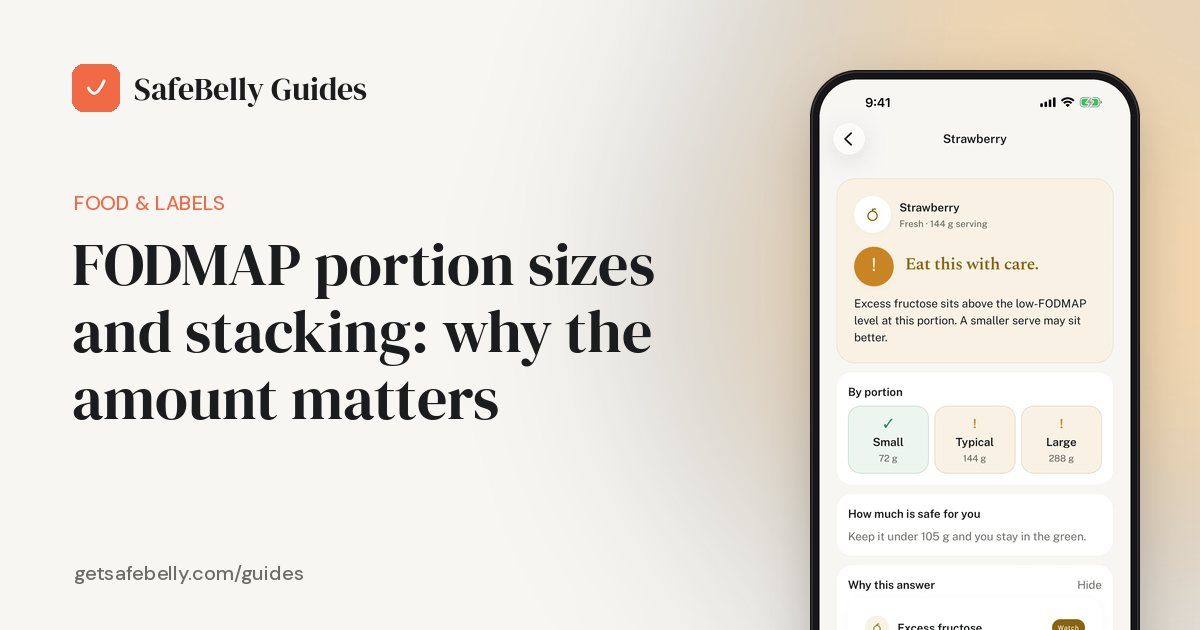
We don’t reproduce exact serving cut-offs here. For those, use the Monash FODMAP app, which rates foods by serving size, ideally alongside a dietitian. Our guide to FODMAP portion sizes and stacking explains why amounts matter and how FODMAPs from several foods in one meal can add up.
Where high FODMAP ingredients hide
Many FODMAPs arrive in small amounts through ingredients rather than whole foods. When reading a label or ordering out, look for:
- Onion and garlic (including powders) in stocks, sauces, dressings, spice mixes, dips, marinades and processed meats.
- Honey and high-fructose corn syrup in sauces, cereals, bars and drinks.
- Sugar alcohols (sorbitol, mannitol, xylitol, maltitol) in sugar-free gum and candy.
- Wheat and rye in breads, crackers, cereals and coatings.
Monash suggests asking for dips, sauces and marinades on the side, since some contain garlic or onion (Monash FODMAP food list). For more help at restaurants, see eating out with IBS.
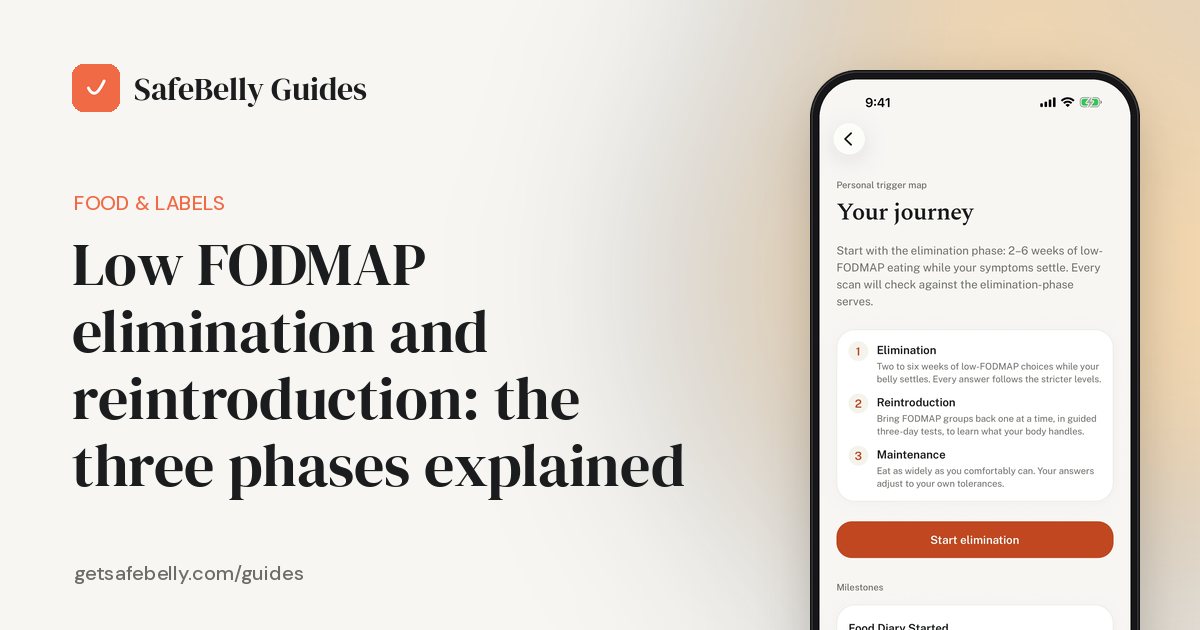
Remember that this list is a starting point for the short low FODMAP phase, not a permanent rulebook. The aim is to bring foods back during reintroduction and limit only your own triggers in the long run (Monash FODMAP).
How SafeBelly helps
Know before you eat.
Rather than memorizing lists, you can ask SafeBelly “Can I eat this?” by searching a food, scanning a barcode or photographing a plate. For FODMAP-based conditions it answers at small, typical and large portions, and a “No, avoid this.” comes with three safe alternatives, checked against the conditions and the 14 major allergens you’ve chosen. It’s a food information app, not a medical device, so keep reading labels too.
SafeBelly is in final testing on iPhone and Android. Leave your email and we'll send one note the day it's in the App Store and on Google Play.
Frequently asked questions
What are the most common high FODMAP foods?+
Commonly listed examples include garlic, onion, wheat and rye products, legumes, cow’s milk and yogurt, honey, high-fructose corn syrup, and fruits such as apples, pears, mango and watermelon. Exact amounts matter, so check the Monash FODMAP app for serving sizes.
What can I use instead of onion and garlic?+
Monash suggests chives in place of onion. Garlic-infused oil can add garlic flavor because the fructans in garlic don’t dissolve into oil; oils with Monash’s Low FODMAP Certified logo have been lab tested.
Is cheese high FODMAP?+
Not always. Monash lists hard cheeses, brie, camembert and feta as lower FODMAP options. The NIDDK includes soft cheeses among high FODMAP dairy foods, so type and amount both matter; the Monash app shows serving sizes for specific cheeses.
Are bananas high FODMAP?+
It depends on ripeness and amount. Cleveland Clinic notes ripe bananas are high in fructose, while a smaller portion or a less-ripe banana may be tolerated.
Is bread high FODMAP?+
Breads made from wheat, rye or barley are commonly high in fructans. Monash lists wheat-, rye- and barley-free breads and sourdough spelt bread as lower FODMAP options. Sourdough spelt still contains gluten, so it isn’t suitable for celiac disease.
Do I have to avoid high FODMAP foods forever?+
No. Restriction is meant to be short, usually a few weeks. Reintroduction then helps you find which groups trigger your symptoms, so you can bring back everything else.
Sources
- FODMAP food list · Monash University FODMAP
- FODMAPs and Irritable Bowel Syndrome · Monash University FODMAP
- The 3 steps of the FODMAP diet · Monash University FODMAP
- Starting the Low FODMAP Diet · Monash University FODMAP
- FODMAP stacking: can I overeat 'green' foods? · Monash University FODMAP
- Cooking with onion and garlic · Monash University FODMAP
- Eating, Diet, & Nutrition for Irritable Bowel Syndrome · National Institute of Diabetes and Digestive and Kidney Diseases (NIDDK)
- Low-FODMAP Diet · Cleveland Clinic
- Find certified low FODMAP foods · Monash University FODMAP
SafeBelly is a food information app, not a medical device, and no substitute for professional medical advice. Talk to your doctor or a registered dietitian before making changes to how you eat, and seek urgent care for severe or sudden symptoms.