Key points
- The foods most often linked to symptoms contain more fructose than glucose, such as apples, pears, mango, watermelon, honey and high-fructose corn syrup.
- Sorbitol, found in some fruits and sugar-free products, can make fructose harder to absorb.
- Some fructose malabsorption is common, even in people without symptoms. Symptoms are what matter.
- Breath testing is arranged and interpreted by clinicians, and has real limitations.
- Fructose is one of the FODMAP groups, so a dietitian-guided low-FODMAP approach often covers it.
Which foods are high in fructose for fructose malabsorption?
With fructose malabsorption, the foods most likely to cause symptoms are those with more fructose than glucose, often called "excess fructose". Monash University lists apples, pears, mangoes, cherries, figs, nashi pears, watermelon and dried fruit among fruits high in FODMAPs, with sorbitol and excess fructose as the main FODMAPs in fruit. Among sweeteners, honey and high-fructose corn syrup are on its high-FODMAP list. Fruit juices and fruit canned in juice or syrup are also flagged in clinical reviews.
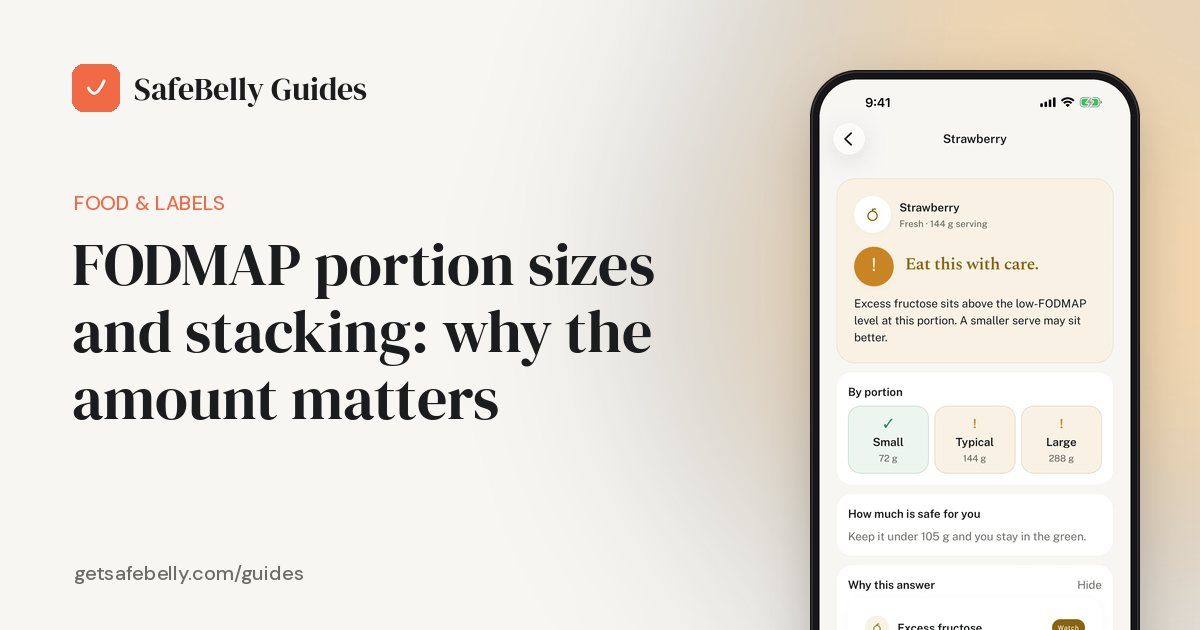
Many foods remain open to you. Monash lists fruits such as cantaloupe, kiwifruit, mandarin, orange, pineapple and blueberries among lower-FODMAP choices, and table sugar and maple syrup among lower-FODMAP sweeteners. Portion size matters a great deal, so "lower" does not mean unlimited. See FODMAP portion sizes for why amount changes the answer.
| Often a trigger | Often easier to tolerate |
|---|---|
| Apples, pears, nashi pears | Oranges, mandarins, kiwifruit |
| Mango, watermelon, cherries, figs | Cantaloupe, pineapple, blueberries |
| Dried fruit, fruit juice | Fresh fruit in a small portion |
| Honey, high-fructose corn syrup | Table sugar, maple syrup |
| Sugar-free sweets and gum with sorbitol or xylitol | Products without sugar polyols |
Everyone’s threshold is different. This table is a starting point for a conversation with your dietitian, not a list of rules.
What fructose malabsorption is: excess fructose vs glucose
Fructose is a simple sugar found in fruit, some vegetables and honey, and it is also made from corn as high-fructose corn syrup. It is absorbed in the small intestine through transporters in the gut wall. A 2011 review in Critical Reviews in Food Science and Nutrition describes two of them: GLUT-5, which carries fructose specifically, and GLUT-2, which also carries glucose.
When there is more fructose than the gut can absorb, the extra moves on to the large intestine. There, gut bacteria ferment it, producing gas. That can lead to bloating, belching, distension, gas, stomach pain or diarrhea. When malabsorption comes with symptoms, the review calls it dietary fructose intolerance.
Glucose helps fructose get absorbed. That is why the balance between the two sugars matters, and why researchers look at "net" or excess fructose rather than total fructose. In one study cited in the review, most participants given a large dose of fructose alone had a positive breath test, but none did when the same amount of glucose was added.
You may read online that adding glucose to fruit or sweets helps. In practice, a randomized crossover study described by Monash University found that adding glucose to fructose solutions or whole foods did not improve symptoms, and it adds to total sugar intake. It is not a recommended strategy.
Fructose malabsorption is not hereditary fructose intolerance
These two names sound alike but are very different conditions.
- Fructose malabsorption happens in the gut when its capacity to absorb fructose is exceeded. It is not considered genetic, and its symptoms are digestive.
- Hereditary fructose intolerance (HFI) is a rare inherited condition. According to MedlinePlus Genetics, it is caused by changes in the ALDOB gene, which reduce the activity of a liver enzyme called aldolase B. Symptoms begin in infancy, once fruit and juices are introduced, and repeated exposure can harm the liver and kidneys.
HFI requires strict medical management by a specialist team. Everything in this guide is about fructose malabsorption, not HFI. If a baby or child reacts strongly to fruit or juice, contact a doctor promptly.
The sorbitol link
Sorbitol is a sugar alcohol (a polyol). It occurs naturally in some fruits and is added to many sugar-free products. Monash notes that fruits particularly rich in sorbitol include apples, cherries, nashi pears, peaches and plums, and that many fruits, such as apples and pears, contain both fructose and sorbitol.
Sorbitol matters for fructose malabsorption because the two can interact. The 2011 review notes that dietary sorbitol can affect fructose absorption and worsen gut symptoms, and that studies giving fructose together with sorbitol produced higher rates of positive tests and symptoms. That helps explain why apples and pears are such common triggers.
Sugar polyols are common in products labeled "sugar-free" or "no added sugar". Monash advises reading labels, especially on artificially sweetened drinks and confectionery, where polyols such as sorbitol and xylitol are often used. On ingredient lists, look for:
- Sorbitol
- Xylitol
- Other ingredients ending in "-itol"
- High-fructose corn syrup
- Honey, fruit juice or fruit juice concentrate used as a sweetener
Sugar-free gum, mints and sweets are easy to overlook because the portion feels small. If you chew gum often, it is worth checking the label.
How fructose malabsorption is assessed
If you suspect fructose is a trigger, start with your doctor. Fructose problems share symptoms with IBS, celiac disease, SIBO and other conditions, and those need to be considered first. Please do not try to diagnose yourself with home tests.
Clinicians may use a hydrogen breath test. A review by Fedewa and Rao in Current Gastroenterology Reports describes the usual process: small intestinal bacterial overgrowth is ruled out first, a measured fructose drink is given, and breath samples are collected at intervals over about three hours to measure hydrogen and methane, gases made when bacteria ferment unabsorbed sugar.
The test has real limitations, which is why it is interpreted by a clinician alongside your symptoms:
- The 2011 review notes that testing protocols are not standardized and that results correlate poorly with symptoms.
- Testing with a large dose of pure fructose on an empty stomach may overstate how common the problem is compared with fructose eaten in meals.
- Some people produce methane rather than hydrogen, which some studies do not measure.
- Monash researchers found that people without digestive symptoms had breath hydrogen responses similar to people with functional bowel disorders, suggesting some fructose malabsorption is normal.
Fructose problems often overlap with IBS. The Fedewa and Rao review notes that, in one study, up to one-third of patients with suspected IBS had fructose malabsorption or dietary fructose intolerance, and that roughly 60–80% of people with IBS believe their symptoms are related to what they eat. That overlap is one more reason to look at the whole picture with your care team rather than focusing on a single sugar.
That last point is reassuring. Incomplete fructose absorption is common, and on its own it does not mean anything is wrong. What matters is whether certain foods give you symptoms, and how much of them you can enjoy comfortably.
How fructose fits with low FODMAP
FODMAP stands for fermentable oligosaccharides, disaccharides, monosaccharides and polyols. Fructose is the "M", a monosaccharide. Lactose is a disaccharide, fructans and GOS are oligosaccharides, and sorbitol and mannitol are polyols. The Fedewa and Rao review notes that FODMAP effects appear to add up, so your total intake across a meal or day matters, not just one food.
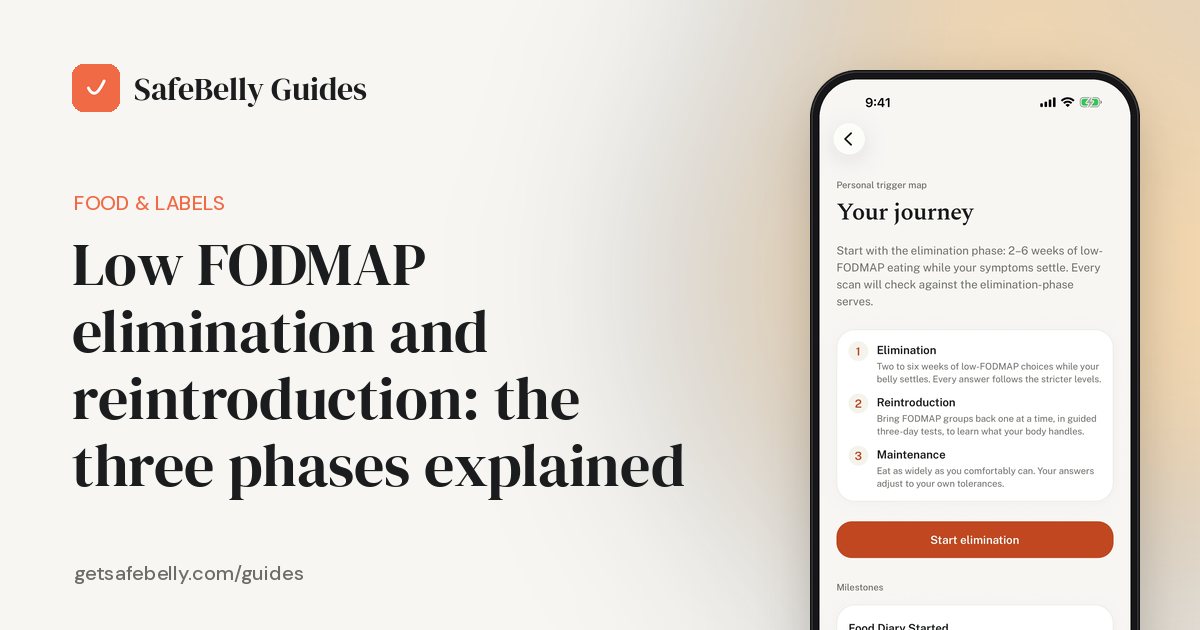
This is why a dietitian-led low-FODMAP approach often addresses fructose along with other triggers. It is designed to be temporary and usually runs in three phases:
- Elimination: a short period of eating lower-FODMAP foods to see whether symptoms settle.
- Reintroduction: testing each FODMAP group, including fructose, one at a time to find your personal triggers and thresholds.
- Personalization: bringing back everything you tolerate, so your eating stays as varied and nourishing as possible.
The Fedewa and Rao review notes that there are no established protocols specifically for fructose, and it stresses the value of working with a dietitian. Our guide to low-FODMAP phases explains each step in more detail. If you find fructans are a problem too, hidden garlic and onion is a helpful next read.
Everyday tips for eating with fructose malabsorption
- Spread fruit through the day. Because FODMAP effects add up, one portion at a time is usually easier than several together.
- Watch drinks. Fruit juice, smoothies and soft drinks sweetened with high-fructose corn syrup can deliver a lot of fructose quickly.
- Check sweeteners. Honey and sorbitol-sweetened products are common, easy-to-miss sources.
- Keep variety. Fruit brings fiber, vitamins and enjoyment. The goal is to find the fruits and amounts that suit you, not to cut fruit out.
- Plan for meals out. Desserts, sauces, glazes and drinks are common places for honey, fruit juice or high-fructose corn syrup. Our eating out with IBS guide has tips for asking about ingredients.
- Keep notes. A food and symptom diary makes reintroduction clearer for you and your dietitian.
If your symptoms change, become severe, or come with blood in your stool or waking at night, see your doctor promptly.
How SafeBelly helps
Know before you eat.
SafeBelly includes fructose malabsorption as a condition you can choose, and checks foods such as fruit, honey and sorbitol-sweetened products against it. Because amount matters, it shows the answer at small, typical and large portions, and the Guided Journey can walk you through elimination, reintroduction and maintenance alongside your dietitian.
SafeBelly is in final testing on iPhone and Android. Leave your email and we'll send one note the day it's in the App Store and on Google Play.
Frequently asked questions
What foods should I avoid with fructose malabsorption?+
The most common triggers contain more fructose than glucose, such as apples, pears, mango, watermelon, cherries, figs, dried fruit, fruit juice, honey and high-fructose corn syrup. Sorbitol in fruits and sugar-free products can add to symptoms. Your own triggers and amounts are best found with a dietitian.
What fruits are easier with fructose malabsorption?+
Monash University lists fruits such as cantaloupe, kiwifruit, mandarin, orange, pineapple and blueberries among lower-FODMAP options. Portion size still matters, so start with a modest serving and notice how you feel.
Is fructose malabsorption the same as hereditary fructose intolerance?+
No. Fructose malabsorption is a common gut absorption issue with digestive symptoms. Hereditary fructose intolerance is a rare genetic condition affecting a liver enzyme, starts in infancy, and needs specialist care.
Does eating glucose with fructose help?+
Glucose helps fructose absorption in the gut, which is why excess fructose matters. However, a randomized study described by Monash University found that adding glucose to fructose-containing foods did not improve symptoms, so it is not a recommended strategy.
How is fructose malabsorption tested?+
A clinician may arrange a hydrogen breath test, measuring hydrogen and methane in your breath over a few hours after a fructose drink. Results need careful interpretation because the test is not fully standardized and does not always match symptoms.
Is fructose malabsorption part of the low-FODMAP diet?+
Yes. Fructose is one of the FODMAP groups, the "M" for monosaccharides. A dietitian-guided low-FODMAP approach tests fructose during reintroduction, so you learn your own tolerance alongside other groups.
Sources
- High and low FODMAP foods · Monash University FODMAP
- Adding glucose to high FODMAP foods – does it really help? · Monash University FODMAP
- Fructose Malabsorption and Intolerance: Effects of Fructose with and without Simultaneous Glucose Ingestion (Latulippe & Skoog, 2011) · Critical Reviews in Food Science and Nutrition, via PubMed Central
- Dietary fructose intolerance, fructan intolerance and FODMAPs (Fedewa & Rao, 2014) · Current Gastroenterology Reports, via PubMed Central
- Hereditary fructose intolerance · MedlinePlus Genetics, US National Library of Medicine
SafeBelly is a food information app, not a medical device, and no substitute for professional medical advice. Talk to your doctor or a registered dietitian before making changes to how you eat, and seek urgent care for severe or sudden symptoms.