Key points
- No single food has been shown to cause or worsen Crohn’s disease or ulcerative colitis, and no one eating plan suits everyone with IBD.
- In remission, experts favor a varied, Mediterranean-style pattern with plenty of produce, adding fiber back as you tolerate it.
- During a flare, a short-term low-residue approach may ease symptoms, but only when your care team advises it.
- IBD raises the risk of low iron, vitamin D, B12 and other nutrients, so regular checks matter.
- A gastroenterologist and an IBD-experienced registered dietitian are your best partners for any big change.
What should you eat with Crohn’s or colitis?
There is no single diet for Crohn’s disease or ulcerative colitis. Most people with IBD do best with a varied, nourishing pattern of eating that changes with their symptoms: a broad, Mediterranean-style mix of foods in remission, a gentler, lower-fiber approach during some flares when advised, and regular checks on nutrition. The US National Institute of Diabetes and Digestive and Kidney Diseases (NIDDK) notes that no specific food has been shown to cause or worsen Crohn’s disease, and says the same about ulcerative colitis.
That doesn’t mean food doesn’t matter. Many people notice certain foods affect their symptoms, especially during a flare, and steady nourishment supports your body through a condition that can make eating and absorbing nutrients harder. It does mean you don’t need to follow a rigid list, and it’s worth being cautious of anyone selling one plan for all of IBD.
This guide is general information. IBD differs a lot between people, depending on where the inflammation is, whether you have narrowing (strictures) or have had surgery, and which medicines you take. Check any big change with your gastroenterologist or an IBD dietitian.
Why there’s no one IBD diet
In 2024 the American Gastroenterological Association (AGA) published a clinical practice update on food and nutrition in IBD. As reported by The Hospitalist, the expert panel stated that no diet has consistently been found to decrease the rate of flares in adults with IBD.
What the panel did recommend, unless there’s a reason not to, is a Mediterranean-style eating pattern for adults with IBD, while keeping salt, added sugar and ultra-processed foods low. They also noted that eating less red and processed meat may reduce flares in ulcerative colitis, though it hasn’t been shown to reduce relapse in Crohn’s disease.
Just as important, the panel flagged a downside of older advice. Telling people with IBD to avoid many foods, including fiber, often led them to keep avoiding nourishing foods long after they were in remission. Restriction has costs, so it’s best kept to times and situations where it clearly helps.
Other structured approaches exist. Crohn’s and Colitis Canada lists the low-FODMAP diet, the Mediterranean diet and the Crohn’s disease exclusion diet among options clinicians may use. If low-FODMAP is suggested to you, see our low-FODMAP guide for how it works, and use it only with a dietitian.
Eating during a flare
Flares are when eating often feels hardest. UCSF Health suggests that during a flare, a low-residue approach may ease abdominal pain and diarrhea, by limiting foods that increase stool output, such as fresh fruit and vegetables, prunes and caffeine. It also notes that cold foods may help with diarrhea.
Low-residue eating is a short-term tool, not a long-term plan, and it isn’t right for everyone. Use it only when your gastroenterologist or dietitian advises it, and ask them when and how to widen your eating again.
- Smaller, more frequent meals are often easier to manage and can help you take in more nourishment across the day.
- Liquid nutrition supplements may help if your appetite is low or solid food is hard to manage. Ask your care team which one suits you.
- Fluids matter. Diarrhea can drain water and electrolytes, so drink regularly and ask about replacing electrolytes.
- For ulcerative colitis, UCSF suggests cutting back on alcohol and concentrated sugars during a flare.
- For Crohn’s disease, UCSF suggests going lactose-free if you’re lactose intolerant, and reducing dietary fat if stools are oily and foul-smelling. Our lactose intolerance guide explains the difference between lactose-free and dairy-free.
A flare is a medical event, not a food failure. Contact your IBD team when symptoms ramp up; food changes support treatment but don’t replace it.
Eating in remission: widening your plate again
When things settle, the goal shifts to variety and enjoyment. UCSF suggests eating a wide variety of foods in remission, including fruits, vegetables, whole grains, lean protein and dairy, and adding fiber back gradually as you tolerate it.
- Start with gentler sources of fiber, such as well-cooked vegetables, canned fruit and cooked cereals.
- Reintroduce foods you avoided during the flare one or two at a time, so you can tell what suits you.
- Keep a short food and symptom diary as you go. NIDDK suggests a food diary can help you spot foods that seem to trigger symptoms.
- Move toward a Mediterranean-style mix with plenty of produce and a wide range of foods, as tolerated.
- Review with your dietitian anything you’re still avoiding, to check it’s still needed.
If you notice bloating or IBS-like symptoms even while your IBD is calm, our guides to bloating and food and high-FODMAP foods and swaps may help you have a better conversation with your care team.
Strictures: when a lower-fiber approach is advised
Some people with Crohn’s disease develop a stricture, a narrowing of the intestine caused by inflammation, scar tissue or both. Crohn’s & Colitis Australia explains that a modified low-fiber approach may be advised to lower the risk of a blockage. It may be temporary, for example while an inflammatory stricture is treated, or longer-term if the stricture can’t be treated or removed, and it should be followed with an IBD dietitian.
- UCSF suggests people with strictures avoid nuts, seeds, beans and kernels, which can block narrowed sections of bowel.
- The AGA panel suggests softening raw fruits and vegetables by cooking or steaming, or chewing them carefully, if you have symptomatic strictures.
- Once a stricture is treated or removed, a balanced, fiber-containing pattern is usually recommended again.
Possible signs of a blockage include abdominal pain, especially after eating, nausea and vomiting, and being unable to pass stool or wind. Contact your IBD team straight away. If symptoms are severe, go to an emergency department or call 911.
Nutrition risks to watch for
IBD can make it harder to get enough nourishment. NIDDK explains that symptoms can reduce appetite, inflammation in the small intestine can limit absorption, and some medicines and surgeries can reduce absorption too. In children, this can affect growth and development.
| Condition | Nutrients UCSF lists as at risk |
|---|---|
| Ulcerative colitis | Folate, magnesium, calcium, iron, potassium |
| Crohn’s disease | Vitamins B12, D, E, K and A, folate, magnesium, zinc, calcium, potassium (depending on medicines, surgery and where the inflammation is) |
- The AGA panel advises routine checks of iron and vitamin D, and B12 checks for people with extensive disease in the ileum (the last part of the small intestine) or past ileal surgery.
- Your doctor may recommend supplements. NIDDK advises checking with your doctor before taking any vitamins or supplements.
- For people with more complicated IBD, the AGA panel recommends care shared between a gastroenterologist and a registered dietitian who watch for malnutrition.
Some people with Crohn’s disease are offered exclusive enteral nutrition, a period of liquid formula in place of food, to help bring the disease under control. The AGA panel describes it as a reasonable option, possibly more effective in children. This is a medical treatment and is always supervised by your team.
Working with your care team
An IBD-experienced registered dietitian can turn general advice into a plan that fits your disease, your medicines and the foods you love. It’s worth asking your gastroenterologist for a referral, especially if:
- You’re cutting out several foods or food groups.
- Your weight is changing without explanation, or your appetite has dropped.
- You have strictures, have had bowel surgery or have a stoma.
- You’re supporting a child with IBD.
- Food has started to feel stressful or frightening.
That last point is common. Living with an unpredictable gut can make every meal feel like a risk. Our guides to food anxiety and digestive conditions and eating out with IBS include practical ideas that apply to IBD too.
How SafeBelly helps
Know before you eat.
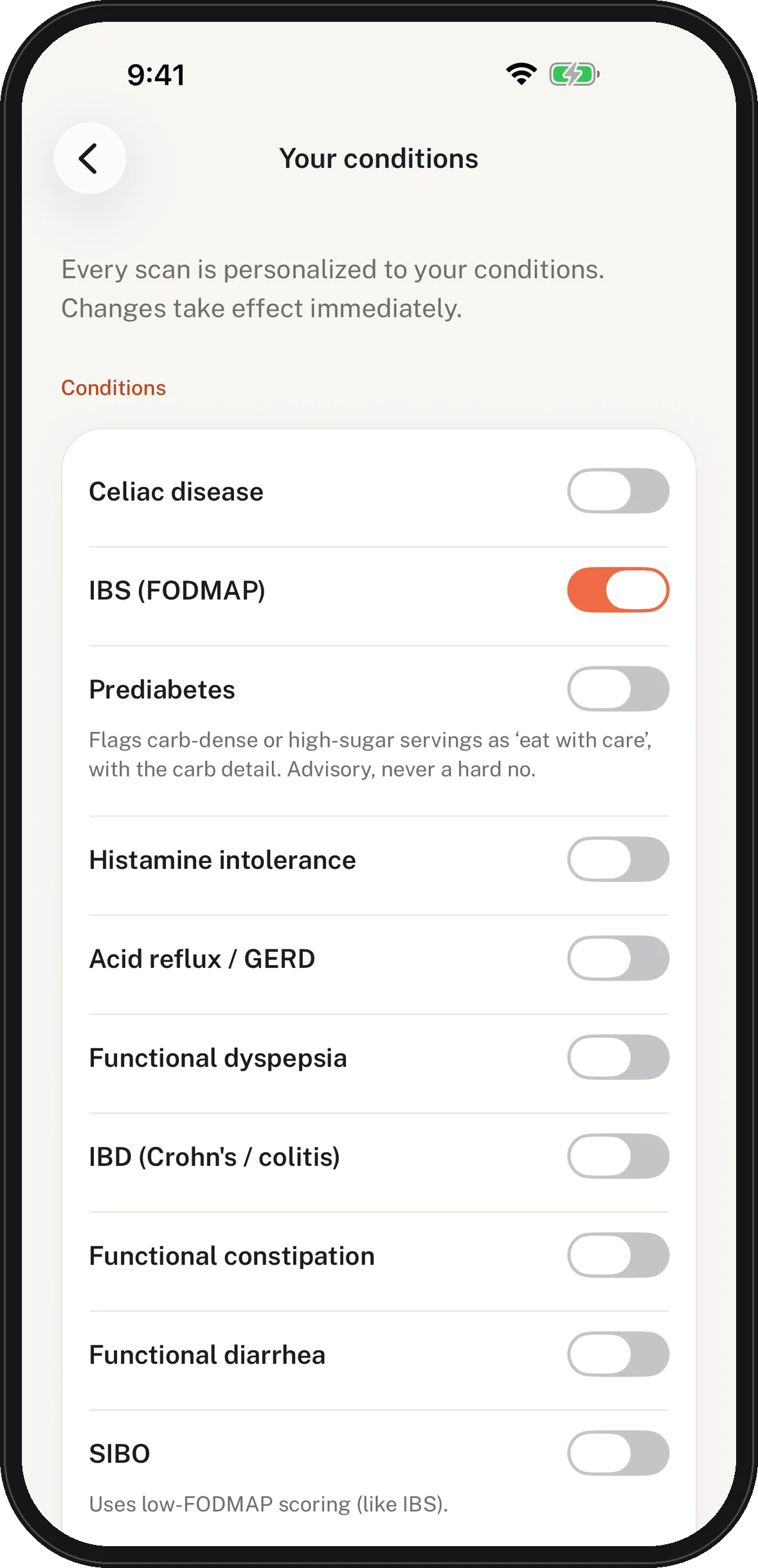
SafeBelly lets you add IBD to your condition profile, so foods you search, scan or photograph are checked against it and come back as “Yes,” “Eat this with care” or “No,” with the reason. The meal diary, one-tap “How’s your belly?” check-in and CSV export can help you bring a clear picture of flares and settled spells to your next appointment.
SafeBelly is in final testing on iPhone and Android. Leave your email and we'll send one note the day it's in the App Store and on Google Play.
Frequently asked questions
Is there a specific diet for Crohn’s disease?+
No single diet has been proven for Crohn’s disease. NIDDK notes no specific food has been shown to cause or worsen it, and a 2024 AGA expert update favors a Mediterranean-style pattern for most adults with IBD. Some people use specialist approaches, such as exclusive enteral nutrition, under medical supervision.
What should I eat during a colitis flare?+
Many people find smaller, more frequent meals and a short-term lower-residue approach easier during a flare, along with plenty of fluids. UCSF also suggests cutting back on alcohol and concentrated sugars in ulcerative colitis flares. Check with your IBD team, and contact them when symptoms flare.
Should I follow a low-residue diet all the time with IBD?+
Usually not. Low-residue eating is a short-term tool for some flares or for strictures, when your care team advises it. The AGA panel noted that long-term avoidance of fiber and other foods can mean missing out on nourishing foods during remission.
Can I eat fiber with Crohn’s or colitis?+
Most people can, especially in remission, adding it back gradually and starting with gentler sources such as well-cooked vegetables and canned fruit. If you have a stricture, your team may advise a lower-fiber approach, which should be followed with an IBD dietitian.
What vitamins are people with IBD often low in?+
Iron, vitamin D and B12 are commonly checked, and UCSF also lists folate, calcium, magnesium, zinc and potassium among nutrients at risk. Which ones apply to you depends on where your inflammation is, your medicines and any surgery, so ask your doctor about regular blood tests.
Does food cause IBD flares?+
Research hasn’t shown that specific foods cause Crohn’s disease or ulcerative colitis to flare in general, though many people notice personal triggers. A food and symptom diary can help you and your team see whether any patterns are real.
Sources
- Eating, Diet, & Nutrition for Crohn’s Disease · National Institute of Diabetes and Digestive and Kidney Diseases (NIDDK)
- Eating, Diet, & Nutrition for Ulcerative Colitis · National Institute of Diabetes and Digestive and Kidney Diseases (NIDDK)
- AGA Offers Practical Advice on IBD Diets (report on the 2024 AGA Clinical Practice Update on Diet and Nutritional Therapies in IBD) · The Hospitalist / MDedge
- Nutrition Tips for Inflammatory Bowel Disease · UCSF Health
- Diet for strictures and Crohn’s disease · Crohn’s & Colitis Australia
- Diet and Nutrition in IBD · Crohn’s and Colitis Canada
SafeBelly is a food information app, not a medical device, and no substitute for professional medical advice. Talk to your doctor or a registered dietitian before making changes to how you eat, and seek urgent care for severe or sudden symptoms.
Keep reading
Living with it
How to keep a food and symptom diary for IBS (without it taking over)

Conditions
The low FODMAP diet for IBS: a beginner’s guide
Conditions
Lactose intolerance: foods to avoid, hidden lactose and what you can still enjoy
Living with it
Food anxiety with IBS: understanding the fear and gently widening your plate