Key points
- Bloating is common: research cited by the NIDDK suggests 16% to 31% of people experience it.
- Common food contributors include beans, lentils, cruciferous vegetables, some fruits, dairy, whole grains and sugar alcohols.
- Swallowed air from eating fast, fizzy drinks, gum and straws adds to the feeling.
- A food and symptom diary helps you find your own triggers instead of cutting out whole food groups.
- Bloating that won’t go away, or comes with unexplained weight change, bleeding, a lump or severe pain, needs a doctor.
Which foods cause bloating?
The foods most often linked to bloating are beans, lentils and peas; cruciferous vegetables such as broccoli, cauliflower and cabbage; some fruits such as apples, pears and peaches; dairy foods; whole grains; drinks sweetened with high-fructose corn syrup; and products with sugar alcohols such as sorbitol or xylitol. According to the NIDDK, these foods can lead to gas, and too much fiber or very rich meals may add to bloating.
None of these foods are a problem in themselves. Many are nourishing staples, and plenty of people eat them without any discomfort. What matters is how your own gut responds, and how much you eat at once.
Bloating is also very common. The NIDDK cites research suggesting that 16% to 31% of people experience bloating, and about 20% of people in a large US survey reported bloating in the past week.
Why some foods leave you feeling bloated
Most of the foods above are rich in carbohydrates that aren’t fully digested in the small intestine. The NIDDK explains that bacteria in the large intestine break these carbohydrates down, and gas is a by-product. That is a normal part of digestion.
The NIDDK also notes that some people have more gas than others, while some feel normal amounts of gas more intensely. That second group often includes people with a sensitive gut, such as those with irritable bowel syndrome (IBS).
| What’s in the food | Where you find it | Related guide |
|---|---|---|
| Fermentable carbohydrates (FODMAPs), such as fructans | Wheat, onion, garlic, beans, lentils | High-FODMAP foods and swaps |
| Lactose | Milk, ice cream, yogurt | Lactose intolerance |
| Fructose | Apples, pears, juices, high-fructose corn syrup | Fructose malabsorption |
| Sugar alcohols (polyols) | Sorbitol, mannitol, xylitol in sugar-free gum and candy; some fruits | IBS and low-FODMAP eating |
| Fiber | Whole grains, beans, vegetables | Functional constipation |
Several of these carbohydrates belong to a family called FODMAPs. If bloating comes with pain or changes in bowel habit, a low-FODMAP approach, guided by a dietitian, is one option your clinician may suggest. The NIDDK describes trying a low-FODMAP diet for a few weeks to see whether it helps IBS symptoms.
It’s not only what you eat: pace, air and fizz
Some bloating has nothing to do with the food itself. The NIDDK lists several ways we swallow extra air:
- Eating or drinking too fast
- Drinking carbonated drinks
- Chewing gum or sucking hard candy
- Smoking
- Wearing loose-fitting dentures
Gentle changes that the NIDDK and the NHS suggest include:
- Slow down. Eat slowly, sitting down where you can, and try not to talk while you eat.
- Go easy on fizz. Limit fizzy drinks and drinking through a straw.
- Smaller, more frequent meals rather than a few large ones.
- Avoid large meals late at night, and sit upright when you eat.
- Stay hydrated and keep moving. The NHS suggests regular exercise, even when you feel bloated.
- Watch for constipation. If you are constipated, the NHS suggests soluble fiber such as oats or linseed.
Sugar-free gum is a double source of bloating for some people: chewing adds swallowed air, and the NIDDK lists sweeteners ending in "-ol" among the ingredients that can cause gas.
What can help when you already feel bloated
Changing what you eat takes time to show results. For the bloating you feel today, the NHS suggests a few gentle things to try:
- Move. A walk or light exercise can help, even when you feel bloated.
- Massage your abdomen. Gently massaging your stomach from right to left can ease trapped wind.
- Sip water. Staying well hydrated helps, especially if constipation is part of the picture.
- Skip the fizz for now. The NHS suggests limiting fizzy drinks, alcohol and caffeine in coffee and tea.
- Ask a pharmacist. They can advise on simeticone, a medicine that can ease bloating, or on laxatives if you are constipated.
If bloating keeps coming back, it’s a signal to look at patterns rather than reach for quick fixes every time. That is where a diary, and a conversation with your doctor, come in.
Should you cut out bread, dairy or beans?
It’s tempting to drop a whole food group when you feel bloated. Bread, dairy and beans are common first targets. Guessing this way rarely gives a clear answer, though, and it can make eating harder than it needs to be.
- Celiac disease needs testing first. If wheat seems to bother you, ask your doctor about celiac testing while you are still eating gluten. Cutting it out first can make the results unreliable. See our guide to celiac disease and gluten-free eating.
- Lactose isn’t all or nothing. The NIDDK notes that most people with lactose intolerance can have some lactose without symptoms, and lactose-free milk products can help. Our guide to lactose-free vs dairy-free explains the difference.
- Beans and lentils are nourishing. They bring fiber and protein. If they bother you, a smaller serving may sit more comfortably, and a dietitian can help you find your level.
- Portion size matters. A food that bothers you in a large serving may be fine in a smaller one, especially with FODMAPs. See FODMAP portion sizes.
The NHS suggests seeing a GP if you have tried changing what you eat and still feel bloated. A doctor can refer you for tests or to a registered dietitian, who can guide a structured approach that protects your nutrition.
Health conditions that can cause bloating
Bloating is a symptom, not a diagnosis. The NIDDK lists a range of conditions linked to gas and bloating, including:
- Functional gut disorders such as IBS, functional bloating, functional constipation and functional dyspepsia
- Lactose intolerance and fructose intolerance
- Small intestinal bacterial overgrowth (SIBO)
- Celiac disease, GERD and gastroparesis
- Blockages in the digestive tract, which can be caused by some cancers
The NHS also notes that some people feel bloated around their period. If bloating tracks with your cycle and comes with pelvic pain, our guide to endometriosis and food may help you prepare questions for your doctor.
Because so many conditions overlap, it’s worth getting checked rather than guessing. Celiac disease in particular should be tested for while you are still eating gluten, since cutting it out first can affect the results.
When bloating needs a doctor
Most bloating is uncomfortable but harmless. Some signs mean it’s time to get checked. The NIDDK suggests seeing a doctor if gas symptoms bother you, if your symptoms change suddenly, or if they come with abdominal pain, constipation, diarrhea or unexplained weight change.
The NHS adds that bloating that doesn’t go away can occasionally be a sign of something more serious, such as ovarian cancer. Make an appointment if:
- You feel bloated often, or it continues even though you’ve changed what you eat
- Your weight is changing without explanation
- You notice blood in your stool
- You feel a swelling or lump in your abdomen
Get urgent help if bloating comes with a fever, vomiting, a stomach ache, or you can’t pass urine, stool or gas. Call 911 (or your local emergency number) if you have a swollen stomach along with sudden severe pain, vomiting blood or what looks like coffee grounds, or severe difficulty breathing.
Finding your own triggers with a diary
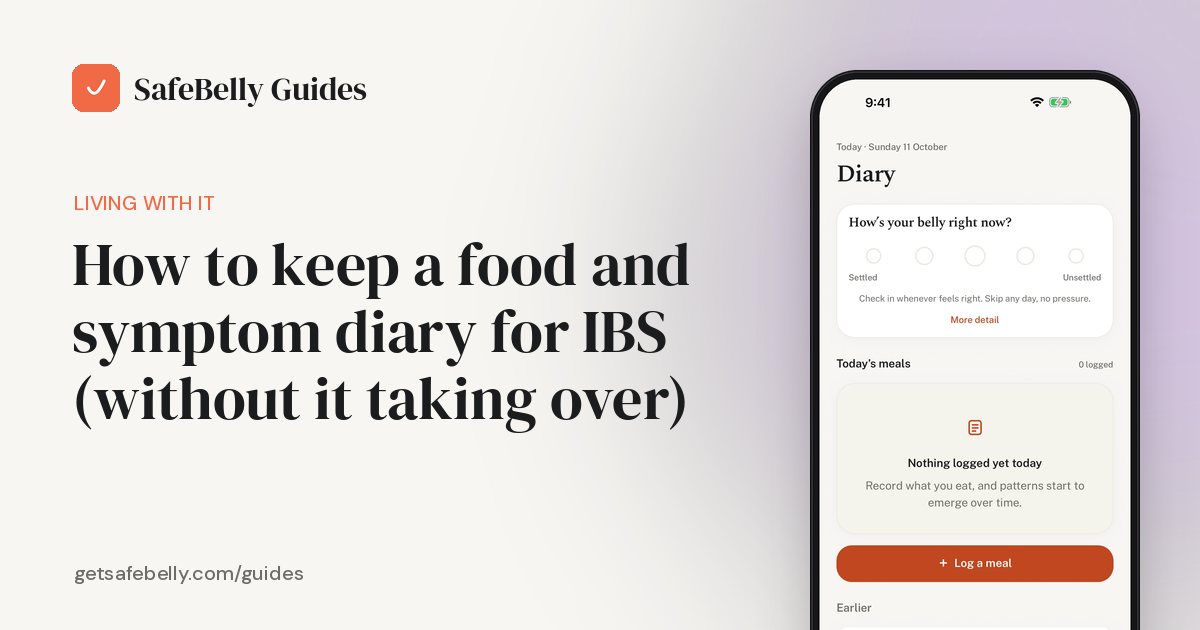
Lists of "bloating foods" are a starting point, but triggers are personal. The NIDDK suggests keeping a diary of foods, drinks and symptoms to help identify yours. Our food and symptom diary guide goes into detail.
- Note what you eat and drink, roughly how much, and when.
- Rate your bloating and any other symptoms a few times a day.
- Add context: sleep, stress, your cycle, exercise and bowel habits.
- Keep it going for a few weeks so patterns have time to show.
- Share it with your doctor or a registered dietitian, who can help you read it.
Look for patterns over several days rather than blaming the last thing you ate. A single meal can mislead you; repeated patterns are far more useful to you and your clinician, and they show whether timing, stress or drinks play a part alongside food. Note portion sizes too: a food that bothers you in a large serving may sit well in a smaller one.
Try not to cut out whole food groups on your own. The NIDDK recommends talking with a doctor or registered dietitian ahead of any major change to how you eat. Elimination approaches such as low-FODMAP are designed to be short, structured and followed by reintroduction, so you keep as much variety as possible.
How SafeBelly helps
Know before you eat.
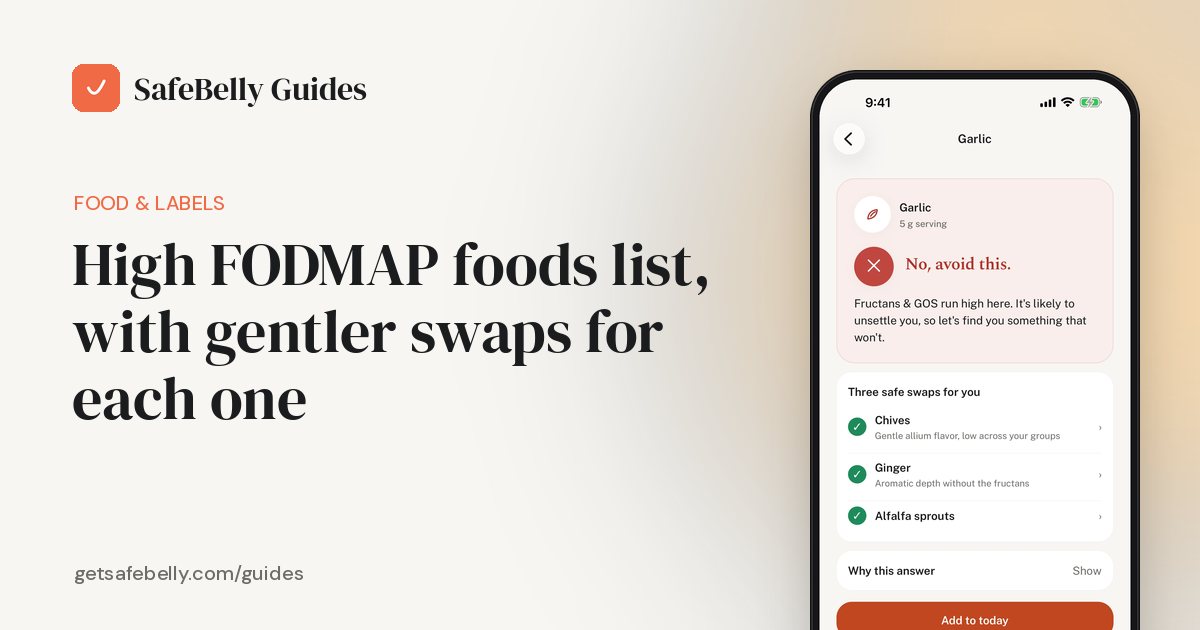
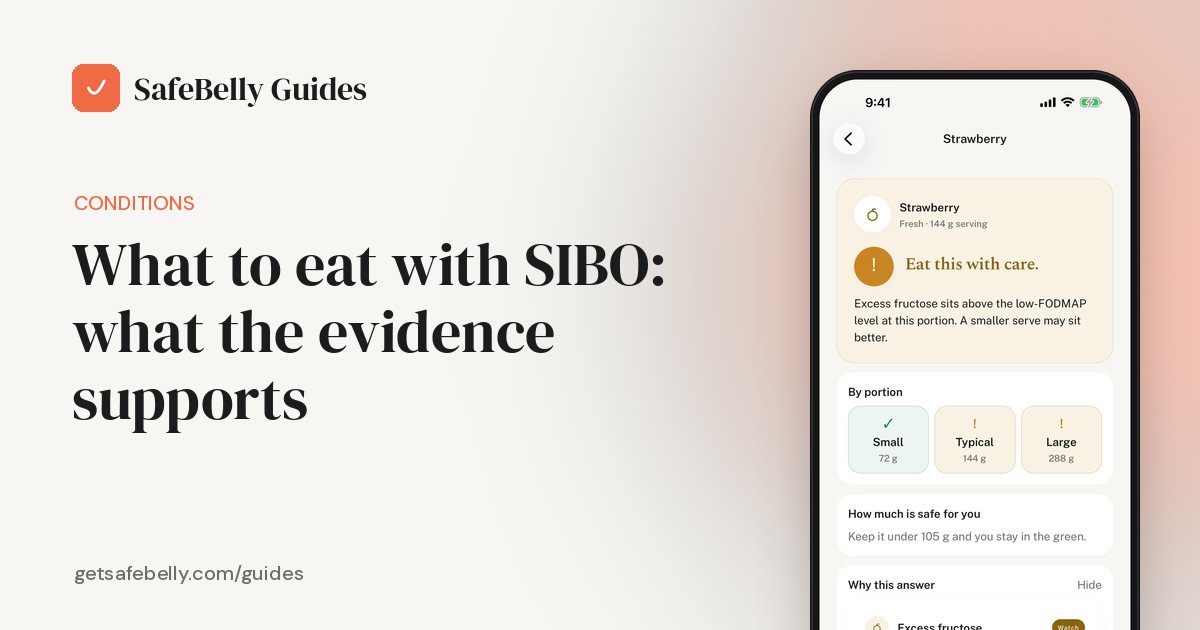
In SafeBelly, general bloating uses low-FODMAP scoring, so you can search a food, scan a barcode or photograph a plate and see whether it’s a "Yes", "Eat this with care" or "No", at small, typical and large portions. The diary and one-tap "How’s your belly?" check-in help you spot your own patterns over time, ready to share with your doctor or dietitian.
SafeBelly is in final testing on iPhone and Android. Leave your email and we'll send one note the day it's in the App Store and on Google Play.
Frequently asked questions
What foods cause the most bloating?+
Beans, lentils, cruciferous vegetables like broccoli and cabbage, some fruits such as apples and pears, dairy, whole grains, and products with sugar alcohols are the most commonly named. Everyone’s triggers differ, so a food and symptom diary is the best way to find yours.
Why do I feel bloated every time I eat?+
It could be what you eat, how fast you eat, fizzy drinks, constipation or a digestive condition such as IBS or lactose intolerance. If it happens often or doesn’t improve with changes to how you eat, see your doctor to find the cause.
Do fizzy drinks cause bloating?+
They can. The NIDDK lists carbonated drinks as a source of swallowed gas, and suggests limiting them if gas and bloating bother you.
Can a low-FODMAP diet help with bloating?+
For people with IBS, the NIDDK notes that trying a low-FODMAP diet for a few weeks may help. It’s best done with a registered dietitian and followed by reintroduction, so you only limit the foods that actually trigger symptoms.
When should I worry about bloating?+
See a doctor if bloating is persistent, keeps coming back, or comes with unexplained weight change, blood in your stool, a lump, fever, vomiting or changes in bowel habit. Sudden severe abdominal pain with a swollen stomach needs emergency care.
Is bloating a sign of food intolerance?+
It can be one sign, but bloating has many possible causes. A doctor can help rule out conditions such as celiac disease or lactose intolerance, which have their own tests.
Sources
- Definition & Facts for Gas in the Digestive Tract · National Institute of Diabetes and Digestive and Kidney Diseases (NIDDK)
- Symptoms & Causes of Gas in the Digestive Tract · National Institute of Diabetes and Digestive and Kidney Diseases (NIDDK)
- Eating, Diet, & Nutrition for Gas in the Digestive Tract · National Institute of Diabetes and Digestive and Kidney Diseases (NIDDK)
- Eating, Diet, & Nutrition for Lactose Intolerance · National Institute of Diabetes and Digestive and Kidney Diseases (NIDDK)
- Bloating · NHS
- Starting the low FODMAP diet · Monash University FODMAP
SafeBelly is a food information app, not a medical device, and no substitute for professional medical advice. Talk to your doctor or a registered dietitian before making changes to how you eat, and seek urgent care for severe or sudden symptoms.