Key points
- Functional dyspepsia is ongoing indigestion with no disease found to explain it; it is a disorder of gut-brain interaction.
- Smaller, more frequent meals are a sensible first step, especially if fullness after eating is your main symptom.
- Commonly reported triggers include carbonated drinks, caffeine, wheat products, fruit and fruit juice, and meals rich in fat, but triggers vary.
- Evidence for specific FD eating plans is limited, so short, guided trials beat long avoid lists.
- Trouble swallowing, vomiting, black stools or unexplained weight change need prompt medical review.
What is the best way to eat with functional dyspepsia?
There is no single proven functional dyspepsia diet. The most useful approach is usually smaller, more frequent meals, plus identifying your own trigger foods with a doctor or registered dietitian. Commonly reported triggers include carbonated drinks, caffeine, grain and wheat products, fruits and fruit juices, and greasy foods, according to the US National Institute of Diabetes and Digestive and Kidney Diseases (NIDDK), which also notes that triggers differ from person to person.
That last point matters most. Many people with functional dyspepsia (FD) eat comfortably most of the time once they know their own patterns, and avoiding foods that don’t actually bother you only makes eating harder.
Please don’t self-diagnose. Indigestion can come from many causes, including ulcers, infections and some medicines. Get checked by a doctor before you start changing what you eat.
What functional dyspepsia is
Indigestion (dyspepsia) is a group of upper-belly symptoms, not a disease. NIDDK describes functional dyspepsia as chronic indigestion where no health problem or digestive tract disease explains the symptoms. It reports that indigestion affects up to 20% of people in the United States each year, and that about 7 in 10 US patients who see a doctor about indigestion are diagnosed with FD.
Typical symptoms include:
- Pain, burning or discomfort in the upper abdomen
- Feeling full too soon during a meal
- Feeling uncomfortably full after eating a small amount
- Bloating, nausea or belching
The British Society of Gastroenterology (BSG) guideline describes two subtypes. Postprandial distress syndrome centers on early fullness and fullness after meals, mainly triggered by eating. Epigastric pain syndrome centers on pain or burning, often regardless of meals. Up to a third of people in specialist clinics have features of both.
FD is considered a disorder of gut-brain interaction. NIDDK lists possible contributors including certain foods and drinks, the stomach not relaxing and expanding normally as it fills, oversensitivity in the upper gut, anxiety and depression, and genetics. It is real, it is common, and it is not "all in your head".
Why smaller meals often help
If you feel full fast or uncomfortably full after eating, meal size is a natural place to start. A 2021 review in the journal Nutrients by Duncanson and colleagues suggests that when eating, meal size or meal frequency affect someone’s symptoms, a short-term trial of changing meal frequency or volume is a logical first step, while noting it is less of a priority for the pain-predominant subtype.
- Split your usual three meals into four to six smaller ones spread through the day.
- Eat slowly and pause partway through, so you notice fullness before it becomes discomfort.
- Give it a few weeks and note how you feel, rather than judging from a single day.
- Keep the overall variety the same. The aim is the same nourishment in gentler portions, not eating less.
If smaller meals mean you’re eating less overall, or your weight is changing unexpectedly, tell your doctor. Getting enough nourishment comes first.
Common food triggers in functional dyspepsia
The table below combines NIDDK’s list of commonly reported FD triggers with what the research has looked at. None of these are off-limits for everyone with FD. They are simply worth noticing.
| Possible trigger | What the sources say |
|---|---|
| Meals rich in fat, greasy or fried food | Named by NIDDK; a 2018 systematic review found dietary fat linked with FD in all three studies that measured it |
| Wheat and other grain products | Named by NIDDK; the same review linked wheat-containing foods to symptoms in six studies |
| Caffeinated foods and drinks | Named by NIDDK; linked with FD in four studies in the 2018 review; the NHS suggests cutting down on tea, coffee and cola |
| Carbonated drinks | Named by NIDDK |
| Fruits and fruit juices | Named by NIDDK |
| Rich or spicy foods, alcohol | The NHS suggests avoiding rich, spicy or greasy foods and cutting down on alcohol for indigestion |
Wheat is a clear example of why guided testing helps. Duncanson and colleagues point out that a reaction to wheat could relate to its protein (gluten) or to fermentable carbohydrates (FODMAPs) and fiber, and those need different responses. If wheat seems to bother you, talk with your doctor before cutting it out, and ask about celiac disease testing first, because going gluten-free beforehand can affect the results. Our celiac disease guide explains why.
Dietary fat is an important nutrient. The idea isn’t to avoid it, but to notice whether large, heavy meals feel harder than smaller ones spread through the day.
What the evidence can and can’t tell you
It helps to be honest about the evidence, because it protects you from overly strict plans that promise more than they deliver.
- The 2022 BSG guideline concludes there is insufficient evidence to recommend specific dietary therapies for FD, including a low-FODMAP approach. It rates the evidence as very low quality.
- Duncanson and colleagues state that there are no randomized controlled trials to guide dietary management in FD, and that most studies are cross-sectional.
- A low-FODMAP trial may still be considered for some people, but only short-term and with a dietitian. Duncanson and colleagues suggest a two-week, dietitian-led trial for uncomplicated postprandial distress, followed by reintroduction to pinpoint triggers, and advise against long-term restriction. Our low-FODMAP guide explains how the phases work.
- The BSG guideline notes that avoidant/restrictive food intake disorder (ARFID) may affect up to half of people with FD, which is a strong reason to approach complex, restrictive plans with care.
Non-food steps also have support. The BSG guideline recommends that everyone with FD be advised to take regular aerobic exercise, and recommends testing for H. pylori, a stomach infection, in people with dyspepsia who have no warning signs. NIDDK notes that a doctor may suggest peppermint or caraway oil for some people. Check with your doctor before trying any supplement.
Finding your own triggers, gently
NIDDK suggests tracking which foods and drinks make your symptoms worse, and says a doctor or registered dietitian can help you pinpoint triggers and may suggest a limited eating plan for a while, while making sure you still get the nutrients you need.
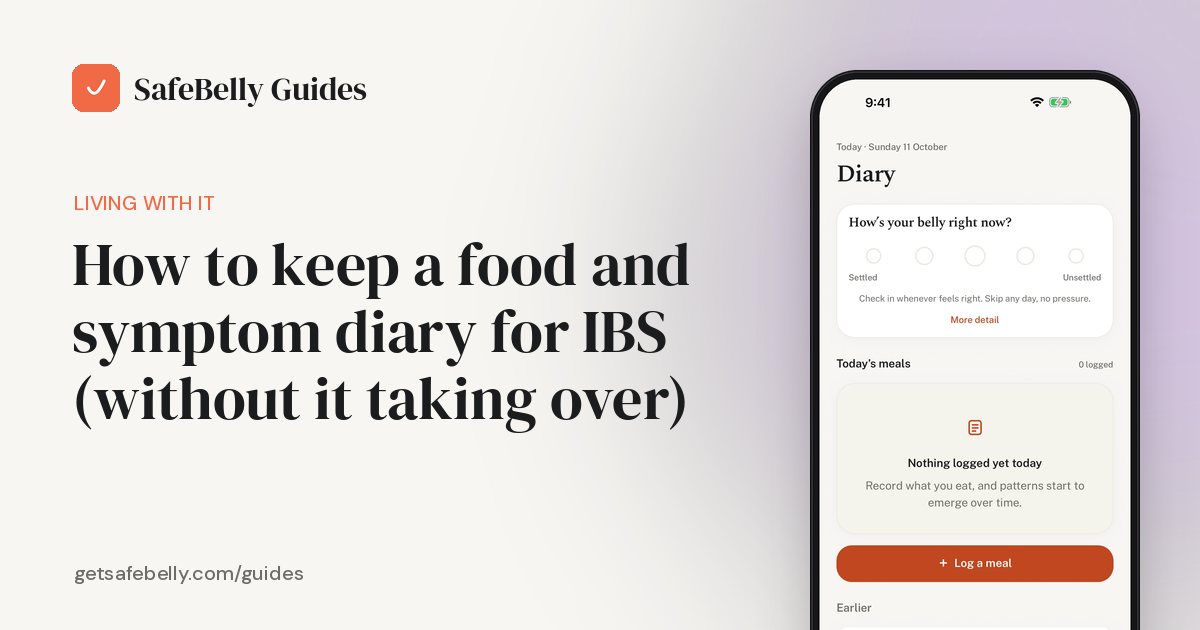
- Keep a food and symptom diary for two to three weeks: what you ate, roughly how much, when, and how you felt over the next few hours.
- Note your main symptom pattern. Is it fullness after meals, or burning pain that comes and goes? The answer helps your clinician choose next steps.
- With your dietitian, change one thing at a time, such as meal size first, then perhaps one suspected trigger.
- Bring back anything that made no clear difference.
- Review the plan every few weeks so restrictions don’t quietly pile up.
Stress and anxiety can affect gut symptoms, and worry about eating can feed into that. If meals are starting to feel stressful, our guide to food anxiety and digestive conditions offers some support.
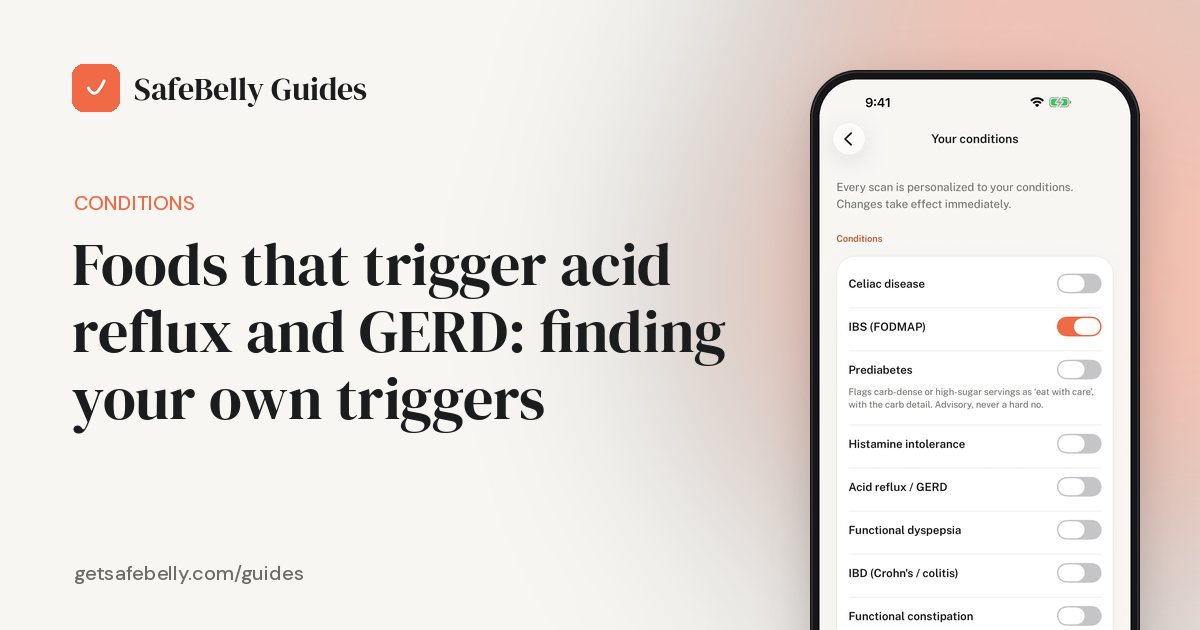
Heartburn can occur alongside indigestion but is a separate symptom. If burning in the chest is your main problem, see our guide to acid reflux and GERD food triggers.
When to see a doctor: red flags
See a doctor if indigestion keeps coming back or doesn’t improve. NIDDK advises seeing a doctor right away if you have:
- Chest, jaw, neck or arm pain
- Difficulty or pain when swallowing
- Frequent vomiting, or vomit with blood in it
- Severe, constant abdominal pain
- Long-lasting bloating or swelling of the abdomen
- Shortness of breath
- Unexplained weight change, or loss of appetite
- Yellowing of the eyes or skin
- Black, tarlike stools
The NHS also lists iron deficiency anemia and feeling a lump in your stomach as reasons to see a doctor, and advises not taking ibuprofen or aspirin for indigestion unless prescribed, as they can make it worse.
Chest pain with shortness of breath, or pain spreading to the jaw or arm, can be a heart problem. Call 911 or your local emergency number.
How SafeBelly helps
Know before you eat.
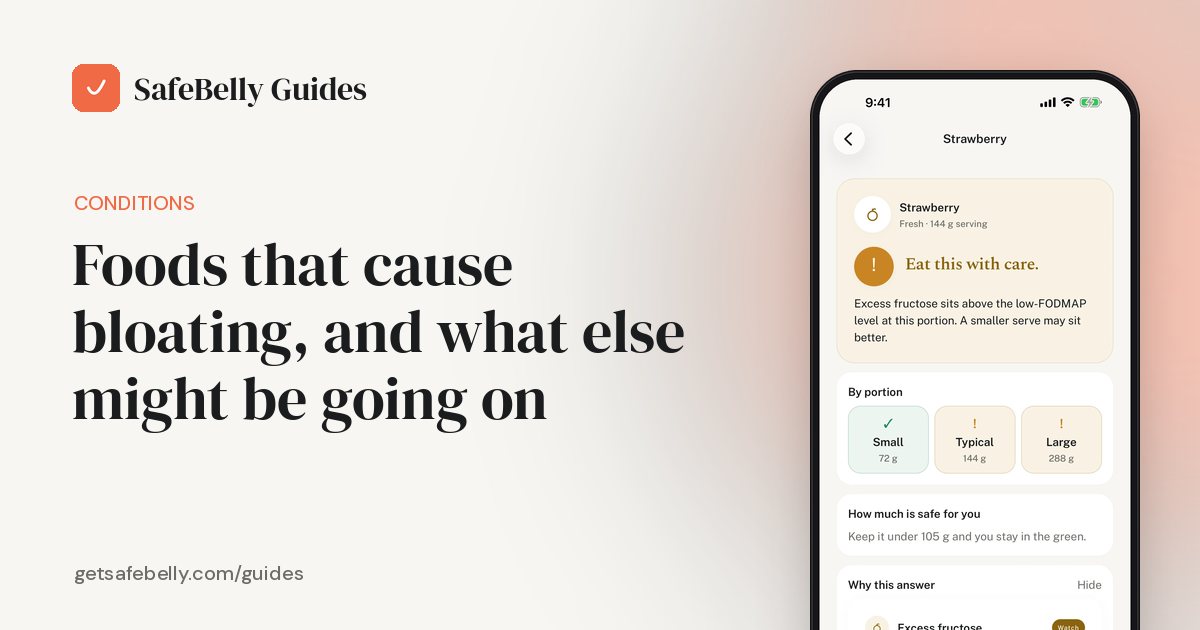
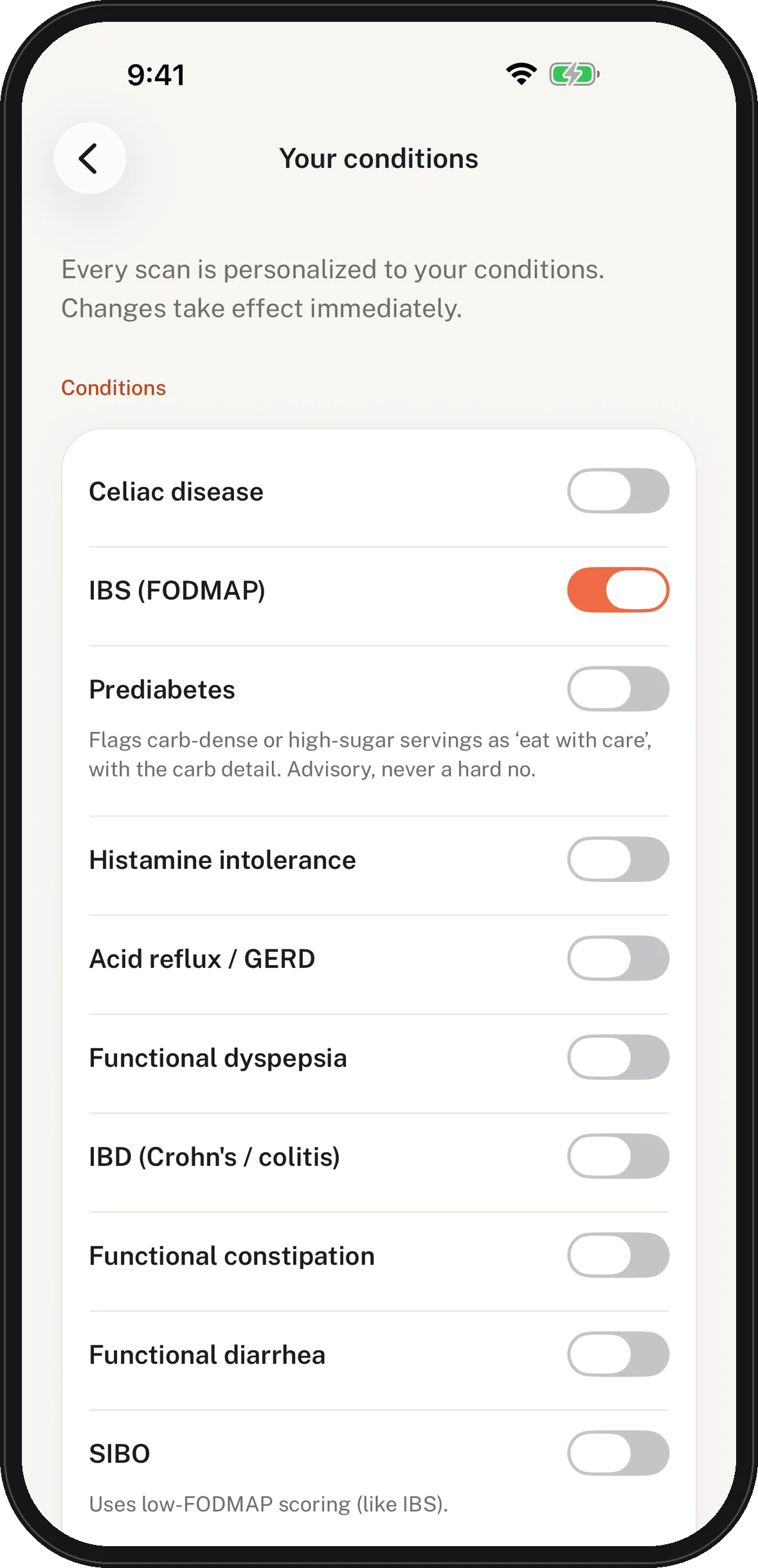
SafeBelly lets you add functional dyspepsia to your condition profile, so each food you search, scan or photograph is checked against it and comes back as “Yes,” “Eat this with care” or “No,” with the reason. The meal diary and “How’s your belly?” check-ins can make it easier to bring clear patterns to your next appointment.
SafeBelly is in final testing on iPhone and Android. Leave your email and we'll send one note the day it's in the App Store and on Google Play.
Frequently asked questions
What foods should I avoid with functional dyspepsia?+
There’s no fixed list for everyone. NIDDK names carbonated drinks, wheat and grain products, caffeine, fruits and fruit juices, and greasy foods as common triggers, but says they vary between people. A food and symptom diary, reviewed with a doctor or dietitian, is the best way to find yours.
Does a low-FODMAP diet help functional dyspepsia?+
The evidence is limited. The 2022 BSG guideline found insufficient evidence to recommend it for FD, though some experts suggest a short, dietitian-led trial for people whose symptoms are mainly fullness after meals. It shouldn’t be followed long-term.
Why do I feel full after eating only a little?+
Early fullness is a core symptom of functional dyspepsia, possibly linked to the stomach not relaxing normally as it fills. It can also have other causes, so it’s worth discussing with a doctor, especially if it’s new or your weight is changing without explanation.
Is functional dyspepsia the same as acid reflux?+
No. Functional dyspepsia centers on upper-belly pain, burning or fullness, while reflux involves stomach contents coming back up into the esophagus, often felt as heartburn. They can occur together, and a doctor can help tell them apart.
Can functional dyspepsia be cured with food?+
There’s no food-based cure for FD. Changes to meal size and identifying your own triggers can help many people feel more comfortable, and doctors may also suggest treatments such as medicines, H. pylori testing and regular exercise.
Is gluten a trigger for functional dyspepsia?+
Some studies link wheat-containing foods to FD symptoms, but it isn’t clear whether gluten or other parts of wheat are responsible. Ask your doctor about celiac disease testing before cutting out gluten, because removing it first can affect the test results.
Sources
- Definition & Facts for Indigestion · National Institute of Diabetes and Digestive and Kidney Diseases (NIDDK)
- Symptoms & Causes of Indigestion · National Institute of Diabetes and Digestive and Kidney Diseases (NIDDK)
- Eating, Diet, & Nutrition for Indigestion · National Institute of Diabetes and Digestive and Kidney Diseases (NIDDK)
- British Society of Gastroenterology guidelines on the management of functional dyspepsia (Black et al., Gut 2022) · British Society of Gastroenterology / PubMed Central
- Mechanisms of Food-Induced Symptom Induction and Dietary Management in Functional Dyspepsia (Duncanson et al., Nutrients 2021) · Nutrients / PubMed Central
- Indigestion · NHS
- Food and functional dyspepsia: a systematic review (Duncanson et al., J Hum Nutr Diet 2018) · Journal of Human Nutrition and Dietetics / PubMed
SafeBelly is a food information app, not a medical device, and no substitute for professional medical advice. Talk to your doctor or a registered dietitian before making changes to how you eat, and seek urgent care for severe or sudden symptoms.