Key points
- SIBO is diagnosed and treated by a clinician. Antibiotics are the standard treatment, alongside addressing any underlying cause.
- There is no single proven "SIBO diet". Eating changes are used to ease symptoms, not to clear the overgrowth.
- A short, dietitian-guided low-FODMAP approach may help some people with symptoms, but direct evidence in SIBO is limited.
- SIBO can affect how you absorb nutrients, so overly restrictive eating over the long term carries real risks.
- Aim for varied, nourishing meals built around what you tolerate, and review restrictions regularly.
What should you eat if you have SIBO?
There is no single proven SIBO diet. SIBO is treated medically, most often with antibiotics, and eating changes are used alongside treatment to ease symptoms such as bloating and gas. Some clinicians suggest a short-term approach that limits fermentable carbohydrates, such as a low-FODMAP diet, but a 2022 review found no studies testing a low-FODMAP approach in people with SIBO and described its benefit as largely hypothetical. The safest plan is one you build with your doctor and a registered dietitian.
This guide explains what SIBO is, how it’s diagnosed and treated, where a low-FODMAP approach may fit, and how to keep your eating varied and nourishing while you work through it. It doesn’t replace advice from your own care team, who know your history, your test results and any other conditions you live with. Use it to prepare questions and to understand the options they may suggest.
Please don’t start a restrictive eating plan on the basis of symptoms alone. Bloating and gas overlap with many conditions, and a clinician can help you find the actual cause.
What is SIBO?
Small intestinal bacterial overgrowth (SIBO) is defined in the American College of Gastroenterology guideline as excessive numbers of bacteria in the small bowel causing gastrointestinal symptoms. Cleveland Clinic describes it as an imbalance where too many bacteria, or the wrong kinds, live in the small intestine, which can cause symptoms and affect how you digest and absorb nutrients.
Symptoms listed by Cleveland Clinic include:
- Bloating, abdominal distension and gas
- Abdominal pain, nausea and indigestion
- Diarrhea or constipation
- Tiredness
- Unexplained weight change
Cleveland Clinic also describes common contributing factors, including low stomach acid (for example from long-term acid-suppressing medication), slowed movement through the small intestine, structural changes from surgery or other conditions, and some medications. Conditions such as diabetes, celiac disease, inflammatory bowel disease and IBS are associated with a higher risk.
How SIBO is diagnosed
Diagnosis belongs with a clinician, usually a gastroenterologist. Cleveland Clinic explains that a hydrogen and/or methane breath test is the usual first step. Your provider may also order blood tests for vitamin and protein levels, a stool test, or imaging to look for structural causes.
SIBO is not always clear-cut. An American Gastroenterological Association (AGA) expert review notes that the definition of SIBO lacks precision and that whether it contributes to IBS-like symptoms is still debated. That is one more reason to work with a specialist who can interpret your results in context, rather than relying on symptoms or a single test result alone.
The ACG guideline itself uses a formal grading process, but notes that where the evidence wasn’t strong enough for a formal recommendation, key concepts were developed by expert consensus. In other words, a lot about SIBO is still being worked out, and sound care involves clinical judgment as well as test results.
Because symptoms overlap, your doctor may also check for other conditions. If celiac disease is a possibility, ask to be tested while you are still eating gluten, since going gluten-free first can affect the results.
Treatment is medical; food plays a supporting role
According to Cleveland Clinic, antibiotics are the standard treatment for the overgrowth itself. The AGA expert review recommends that management focus on identifying and correcting underlying causes where possible, correcting nutritional deficiencies, and antibiotics.
- The overgrowth: treated with medication prescribed by your clinician.
- The underlying cause: for example, motility, structural issues or medications, managed by your care team.
- Nutrition: any deficiencies corrected, sometimes with supplements your doctor recommends.
- Symptoms: where eating changes may help, ideally with a registered dietitian.
Cleveland Clinic notes that symptoms often return months later, especially if an underlying cause is still present. If that happens, go back to your clinician rather than tightening your eating on your own.
You may also hear about the elemental diet, a liquid formula of pre-digested nutrients. Cleveland Clinic describes it as a more severe option that providers prescribe only for short-term therapeutic use. It isn’t something to try without medical supervision.
Where a low-FODMAP approach fits
FODMAPs are fermentable carbohydrates found in foods such as wheat, onion, garlic, beans and some fruits. Cleveland Clinic notes that some providers recommend a short-term elimination approach that limits these kinds of carbohydrates, and lists low-FODMAP as one of several options people use for SIBO.
The honest picture is that the evidence is thin. The 2022 review in *Nutrients* found no studies of low-FODMAP eating in SIBO patients specifically; its evidence came from IBS research. The authors also raised a concern that long-term FODMAP restriction may reduce beneficial gut bacteria such as Bifidobacterium.
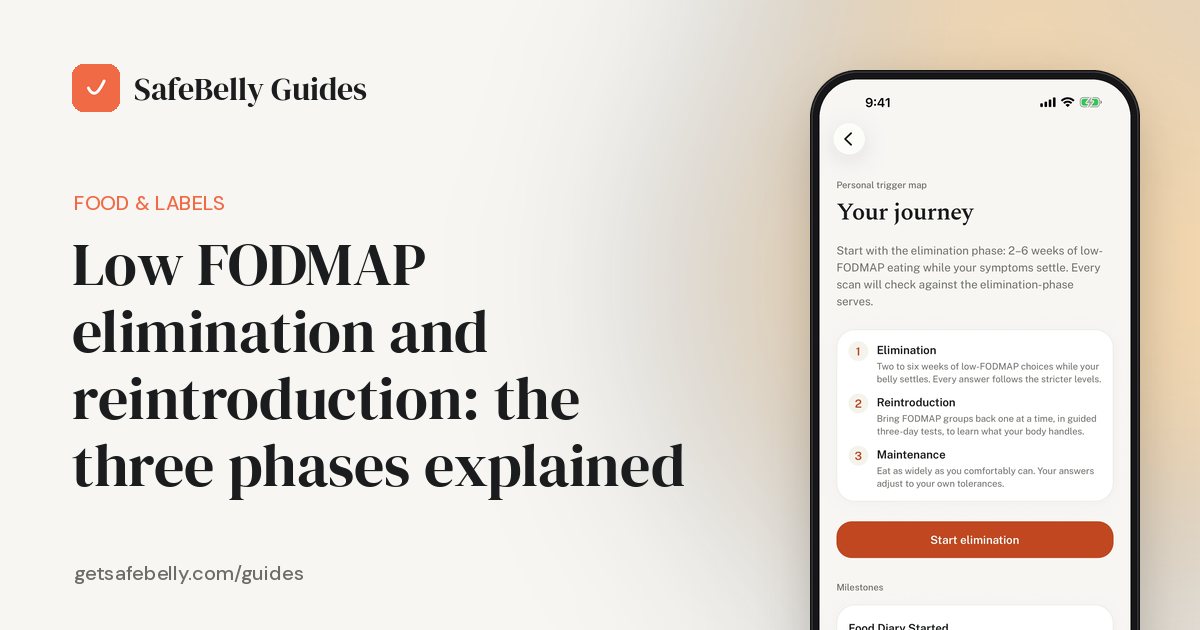
If you and your clinician decide to try it, Monash University’s three-step structure keeps it short and personalized:
- Elimination (2 to 6 weeks): swap high-FODMAP foods for lower-FODMAP alternatives, according to Monash’s guidance.
- Challenge: test one FODMAP group at a time, noting how you feel.
- Personalization: bring back everything you tolerate, and limit only what clearly triggers symptoms.
Monash recommends following a FODMAP plan with a dietitian who has specialty skills in managing IBS. Our guide to low-FODMAP phases explains each step in more detail, and high-FODMAP foods and swaps has practical alternatives.
Gentle, everyday eating with SIBO
While you are being assessed or treated, these practical habits may help you feel more comfortable without narrowing your meals unnecessarily:
- Build meals around what you tolerate. Plain proteins like fish, eggs, chicken or tofu, with rice, potatoes and well-tolerated vegetables, are simple starting points.
- Eat slowly and keep portions moderate. The NIDDK suggests eating slowly and having smaller, more frequent meals to help with gas.
- Go easy on fizzy drinks and sugar-free gum. Carbonation adds swallowed air, and sweeteners ending in "-ol" can cause gas.
- Keep flavor without garlic and onion if they bother you, using chives, spring onion greens or garlic-infused oil. See hidden garlic and onion.
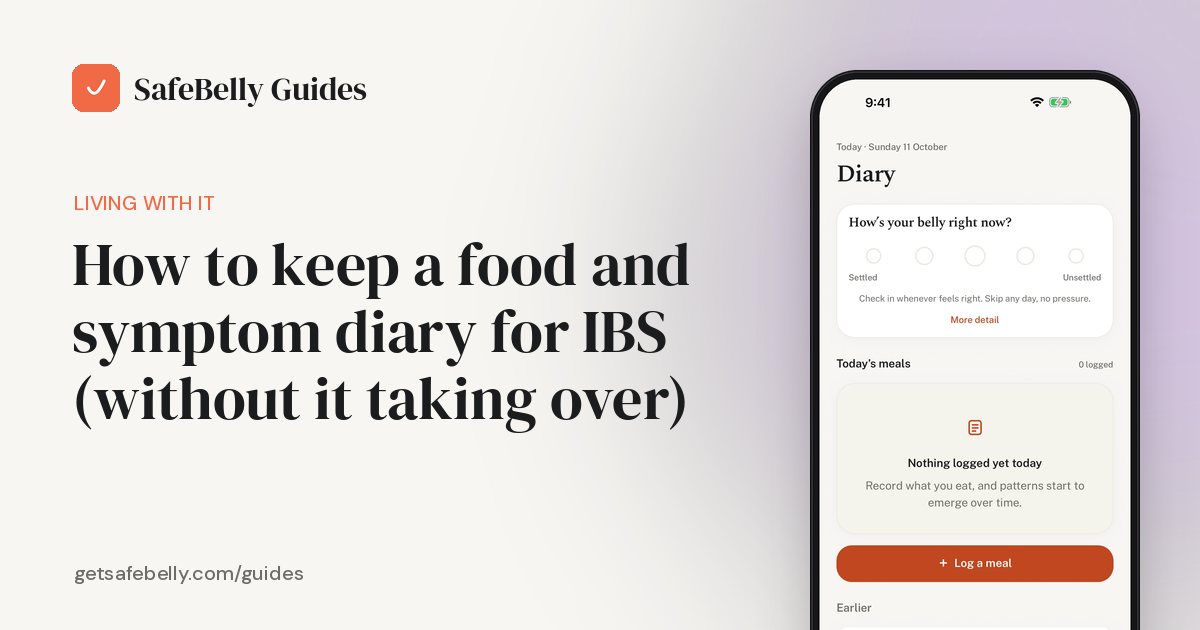
- Track patterns, not single meals. A food and symptom diary gives you and your dietitian something concrete to work from.
Variety is worth protecting. Rotating through different proteins, grains, fruits and vegetables you tolerate gives you a wider range of nutrients, which matters when SIBO can already affect absorption. If your list of tolerated foods is getting shorter rather than longer, that’s a reason to check in with your dietitian, not to cut back further on your own.
Portion size matters with FODMAPs. A food that bothers you in a large serving may be fine in a smaller one. Our guide to FODMAP portion sizes explains why.
Questions to ask your care team
Appointments can feel short. Writing your questions down ahead of time helps you leave with a clear plan. You might ask:
- "Which test are you using to check for SIBO, and how will you interpret the result?"
- "Is there an underlying cause we should look at, such as medications, motility or previous surgery?"
- "Do I need blood tests for vitamin B12, iron, folate or other nutrients?"
- "Should I change how I eat during treatment, or keep eating as usual?"
- "If you suggest a low-FODMAP approach, how long should the elimination phase last, and who will guide reintroduction?"
- "What should I do if symptoms come back?"
The AGA review notes that lab findings in SIBO can include elevated folate and, less often, low vitamin B12 or other nutritional deficiencies, which is why checking your nutrition is part of your care. Bringing a food and symptom diary to appointments gives your clinician real information to work with.
Why long-term restriction isn’t the goal
It’s understandable to want to cut out anything that might cause symptoms. With SIBO, that instinct can backfire. Cleveland Clinic explains that SIBO itself can lead to poor absorption of nutrients, malnutrition and vitamin deficiencies, including vitamin B12. A very narrow eating pattern on top of that makes it harder to get what your body needs.
- Keep elimination phases short and time-limited, with a plan for reintroduction.
- Review your food list with your dietitian regularly, and add foods back when you can.
- Ask your doctor whether you need any blood tests for vitamin or mineral levels.
- Notice if eating has started to feel frightening or very limited. Our guide to food anxiety and digestive conditions may help, and it’s worth raising with your care team.
See your doctor promptly if your weight is changing without explanation, feel very tired, notice blood in your stool, have ongoing vomiting or fever, or if your symptoms change or get worse.
How SafeBelly helps
Know before you eat.
In SafeBelly, SIBO uses low-FODMAP scoring, so you can search a food, scan a barcode or photograph a plate and see a "Yes", "Eat this with care" or "No" at small, typical and large portions. The Guided Journey walks through elimination, reintroduction and maintenance, which helps keep restriction time-limited, and you can export your diary as a CSV to share with your care team.
SafeBelly is in final testing on iPhone and Android. Leave your email and we'll send one note the day it's in the App Store and on Google Play.
Frequently asked questions
Is there a specific SIBO diet?+
No single eating plan has been proven to treat SIBO. Treatment is medical, usually antibiotics, and eating changes such as a short low-FODMAP approach are sometimes used to ease symptoms. Work with your doctor and a registered dietitian on what suits you.
Can changing what I eat clear SIBO?+
There’s no strong evidence that eating changes alone clear SIBO. Cleveland Clinic lists antibiotics as the standard treatment, and the AGA recommends also addressing any underlying cause and nutritional deficiencies.
Does a low-FODMAP diet help with SIBO?+
It may help some people with symptoms, but a 2022 review found no studies testing it in SIBO specifically. If you try it, keep it short, follow it with reintroduction, and do it with a dietitian.
What is the elemental diet for SIBO?+
It’s a liquid formula of pre-digested nutrients that leaves bacteria little to feed on. Cleveland Clinic describes it as a more severe option prescribed only for short-term use, so it should only be done under medical supervision.
How is SIBO diagnosed?+
Usually with a hydrogen and/or methane breath test ordered by a clinician, sometimes alongside blood tests, stool tests or imaging. Because the definition of SIBO is still debated, results are best interpreted by a gastroenterologist.
Can SIBO come back?+
Yes. Cleveland Clinic notes that symptoms often return months following treatment, especially if an underlying cause is still present. Talk to your clinician if symptoms return.
Sources
- Small Intestinal Bacterial Overgrowth (SIBO) · Cleveland Clinic
- ACG Clinical Guideline: Small Intestinal Bacterial Overgrowth (Pimentel et al., Am J Gastroenterol, 2020) · American College of Gastroenterology via PubMed
- AGA Clinical Practice Update on Small Intestinal Bacterial Overgrowth: Expert Review (Quigley et al., Gastroenterology, 2020) · American Gastroenterological Association via PubMed
- Efficacy of an Irritable Bowel Syndrome Diet in the Treatment of Small Intestinal Bacterial Overgrowth: A Narrative Review (Nutrients, 2022) · PubMed Central
- Starting the low FODMAP diet · Monash University FODMAP
- Eating, Diet, & Nutrition for Gas in the Digestive Tract · National Institute of Diabetes and Digestive and Kidney Diseases (NIDDK)
SafeBelly is a food information app, not a medical device, and no substitute for professional medical advice. Talk to your doctor or a registered dietitian before making changes to how you eat, and seek urgent care for severe or sudden symptoms.