Key points
- Ask the person what they need; they know their condition, triggers and comfort level best.
- For allergies and celiac disease, cross-contact matters: cooking does not remove an allergen, and soap and water beat sanitizer gel.
- Keep every package so the person can read the label themselves; ingredients change.
- For IBS, the issue is usually specific ingredients and portions, and the person can guide you.
- For children with allergies, work with the school on a written plan and know the emergency steps.
How do you cook for someone with food allergies or IBS?
To cook for someone with food allergies or IBS, start by asking exactly what they need to avoid and how strict they need to be, keep the original packaging so they can check labels, and prevent cross-contact by preparing their food first with freshly washed tools. For a food allergy or celiac disease, tiny traces can matter. For IBS, the issue is usually particular ingredients and amounts, and the person can tell you what works for them.
Whether you are a partner learning a new way of cooking, a parent of a child with a new diagnosis, or a host planning a dinner, the goal is the same: a meal that is safe for them and lets them relax and enjoy being included. This guide covers the practical side. It is general information, not medical advice, and it never replaces the person's own judgment or their doctor's guidance.
Allergy, celiac disease or IBS: why the details differ
These conditions can look similar from the outside ("they can't eat X"), but the stakes and the kitchen rules are different. Always follow the person's lead.
| Condition | What matters most in the kitchen | Learn more |
|---|---|---|
| Food allergy | Strict avoidance of the allergen, including traces through cross-contact. Reactions can be severe. | Food allergies and the major allergens |
| Celiac disease | Strict avoidance of gluten, including crumbs and shared equipment. | Hidden gluten sources |
| IBS | Specific trigger ingredients (often garlic, onion or other FODMAPs) and portion size; traces are usually less of a concern. | IBS and low-FODMAP eating |
In the US, the FDA recognizes nine major food allergens: milk, eggs, fish, crustacean shellfish, tree nuts, peanuts, wheat, soybeans and sesame, which was added by the FASTER Act from January 1, 2023 (FDA). The CDC notes there is no cure for food allergies, and strict avoidance is the only way to prevent a reaction (CDC).
Never assume a food is safe because it looks plain or because it was fine last time. Ingredients and factories change. Keep packaging so the person can read the label for themselves.
Cooking for someone with IBS
Many people with IBS follow a low-FODMAP approach or know their own triggers. Garlic and onion are high in fructans, one of the FODMAP groups, and they hide in stocks, sauces, spice blends and marinades. Our guide to hidden garlic and onion lists where they tend to turn up.
- Ask about their specific triggers. Two people with IBS can tolerate very different foods.
- Flavor with infused oil. Monash University explains that the fructans in garlic and onion dissolve in water but not in oil, so infused oils carry the flavor without those FODMAPs (Monash FODMAP). Store-bought infused oils certified by Monash have been lab tested.
- Keep sauces on the side. It lets everyone add what suits them.
- Mind the portion. For FODMAPs, dose matters; a small amount of an ingredient may sit well when a big helping does not. See FODMAP portion sizes.
- Skip the pressure. Never urge someone to "just try a bit." They know their body.
Asking about food needs without making it awkward
Many people with food restrictions feel like a burden at shared meals. A matter-of-fact question, asked early and privately, takes a lot of that weight off. Some phrases that work:
- "I'd love to cook something you can enjoy. What do you need me to avoid, and how careful do I need to be?"
- "Is a trace from a shared pan a problem, or is it more about the ingredient itself?"
- "Are there brands you trust? I'll keep all the packaging so you can check."
- "Would you rather bring a dish, or tell me what to buy? Either is completely fine."
- "Any foods you love that I could build the meal around?"
Then believe the answer. Don't ask them to justify it, and don't comment on what's on their plate at the table. If they choose to bring their own food or eat only part of the meal, that is a reasonable way of keeping themselves well, not a reflection on your cooking.
If you're not sure about an ingredient, say so. "I don't know" is far safer than a guess, and the person can decide for themselves.
Kids, school and other caregivers
The CDC estimates that about 1 in 13 children (8%), roughly two students per classroom, have food allergies (CDC). The CDC and the U.S. Department of Education developed Voluntary Guidelines for Managing Food Allergies in Schools and Early Care and Education Programs, which cover daily management for each child, emergency preparedness, staff training, education for children and families, and a safe environment.
- Meet with the school early. Ask how they put a food allergy plan in place for an individual child, who is trained, and where medication is kept.
- Complete an emergency care plan with your child's doctor. The CDC points families to plans such as FARE's Food Allergy & Anaphylaxis Emergency Care Plan.
- Teach your child not to share food, drinks or utensils, as FARE recommends, in words that suit their age.
- Brief every caregiver. Grandparents, sitters and friends' parents need the same information: what to avoid, how to read labels, and what to do in an emergency.
- Send safe snacks for parties and class treats so your child is included.
For a child with IBS or celiac disease, a short note for teachers about bathroom access and safe snacks can make school days much easier. Your child's doctor or dietitian can help you decide what to share.
Planning inclusive meals and knowing what to do in an emergency
The kindest meal is one where the person with restrictions eats the same thing as everyone else, or something just as appealing, without fuss. Some ideas:
- Build-your-own meals such as taco bowls, grain bowls or baked potatoes, with toppings in separate bowls and their own serving spoons.
- Serve the safe portion first, ahead of anyone else, so spoons from other dishes never touch it.
- Label dishes at a buffet or potluck with their main ingredients.
- Make the safe dish the main event, not a separate plate on the side.
If someone has a severe allergic reaction: FARE's guidance is to give epinephrine immediately, then call 911 and tell the dispatcher the person is having a severe allergic reaction and may need epinephrine when responders arrive. Lay them flat with legs raised unless they are struggling to breathe or vomiting, in which case let them sit up or lie on their side. They should go to the emergency room even if symptoms ease, and stay for at least 4 hours, since symptoms can return (FARE). Always follow the person's own physician-signed plan and ask where they keep their medication.
For more on helping someone order safely away from home, see talking to restaurant staff about allergies.
How SafeBelly helps
Know before you eat.
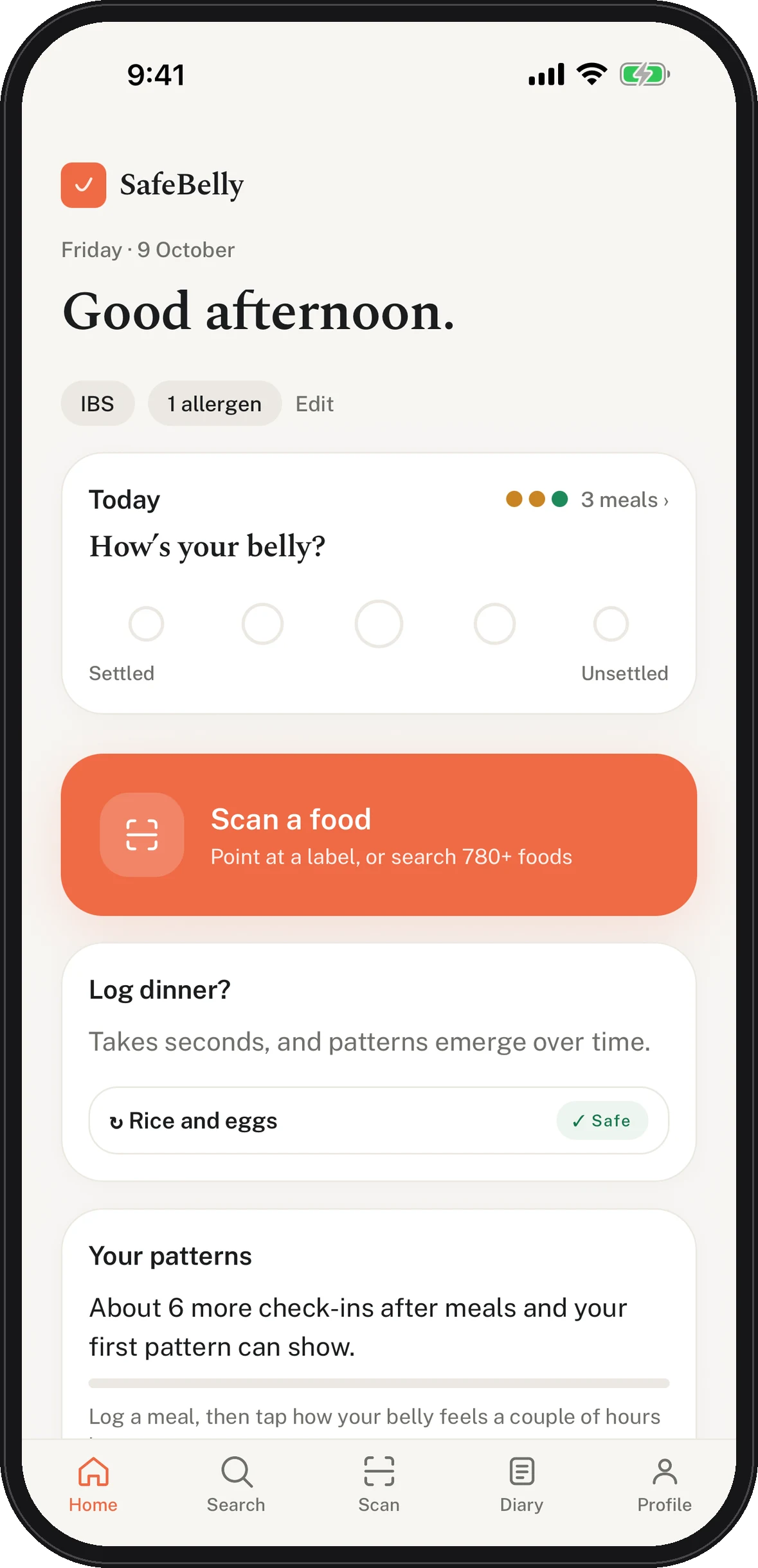
If you're cooking for someone else, SafeBelly can help you check an ingredient or a packaged food against the conditions and 14 major allergens they've chosen, with a "Yes," "Eat this with care" or "No" and the reason. A "No" comes with three alternatives. It never replaces reading the label every time or asking the person directly, and it is a food information app, not a medical device.
SafeBelly is in final testing on iPhone and Android. Leave your email and we'll send one note the day it's in the App Store and on Google Play.
Frequently asked questions
How do you avoid cross-contact when cooking for someone with a food allergy?+
Use tools, boards and pans thoroughly washed with soap and water, cook the safe meal first, and keep it covered and apart. Wash hands with soap and water, since sanitizer gel does not remove allergens. If an allergen gets into the dish, start over; picking it out does not make it safe.
Does cooking destroy food allergens?+
No. FARE explains that cooking does not remove an allergen from food. That is why cross-contact matters even when food is cooked thoroughly.
How do I ask a guest about their food allergies without being awkward?+
Ask early and privately, and keep it practical: what do they need to avoid, and how careful do you need to be? Offer to keep packaging for them to check, and accept their answer without asking them to explain. They will usually be grateful you asked.
Can someone with celiac disease share a kitchen with gluten?+
Many people do, with care. The Gluten Intolerance Group suggests a gluten-free area on a top shelf, separate or carefully washed tools, toaster bags, and separate labeled spreads to avoid double-dipping. Ask the person what setup they are comfortable with.
What can I cook for someone with IBS?+
Ask about their own triggers first, since they vary a lot. Common helpful steps include leaving out garlic and onion, flavoring with infused oils instead, and serving sauces on the side. Build-your-own meals let everyone choose what suits them.
What should my child's school have for a food allergy?+
The CDC recommends schools have food allergy plans covering prevention and emergency response, including anaphylaxis. Work with your child's doctor on an emergency care plan, share it with the school, and ask who is trained to respond and where medication is kept.
Sources
- How to Avoid Cross-Contact · Food Allergy Research & Education (FARE)
- Recognizing and Responding to a Reaction · Food Allergy Research & Education (FARE)
- Food Allergies · U.S. Food and Drug Administration (FDA)
- Food Allergies in Schools · Centers for Disease Control and Prevention (CDC)
- 7 Tips for Avoiding Gluten Cross-Contact at Home · Gluten Intolerance Group (GIG)
- Cooking with onion and garlic · Monash University FODMAP
SafeBelly is a food information app, not a medical device, and no substitute for professional medical advice. Talk to your doctor or a registered dietitian before making changes to how you eat, and seek urgent care for severe or sudden symptoms.
Keep reading
Conditions
Major food allergens: the US top 9, the EU and UK 14, and how to stay prepared
Food & labels
Hidden sources of gluten: where it hides and how to check

Food & labels
Hidden garlic and onion: foods that contain them and how to spot them
Food & labels
How to read food labels for allergens: a step-by-step guide