Key points
- Monash rates firm bananas as low FODMAP and ripe bananas as high in fructans, so ripeness changes the answer.
- A small serving of ripe banana may still suit many people. Monash’s advice is that your eating only needs to be as strict as your symptoms require.
- Cold storage and ripening can raise fructans, which may explain why some people notice ripe bananas more.
- Banana bread, smoothies and banana-flavored products bring other ingredients that matter as much as the banana.
- Bananas are among the fruits most linked with latex-fruit syndrome. If you have reacted to bananas or latex, see an allergist.
Are bananas low FODMAP?
Firm bananas are low FODMAP; ripe bananas are high in fructans unless the serving is small. Monash University re-tested bananas and now rates them by ripeness: firm bananas as low in oligo-fructans, and ripe bananas as high. A small serving of ripe banana, around a third of one, may still suit many people.
Fructans are one of the FODMAP groups, the same group found in wheat, garlic and onion. If fructans are among your triggers, the difference between a just-yellow banana and a soft, speckled one can be noticeable. If they aren’t, you may not need to think about it at all.
This guide explains why ripeness matters, how to choose and use bananas during the elimination phase, what to know about banana chips, banana bread and smoothies, and how bananas fit with other conditions. New to FODMAPs? Start with our low-FODMAP guide for IBS.
Bananas by condition
| Condition | What to know | Typical answer in SafeBelly |
|---|---|---|
| IBS / low FODMAP (firm banana) | Monash rates firm bananas low in fructans at a typical serving. | Depends on portion |
| IBS / low FODMAP (ripe banana) | Monash rates ripe bananas high in fructans. A small serving may still suit many people. | Depends on portion |
| Histamine intolerance | Lab testing found no detectable histamine, but bananas are high in putrescine, another amine, and are often left off low-histamine lists. Evidence is mixed. | Eat with care |
| Celiac disease | Plain banana contains no gluten grains. Banana bread, muffins and many banana snacks contain wheat. | Yes (plain banana) |
| Lactose intolerance | Bananas contain no lactose. Smoothies and banana desserts often add milk or yogurt. | Yes (plain banana) |
| Banana allergy or latex-fruit syndrome | Banana is one of the fruits most linked with latex allergy. Reactions can be serious. | No |
If you have a food allergy or latex allergy, no guide or app can tell you a food is safe for you. Follow your allergist’s advice, read labels every time and carry any medication you have been prescribed.
Why ripeness changes the FODMAP content
Monash re-tested bananas in 2017, partly because people reported discomfort with ripe ones. In its update on bananas, it gave a few possible reasons fructans may be higher than earlier testing suggested:
- Plants make more fructans under stress. Monash notes that bananas’ fructan content increases when they are stored and ripened in cold storage, which is common for supermarket fruit.
- Variety matters. Farmers may favor higher-fructan varieties because they resist pests and disease better.
- Growing and storage conditions vary. In a separate article on food processing and FODMAPs, Monash lists ripeness, plant variety, climate, soil, storage time and storage temperature as factors that can all change a plant food’s FODMAP content.
That last point is a useful reminder: lab ratings are a guide, and two bananas from different shops may not be identical. Your own response, tracked over time, is the most useful information you have.
Avocado works the other way round. Monash found unripe avocado had more of its polyol than ripe avocado. See is avocado low FODMAP.
Choosing and using bananas during elimination
Monash’s own recipes reflect the ratings. Its oat and banana pancakes use firm bananas, and its low-FODMAP shopping list lists "banana (firm)" rather than bananas in general. A few practical ideas:
- Buy them less ripe. A firm banana with little or no brown speckling is the closer match to Monash’s low-FODMAP rating.
- Use ripe ones in small amounts. A few slices on cereal or in a smoothie, rather than a whole soft banana.
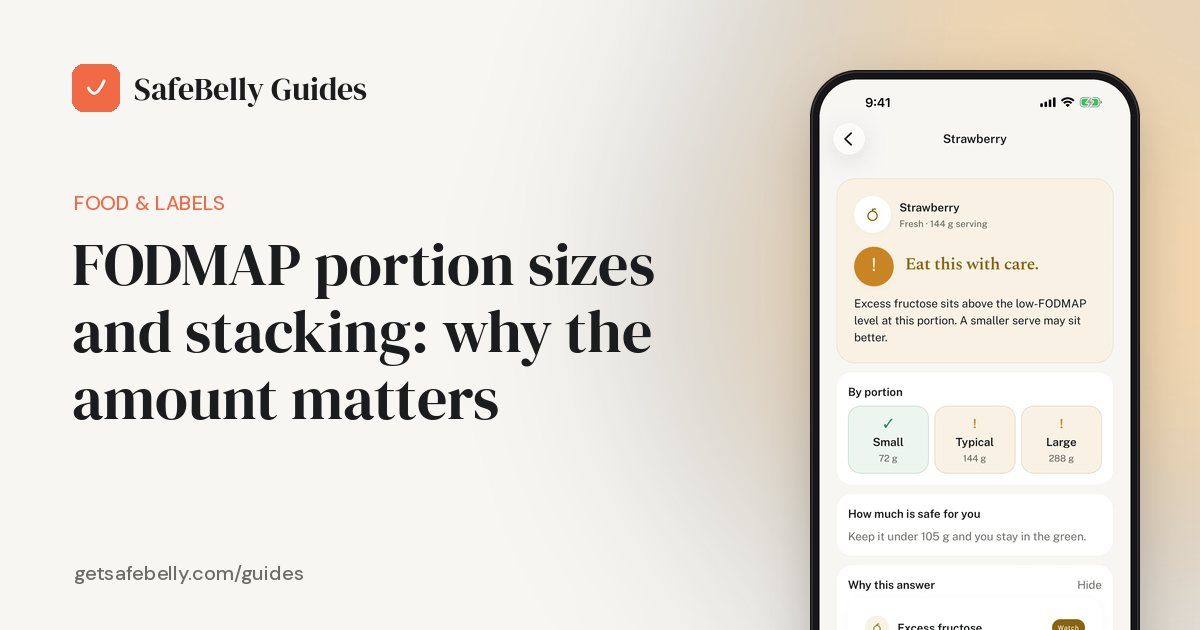
- Spread fruit across the day. Several fruit servings at once can add up. Our guide to FODMAP portion sizes explains how.
- Watch the rest of the bowl. Oats, yogurt, honey and dried fruit all have their own FODMAP content. See are oats gluten-free for the oat side of breakfast.
- Check the Monash app for current tested servings at each ripeness.
Monash’s message is reassuring: if you tolerate ripe bananas well, there is no need to cut them out. As its update puts it, your eating only needs to be as strict as your symptoms require.
Banana chips, banana bread, smoothies and other forms
Bananas show up in many forms, and the other ingredients often matter more than the fruit:
| Form | What to check |
|---|---|
| Firm fresh banana | Usually the gentlest option for fructans. Keep an eye on portion. |
| Ripe or overripe banana | Higher in fructans. Smaller servings may suit. |
| Banana chips | Monash’s shopping list includes banana chips, with serving sizes in its app. Check for added honey or other sweeteners. |
| Banana bread and muffins | Usually made with wheat flour and very ripe bananas, so both fructans and gluten can be an issue. |
| Smoothies | Often ripe banana plus milk, yogurt, honey or other fruit. Ask what goes in, or make your own. |
| Frozen banana "ice cream" | Usually made from very ripe bananas. Treat it like ripe banana. |
| Banana-flavored products | May contain little or no banana. Read the label for your own triggers. |
If you need to avoid gluten, look for banana bread labeled gluten-free and read the ingredients for your other triggers. Our guide to hidden sources of gluten has more on baked goods.
Bananas, histamine and latex allergy
Histamine intolerance. Bananas often appear on lists of foods to limit. A 2018 review in the journal *Foods* on biogenic amines in plant foods found no detectable histamine in bananas, but high levels of putrescine, another amine. The authors suggest that foods like this may be left off low-histamine lists because of other amines, which may compete with histamine for the same breakdown enzyme. A 2025 review notes that exact food lists aren’t possible with current evidence. Tolerance is personal; our histamine intolerance guide covers how to test yours with professional support.
Latex-fruit syndrome. Some people with a latex allergy also react to certain fruits. A 2024 review in the *Journal of Clinical Medicine* found banana, avocado, kiwifruit and papaya were the fruits most often involved, with reactions ranging from mouth itching to anaphylaxis. Banana isn’t one of the US top 9 allergens, so it won’t be highlighted on labels in the same way. If you have reacted to bananas or latex, talk to an allergist. Call emergency services for any severe reaction. Our guide to food allergies and the major allergens has more.
Swaps and when to talk to a clinician
If bananas, or ripe bananas, are one of your triggers, other fruits can fill the same spot. Check each one against your conditions and the Monash app for servings. For more ideas, see high-FODMAP foods and swaps.
- A firmer banana, or a smaller piece of a ripe one.
- Another fruit you already tolerate on cereal or in smoothies, checked in the Monash app for a low-FODMAP serving. (If you have latex-fruit syndrome, remember kiwifruit and papaya are also commonly involved.)
- A spoon of peanut butter for creaminess in a smoothie, unless you have a peanut allergy.
Talk to your doctor or a registered dietitian if you are thinking of cutting out fruit, if you are unsure whether fructans or something else are behind your symptoms, or if your symptoms change. A dietitian can guide you through the low-FODMAP phases, including testing fructans in a structured way, and a simple food and symptom diary helps you both see patterns. Unexplained weight change, bleeding or fever are reasons to see your doctor promptly.
How SafeBelly helps
Know before you eat.
Search "banana" or scan a banana snack in SafeBelly and it checks it against the conditions you pick and the 14 major allergens. For FODMAP-based conditions it shows the answer at small, typical and large portions, so you can see where a banana changes from "Yes" to "Eat this with care". It’s a food information app, not a medical device, and it works alongside your dietitian’s advice.
SafeBelly is in final testing on iPhone and Android. Leave your email and we'll send one note the day it's in the App Store and on Google Play.
Frequently asked questions
Are bananas low FODMAP?+
Firm bananas are. Monash rates firm bananas as low in fructans and ripe bananas as high, though a small serving of ripe banana may still suit many people. Check the Monash FODMAP app for current servings.
Why are ripe bananas higher in FODMAPs?+
Monash found ripe bananas higher in fructans. It notes that fructans can increase when bananas are stored and ripened in cold storage, and that variety, climate and storage all affect FODMAP content.
Are green bananas better for IBS?+
Firm bananas are the ones Monash rates as low FODMAP, and its recipes use firm bananas. Whether a less ripe banana sits better for you is personal, so test it and track how you feel.
Is banana bread low FODMAP?+
Usually not. It is typically made with very ripe bananas and wheat flour, both sources of fructans. Gluten-free and low-FODMAP versions exist, but read the label for your own triggers.
Are banana chips low FODMAP?+
Monash lists banana chips on its low-FODMAP shopping list, with serving sizes in its app. Check the ingredients for added honey or other sweeteners.
Can bananas trigger histamine symptoms?+
Bananas showed no detectable histamine in lab testing, but they are high in putrescine, another amine, and are often left off low-histamine lists. Evidence is mixed, so tolerance is best tested with a clinician or dietitian.
Sources
- Update: bananas re-tested! · Monash University FODMAP
- Food processing and FODMAPs: what you need to know · Monash University FODMAP
- Low FODMAP shopping list · Monash University FODMAP
- Oat and banana pancakes · Monash University FODMAP
- Biogenic amines in plant-origin foods: are they frequently underestimated in low-histamine diets? · Foods (2018), via PubMed Central
- Evidence for dietary management of histamine intolerance · International Journal of Molecular Sciences (2025), via PubMed Central
- Revisiting latex-fruit syndrome after 30 years of research · Journal of Clinical Medicine (2024), via PubMed Central
- Food allergies · US Food and Drug Administration
SafeBelly is a food information app, not a medical device, and no substitute for professional medical advice. Talk to your doctor or a registered dietitian before making changes to how you eat, and seek urgent care for severe or sudden symptoms.