Key points
- Carbs aren’t off-limits with prediabetes. Your body and brain need them.
- Fiber-rich carbs like whole grains, beans and whole fruit raise blood sugar more gradually.
- Spreading carbs across regular meals, rather than all at once, helps keep blood sugar steadier.
- Pairing carbs with protein or fiber slows how quickly blood sugar rises.
- The CDC’s National Diabetes Prevention Program offers a year of coached support.
How should you eat with prediabetes?
With prediabetes, the most helpful eating pattern focuses on the kind of carbohydrates you choose, how they’re spread across the day, and what you eat them with. The CDC suggests choosing fiber-rich carbs such as whole grains, beans and whole fruit, eating regular balanced meals with a similar amount of carbs at each, and pairing carbs with protein or fiber, which slows how quickly blood sugar rises (CDC). No food is forbidden, and carbs are not the enemy.
Prediabetes means your blood sugar is higher than usual but not high enough for a type 2 diabetes diagnosis (CDC). It’s very common: the CDC says more than 2 in 5 American adults have it. Most people have no symptoms, which is why testing matters (NIDDK).
This guide is general information, not a personal plan. Your doctor or a registered dietitian can help you set targets that fit your health, medications, culture and the foods you love.
How carbohydrates affect blood sugar
Carbohydrates break down into glucose, which is your body’s main fuel. The CDC is clear that “your body and brain need carbs to function properly” (CDC). What differs is how quickly different carbs reach your bloodstream.
| Type | How it affects blood sugar | Examples |
|---|---|---|
| Simple carbs | Raise blood sugar quickly | Table sugar, honey, syrup, fruit juice. Whole fruit and dairy also contain simple carbs, along with vitamins and minerals |
| Refined grains | Processed to remove the fiber, so they act more like simple carbs | White bread, white rice, pastries |
| Complex carbs | Raise blood sugar more slowly, because they contain fiber and complex starches | Whole grains, beans and lentils, starchy vegetables like sweet potatoes, peas and corn |
Source: CDC. The CDC suggests leaning toward complex carbs for the most nourishment with the gentlest effect on blood sugar.
One useful example: juice raises blood sugar faster than whole fruit. It takes about three oranges to make one cup of juice, and juice has none of the fruit’s fiber. That doesn’t make juice off-limits; it just means whole fruit is usually the steadier choice (CDC).
Fiber: the carb that works in your favor
Fiber is a carbohydrate your body doesn’t break down the way it does sugars and starches. The CDC calls fiber especially helpful for people with prediabetes, because soluble fiber forms a gel that slows digestion and helps steady blood sugar, while insoluble fiber helps keep your bowels regular (CDC).
- Soluble fiber: apples, bananas, oats, peas, black beans, lima beans, Brussels sprouts, avocados.
- Insoluble fiber: whole wheat flour, bran, nuts, seeds, and the skins of many fruits and vegetables.
- Other fiber-rich options: brown rice, quinoa, whole wheat pasta, lentils and non-starchy vegetables.
US guidance suggests adults get 22 to 34 grams of fiber a day, depending on age and sex, and the CDC notes most adults get about half that (CDC). Increase fiber slowly and drink plenty of water, since a sudden jump can cause gas, bloating, cramps, constipation or diarrhea.
When shopping for bread or crackers, look for whole grain flour listed as the first ingredient. Words like “enriched,” “unbleached” or “multigrain” don’t mean whole grain (CDC).
If you also live with IBS, some fiber-rich foods like beans, apples and wheat are high in FODMAPs. Our guides to IBS and low-FODMAP eating and high-FODMAP foods and swaps can help you find options that suit both.
Portions and spreading carbs through the day
Portions matter with carbohydrates, not because any food is wrong, but because a large amount at once can push blood sugar higher than the same amount spread out. The CDC suggests regular, balanced meals and notes that eating about the same amount of carbs at each meal can help prevent highs and lows (CDC).
A simple visual tool many people find easier than counting is the plate method, using a 9-inch plate (CDC):
- Fill half the plate with non-starchy vegetables, such as salad, green beans or broccoli.
- Fill a quarter with protein, such as chicken, fish, beans, tofu or eggs.
- Fill a quarter with carbohydrate foods, ideally fiber-rich ones like brown rice, whole grain bread, potatoes with skin or fruit.
- Add water or an unsweetened drink alongside.
For reference, the CDC describes one carb serving as about 15 grams of carbohydrate, which is often smaller than people expect, for example about a quarter cup of granola or six saltine crackers (CDC). Some people find carb counting helpful; if you’d like to try it, a doctor or dietitian can help you choose a target that suits you.
Pairing carbs with protein and fiber
Eating carbohydrates together with protein or fiber slows down how quickly blood sugar rises, and pairing carbs with protein can help you feel satisfied for longer (CDC). In practice, this means building snacks and meals that combine more than one thing:
- An apple with a small handful of nuts or some nut butter
- Whole grain toast with eggs
- Oatmeal with seeds and yogurt
- Rice with beans, tofu or fish, plus vegetables
- Whole grain crackers with cheese or hummus
None of these are rules. They are simply ways to make the carbs you already enjoy sit more gently with your blood sugar. Cultural foods, family meals and favorite dishes all have a place.
Simple meal and snack ideas
Putting the CDC’s ideas together, meals tend to sit more gently with blood sugar when they include non-starchy vegetables, a protein, and a fiber-rich carbohydrate, eaten at fairly regular times (CDC). Here are some combinations to spark ideas. Swap in the grains, beans, vegetables and flavors from your own kitchen.
| Meal | Ideas | What makes it steady |
|---|---|---|
| Breakfast | Oatmeal with berries, seeds and yogurt; or eggs with whole grain toast and tomatoes | Soluble fiber from oats, plus protein |
| Lunch | Black bean and vegetable bowl with brown rice; or a whole wheat wrap with chicken and salad | Beans bring both fiber and protein |
| Dinner | Fish or tofu with roasted vegetables and a small portion of quinoa or potatoes with skin | Half the plate vegetables, a quarter protein, a quarter carbs |
| Snacks | Apple slices with peanut butter; hummus with vegetables; a small handful of nuts | Carbs paired with protein or fiber |
When a meal is mostly carbohydrate, such as a big bowl of pasta or a sandwich on white bread, adding vegetables and a source of protein is often an easier change than taking the carbs away. Leftover whole grains and canned beans make these combinations quick on busy days.
Water or an unsweetened drink, such as unsweetened iced tea, is the CDC’s suggested partner for meals (CDC). Sweetened drinks and juice deliver carbs quickly without fiber.
If you also manage a food allergy or intolerance, read the label every time, because ingredients change. Our guide to reading food labels for allergens walks through what to check.
Support from the CDC National Diabetes Prevention Program
You don’t have to work this out alone. The CDC-led National Diabetes Prevention Program offers a yearlong lifestyle change program with a trained coach and a group of people with similar goals. The CDC says the program can lower the risk of type 2 diabetes by 58%, or 71% for people over 60 (CDC).
- What it covers: eating, physical activity, managing stress, eating out, and getting back on track following a setback (CDC).
- How it runs: about weekly sessions for the first six months, then once or twice a month for the second six months.
- Formats: in person, live online, self-paced online or a mix, in several languages.
- Cost: varies by provider. Some programs are free, and employers or insurers may cover it, so ask the organization directly.
You can find a program near you or online by entering your ZIP code on the CDC site.
Testing and when to talk to your doctor
Prediabetes is diagnosed with a blood test. NIDDK lists the prediabetes ranges as an A1C of 5.7% to 6.4% or a fasting blood glucose of 100 to 125 mg/dL (NIDDK). If you have prediabetes, NIDDK advises being tested for type 2 diabetes every year.
Talk to your doctor if you have risk factors such as being 45 or older or having a close relative with type 2 diabetes (CDC). Speak to them, too, ahead of making big changes if you take medication that affects blood sugar, or if you have other conditions such as kidney disease, celiac disease or IBS that shape what you can eat.
If thinking about food has started to feel stressful, you’re not alone. Our guide to food anxiety and digestive conditions offers some gentle ways to ease that pressure.
How SafeBelly helps
Know before you eat.
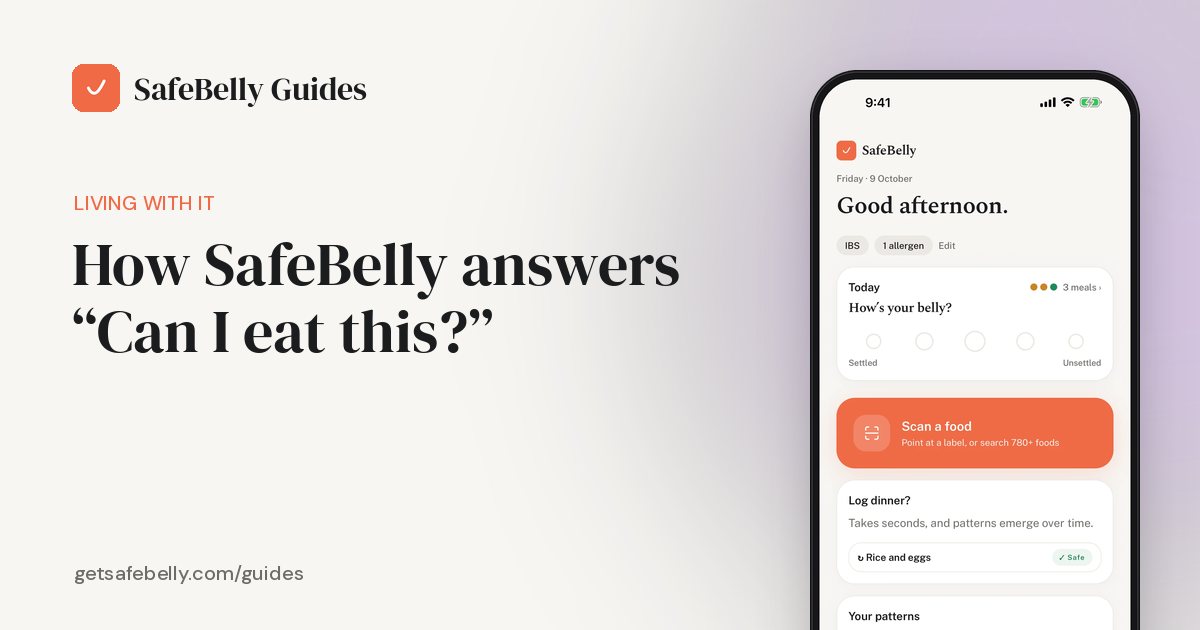
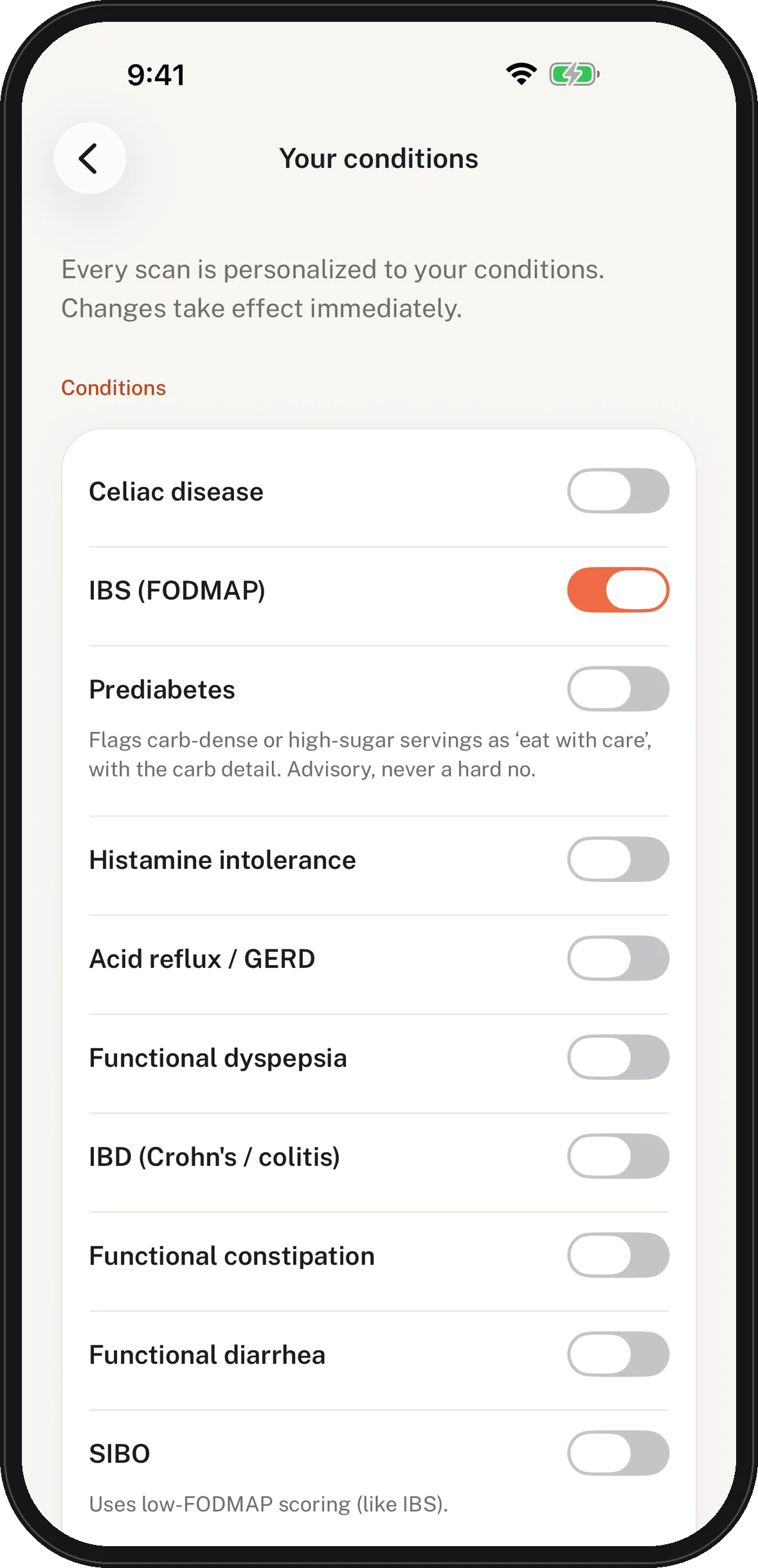
SafeBelly treats prediabetes as advisory only: it can mark a food “Eat this with care.” and explain why, but prediabetes on its own never turns an answer into a “No.” It checks this alongside any digestive conditions and allergens you’ve chosen, so you see the whole picture for one food in one place.
SafeBelly is in final testing on iPhone and Android. Leave your email and we'll send one note the day it's in the App Store and on Google Play.
Frequently asked questions
Can I eat carbs with prediabetes?+
Yes. The CDC says your body and brain need carbs to function properly. The focus is on choosing fiber-rich carbs, spreading them across your meals and pairing them with protein or fiber, rather than avoiding them.
What is the best breakfast for prediabetes?+
There’s no single right breakfast, but combining a fiber-rich carb with protein is a steady choice. Examples include oatmeal with seeds and yogurt, or whole grain toast with eggs. Whole fruit tends to be gentler on blood sugar than juice.
How many carbs should I eat with prediabetes?+
It varies from person to person, so there isn’t one number for everyone. The CDC suggests working with a doctor or registered dietitian to set a target, and notes that eating a similar amount of carbs at each meal can help. One carb serving is about 15 grams.
Is fruit OK with prediabetes?+
Yes. Whole fruit contains fiber, vitamins and minerals, and raises blood sugar more slowly than juice. Pairing fruit with protein, such as nuts or yogurt, can help further.
What is the National Diabetes Prevention Program?+
It’s a CDC-led, yearlong lifestyle change program with a trained coach, offered in person or online. It covers eating, activity and stress, and the CDC says it can lower the risk of type 2 diabetes by 58%. You can search for a program by ZIP code on the CDC website.
Can prediabetes be reversed?+
Lifestyle changes can significantly lower the chance of developing type 2 diabetes, and the CDC says they can cut that risk roughly in half. Your doctor can track your blood sugar over time with regular tests. Everyone’s situation is different, so talk with your care team about what to expect.
Sources
- Prediabetes: Your Chance to Prevent Type 2 Diabetes · Centers for Disease Control and Prevention (CDC)
- Diabetes Meal Planning · Centers for Disease Control and Prevention (CDC)
- Choosing carbs (CDC diabetes eating guidance) · Centers for Disease Control and Prevention (CDC)
- Fiber: The Carb That Helps You Manage Diabetes · Centers for Disease Control and Prevention (CDC)
- Lifestyle Change Program Details (National Diabetes Prevention Program) · Centers for Disease Control and Prevention (CDC)
- Find a Lifestyle Change Program · Centers for Disease Control and Prevention (CDC)
- Insulin Resistance & Prediabetes · National Institute of Diabetes and Digestive and Kidney Diseases (NIDDK)
SafeBelly is a food information app, not a medical device, and no substitute for professional medical advice. Talk to your doctor or a registered dietitian before making changes to how you eat, and seek urgent care for severe or sudden symptoms.