Key points
- Every check ends in one of three answers: yes, eat with care, or no, always with the reason.
- Your conditions and the 14 major allergens are checked on every food, every time.
- For FODMAP-based conditions, the answer is shown at small, typical and large portions.
- When the data is incomplete, SafeBelly leans toward care or no, never yes.
- It's a food information app, not a medical device, and it works alongside your care team.
The short answer
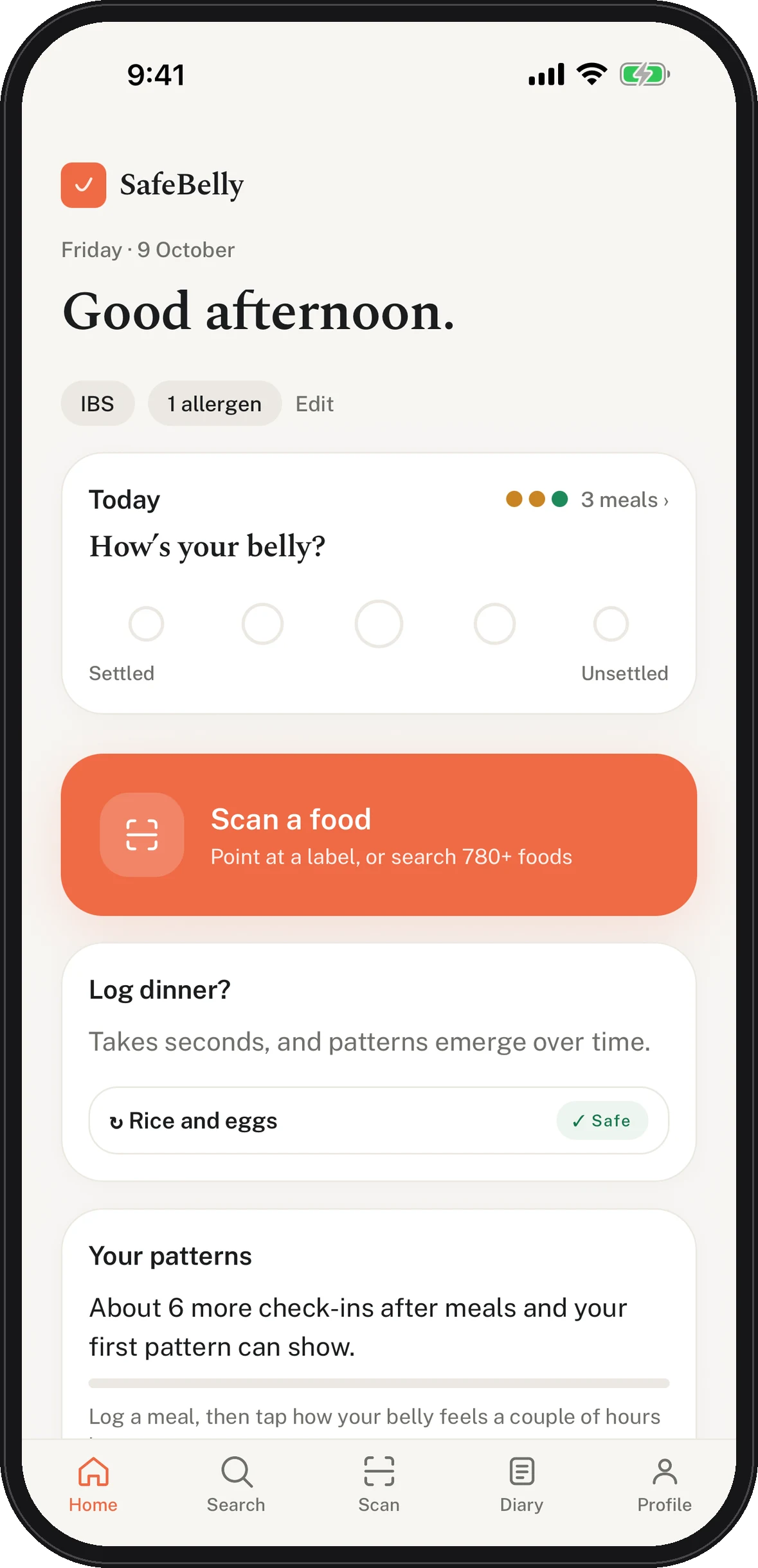
SafeBelly takes a food you search, scan or photograph, checks its ingredients against the conditions and allergens you chose, and gives you one of three answers: “Yes, you can eat this.”, “Eat this with care.” or “No, avoid this.” Each answer says why, in plain language, so you can decide with the full picture rather than a color on a screen.
It's built for the moment in the aisle, at the table or in the kitchen when you need to know quickly, and for the slower work of learning what your body tolerates over time.
Step 1: you tell it what matters to you
When you set up SafeBelly, you choose the conditions and sensitivities you live with. Everything after that is personalized to that profile, and you can change it at any time.
- Gut conditions: IBS, SIBO, endometriosis-related gut symptoms and general bloating use low-FODMAP scoring. See eating with IBS.
- Celiac disease: gluten is checked strictly, including the less obvious sources covered in hidden gluten.
- Intolerances: lactose intolerance, fructose malabsorption and histamine intolerance.
- Other digestive conditions: reflux and GERD, functional dyspepsia, IBD, functional constipation and functional diarrhea, and eosinophilic esophagitis (the six common food triggers).
- Prediabetes: an advisory “eat with care” on carb-dense or high-sugar servings, never a hard no.
- Allergens: the 14 major allergens, checked on every food whether or not you have other conditions selected.
Step 2: it reads the food
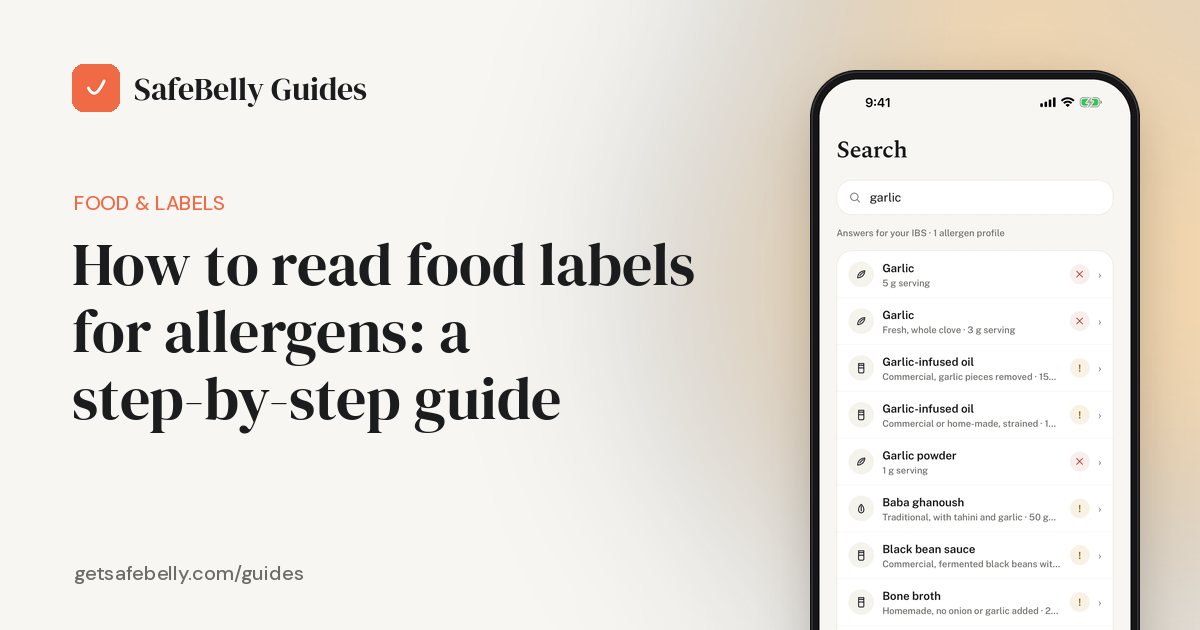
There are three ways to ask. Search works for whole foods and common dishes. A barcode scan pulls the ingredient list from the package. A photo of a plate names the foods it can see so each one can be checked; photo checks only run when you tap, never in the background.
A barcode scan is only as good as the ingredient data behind it, and recipes change. If you have an allergy, read the label on the package in your hand every time, even when the app says yes.
Step 3: your conditions are checked first
Before anything else, the ingredients go through a single condition engine that applies the rules for each condition and allergen in your profile. The strictest result wins: if one condition says no and another says yes, the answer is no.
| Answer | What it means | What you see with it |
|---|---|---|
| Yes, you can eat this. | Nothing in it conflicts with your profile at a typical portion. | The specific reason it suits you. |
| Eat this with care. | It may be fine depending on portion, preparation or your own tolerance. | What to watch and how to adjust. |
| No, avoid this. | It contains something your profile rules out. | The ingredient responsible and three safe alternatives. |
Why portion size changes the answer
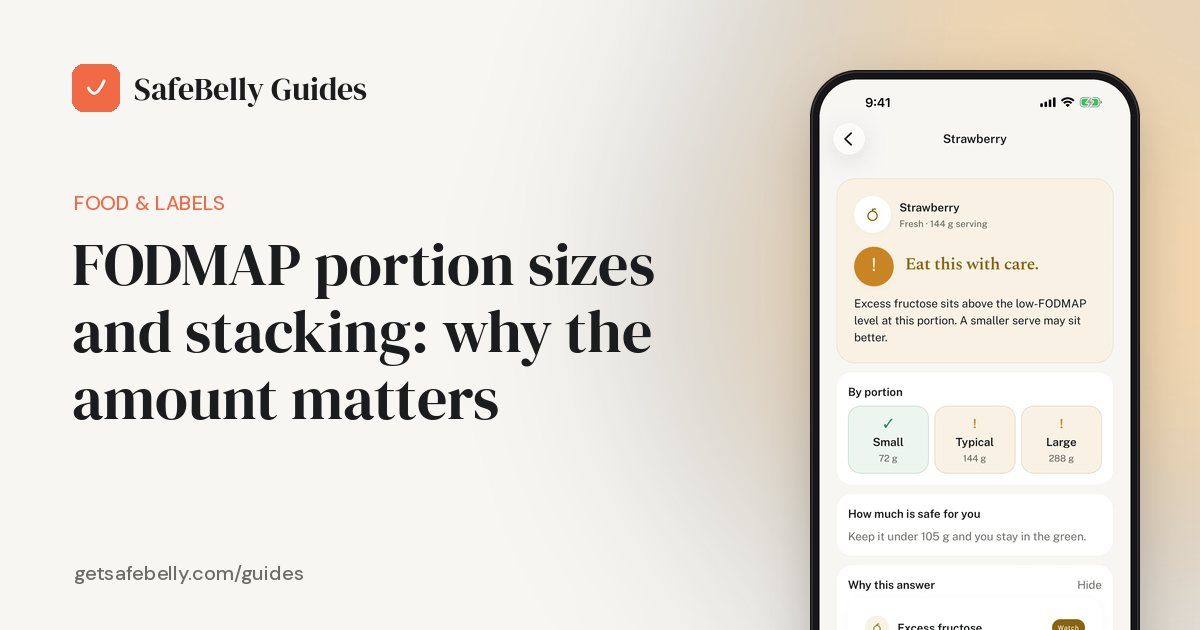
For FODMAP-based conditions, dose matters: many foods are well tolerated in a small serving and trigger symptoms in a large one. That's why SafeBelly shows the answer at small, typical and large portions instead of a single verdict. The background is in FODMAP portion sizes.
Allergens and celiac disease are different. There's no safe portion of an allergen you react to, so those answers don't change with serving size.
What happens when it isn't sure
Food data is messy. Ingredient lists say “spices” or “natural flavors”, databases have gaps, and photos can be ambiguous. When SafeBelly can't confirm a food is suitable, it says so and leans toward eat with care or no. It will never turn uncertainty into a yes.
Allergen checks run on every food, every time, and are designed so that a miss is treated as a safety issue, not a rounding error.
Learning what works for you
Answers are a starting point. Your own tolerance is the real goal, especially with IBS, where most people can eat more widely after working through the phases described in low-FODMAP phases explained.
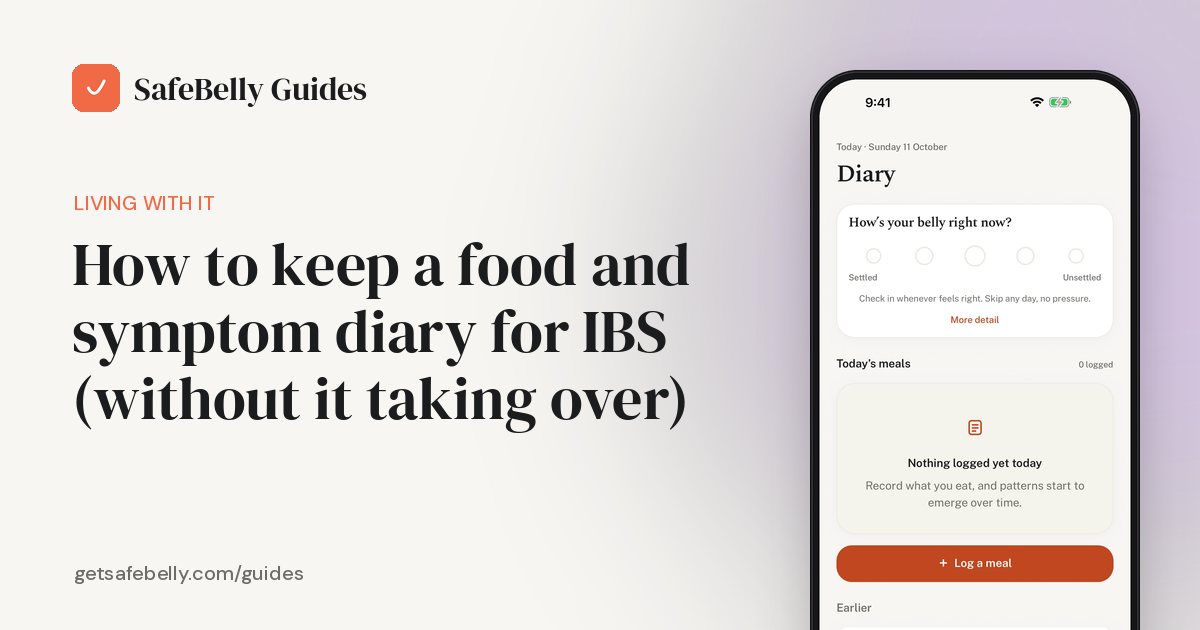
- Diary: log meals with or without amounts, and tap how your belly feels afterwards.
- Guided Journey: move through elimination, reintroduction and maintenance, with answers that adjust as you learn your tolerances.
- Export: download your diary and symptoms as a CSV to share with your doctor or dietitian. See keeping a food and symptom diary.
Your data stays yours
Your conditions, diary and symptoms are health data, and they're treated that way: encrypted, never sold, never shared with advertisers, and never sent to third-party analytics. When you photograph a meal, the photo is used only to name the foods in it; your conditions aren't sent with it. You can export everything or delete your account at any time.
How SafeBelly helps
Know before you eat.
This guide is about SafeBelly itself. If you'd like to try it, join the launch list and we'll email you once, the day it's in the App Store and on Google Play.
SafeBelly is in final testing on iPhone and Android. Leave your email and we'll send one note the day it's in the App Store and on Google Play.
Frequently asked questions
Is SafeBelly a medical device?+
No. SafeBelly is a food information app, not a medical device, and no substitute for professional medical advice. It's designed to sit alongside the guidance you get from your doctor or registered dietitian.
Which conditions does SafeBelly support?+
Celiac disease, IBS, SIBO, endometriosis-related gut symptoms, general bloating, histamine intolerance, reflux and GERD, functional dyspepsia, IBD, functional constipation, functional diarrhea, lactose intolerance, fructose malabsorption, eosinophilic esophagitis and prediabetes, plus the 14 major allergens.
What does “Eat this with care” mean?+
It means the food may suit you depending on the portion, how it's prepared or your own tolerance. The answer explains what to watch for and how to adjust, for example a smaller serving.
Can I rely on SafeBelly for a severe food allergy?+
Use it as an extra check, never the only one. Always read the label on the package in your hand, ask staff when eating out, and carry any medication you've been prescribed.
Does SafeBelly work offline?+
Checking a food needs a connection. Your diary works offline and syncs when you're back online, without creating duplicates.
When can I download SafeBelly?+
SafeBelly is coming soon to iPhone and Android. You can join the launch list to get one email when it's available.
Sources
- Low FODMAP diet: the three phases · Monash University FODMAP
- Food Allergen Labeling and Consumer Protection Act (FALCPA) · U.S. Food and Drug Administration
- Allergen guidance for food businesses · UK Food Standards Agency
SafeBelly is a food information app, not a medical device, and no substitute for professional medical advice. Talk to your doctor or a registered dietitian before making changes to how you eat, and seek urgent care for severe or sudden symptoms.