Key points
- Traditional, slow-fermented sourdough can be lower in FODMAPs, because microbes in the starter break down fructans during the long rise.
- Not all sourdough is made that way. Commercial loaves often add baker’s yeast to speed things up, which leaves less time for FODMAPs to break down.
- Monash found traditional spelt sourdough among the lowest-FODMAP breads it tested, but that doesn’t apply to every spelt product.
- Wheat, spelt and rye sourdough are not gluten-free and are not suitable for celiac disease, however long they ferment.
- If you need gluten-free bread, choose a loaf labeled gluten-free, and if you have celiac symptoms, get tested ahead of cutting out gluten.
Is sourdough low FODMAP? Is it gluten-free?
Traditional sourdough can be lower in FODMAPs, but wheat, spelt and rye sourdough are not gluten-free. During a long, slow rise, the yeasts and bacteria in a sourdough starter use up some of the fructans in the flour, so a well-made loaf can suit many people with IBS. The gluten stays. Sourdough made from gluten grains is not suitable for anyone with celiac disease.
Those two answers get mixed up a lot online, partly because "sourdough is easier to digest" is often stretched into "sourdough is gluten-free". It isn’t. FODMAPs are carbohydrates; gluten is a protein. Fermentation affects them very differently.
This guide explains what fermentation does, how to tell traditional sourdough from a quicker commercial loaf, where spelt fits, and what to choose if you need bread that is genuinely gluten-free.
Sourdough by condition
| Condition | What to know | Typical answer in SafeBelly |
|---|---|---|
| IBS / low FODMAP | Long fermentation lowers fructans. Monash has found traditional spelt sourdough and some other traditional sourdoughs low FODMAP. Quick, yeasted loaves may not be. | Depends on portion |
| Celiac disease | Wheat, spelt and rye sourdough contain gluten. Fermentation does not make them safe for celiac disease. | No |
| Wheat allergy | Wheat is one of the US top 9 allergens, and the FDA counts spelt as a wheat. Sourdough made with either contains wheat. | No |
| Fructose malabsorption | Some loaves add honey or high fructose corn syrup. Check the ingredients. | Eat with care |
| Gluten-free labeled sourdough | A different product, made with gluten-free flours. Still read the label for your other triggers and allergens. | Depends on portion |
If you have a wheat allergy, read the label every time, including "may contain" statements, and ask staff at bakeries and cafés. Carry any medication you have been prescribed.
How sourdough fermentation lowers FODMAPs
Wheat and related grains contain fructans, one of the FODMAP groups. In traditional sourdough, the dough is left to prove for a long time, often more than 12 hours according to Monash University. The yeasts and bacteria in the starter feed on carbohydrates in the flour, including FODMAPs. As Monash puts it, the end result is a bread with reduced FODMAP content.
That is why Monash has found that spelt sourdoughs and some other breads made with the traditional sourdough process meet its low-FODMAP criteria, and why it has certified several sourdough loaves. Registered dietitian Kate Scarlata reported that Monash testing also found some US white and wholemeal wheat sourdoughs met low-FODMAP criteria at a typical serving.
Portion still matters. Even a lower-FODMAP bread adds up across a sandwich, a side of toast and a bowl of soup. Our guide to FODMAP portion sizes explains why, and the Monash FODMAP app lists the current tested servings for specific breads.
Traditional vs commercial sourdough
"Sourdough" on a label doesn’t tell you how the bread was made. Kate Scarlata notes that it is the slow rise that allows FODMAPs to break down, and that when baker’s yeast is added to speed leavening, there is less time for that to happen. She suggests asking bakers whether the dough is left to leaven naturally over one to two days.
| Traditional sourdough | Quicker commercial "sourdough" | |
|---|---|---|
| Leavening | Starter culture only | Often starter plus added yeast, or yeast with sourdough flavoring |
| Rise time | Long, often 12 hours or more | Shorter |
| FODMAP effect | More time for fructans to break down | Less time, so likely less reduction |
| Ingredient list | Usually flour, water, salt and starter | May list yeast, sugars, honey or extra flours |
| Gluten | Contains gluten if made from wheat, spelt or rye | Contains gluten if made from wheat, spelt or rye |
- Look for yeast in the ingredients. Scarlata points out that added yeast signals faster leavening.
- Check for added sweeteners such as honey or high fructose corn syrup, which add FODMAPs of their own.
- Ask at the bakery how long the dough proves and what is in the starter.
- Look for the Monash certified logo, which means a product has been lab tested. Monash explains its certification program, and its app helps you find certified products where you live.
Spelt sourdough: why it stands out, and its limits
Spelt is an ancient wheat. Monash’s testing found that spelt flour tends to be lower in total FODMAPs than modern wheat, and that spelt bread made with traditional sourdough methods had the lowest FODMAP levels of the spelt breads it tested. Spelt bread made with modern methods had the highest.
Monash is careful to say this does not apply to all spelt products. In the same article it reported that spelt flakes tested high, and spelt pasta was only rated low at a smaller serving. In Monash’s words, spelt may only be low FODMAP when it is used in a traditional sourdough spelt bread.
Spelt is not gluten-free. The FDA lists spelt wheat among the gluten-containing grains in its gluten-free labeling rule. A spelt sourdough may suit someone with IBS; it is not suitable for celiac disease or a wheat allergy.
Why sourdough isn’t safe for celiac disease
Fermentation breaks down some gluten, but not nearly enough. Several lines of evidence point the same way:
- Lab research. A 2015 study in *Nutrients* found that lactic fermentation of wheat flour did not sufficiently prevent the immune-related interaction with gluten, and concluded it may not be an appropriate way to make celiac-safe products.
- Testing of real loaves. Gluten Free Watchdog tested artisanal wheat sourdoughs, including one marketed as "gluten neutralized", and found gluten far above the US gluten-free limit of under 20 parts per million. Its conclusion: wheat-based sourdough should not be eaten by anyone with a gluten-related disorder.
- No symptoms doesn’t mean no harm. Gluten Free Watchdog points out that in a 2011 study often quoted by bakeries, two people with celiac disease who ate ordinary sourdough had no complaints but still showed intestinal damage. The very low-gluten breads in that study were made in a lab and aren’t sold in stores.
- US labeling rules. The FDA says a food intentionally made with a gluten-containing ingredient that hasn’t been processed to remove gluten, such as wheat flour, can’t be labeled gluten-free. For fermented foods that do carry a gluten-free claim, the FDA’s 2020 rule requires records showing the food was gluten-free ahead of fermentation, because gluten broken down by fermentation can’t be reliably measured.
If you think gluten may be causing your symptoms, keep eating it until you have been tested. The NIDDK explains that avoiding gluten ahead of testing can make the results inaccurate. Our celiac disease guide covers the next steps.
Label tips and swaps
Whether you are choosing for FODMAPs, for gluten, or both, the label is where you find out:
- For celiac disease: choose bread labeled gluten-free, and remember that gluten-free sourdough is made from gluten-free flours and a gluten-free starter. Our guide to gluten-free vs celiac-safe explains labels and cross-contact, and hidden sources of gluten covers the less obvious ones.
- For IBS: look for a short ingredient list with a starter and no added yeast, and avoid added honey or high fructose corn syrup if those affect you.
- Gluten-free isn’t automatically low FODMAP. Monash notes that gluten-free products are more likely to be low FODMAP but sometimes contain high-FODMAP ingredients, so check the list.
- Ingredients change. Read the label every time you buy, even for a loaf you know.
If sourdough doesn’t suit you, there are plenty of other options: a certified low-FODMAP bread, a gluten-free loaf that fits your triggers, rice cakes, corn tortillas, or potatoes and rice as the base of a meal. For more ideas, see high-FODMAP foods and swaps.
When to talk to a clinician
Talk to your doctor or a registered dietitian if you are thinking of cutting out wheat or gluten, if bread seems to cause symptoms, or if you are not sure whether FODMAPs or gluten are the issue. The answer changes what you need to do: someone with IBS may tolerate a slow-fermented sourdough, while someone with celiac disease needs a strict gluten-free approach.
- Get tested for celiac disease while you are still eating gluten.
- Work with a dietitian on the low-FODMAP phases to find out whether fructans are one of your triggers.
- See your doctor for symptoms that change or get worse, or that come with unexplained weight change, bleeding or fever.
How SafeBelly helps
Know before you eat.
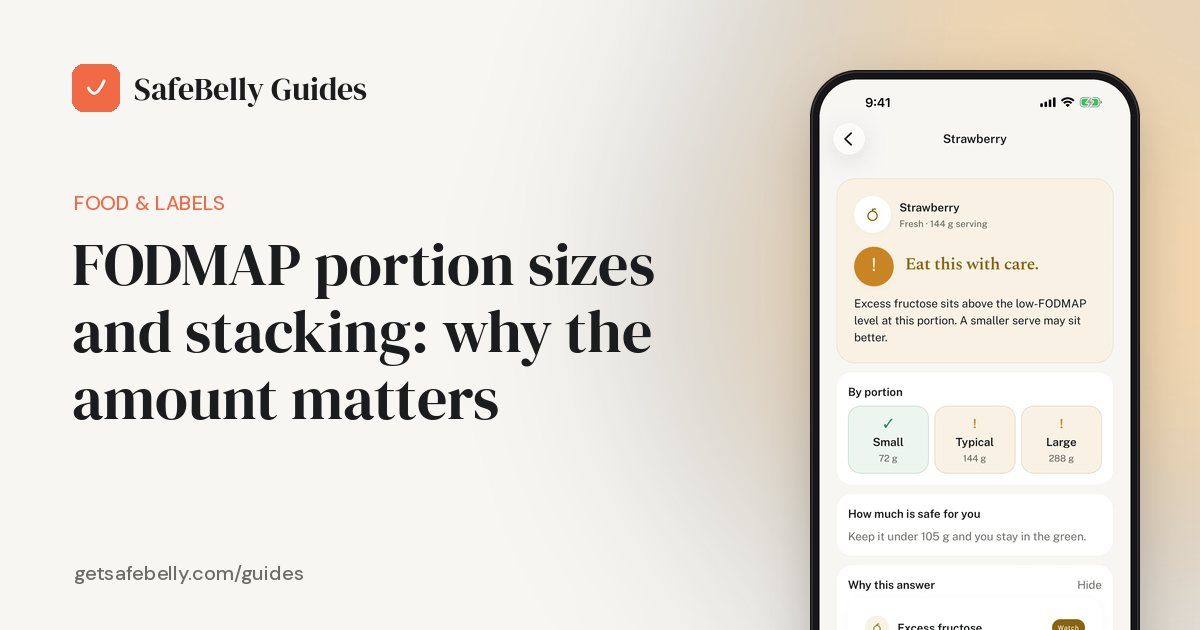
Scan a loaf’s barcode or search a bakery bread in SafeBelly and it checks the ingredients against the conditions you pick and the 14 major allergens, so a wheat or spelt sourdough is a clear "No, avoid this." for celiac disease even when it may suit IBS. For FODMAP-based conditions it shows the answer at small, typical and large portions. It’s a food information app, not a medical device, and it works alongside your doctor’s and dietitian’s advice.
SafeBelly is in final testing on iPhone and Android. Leave your email and we'll send one note the day it's in the App Store and on Google Play.
Frequently asked questions
Is sourdough bread low FODMAP?+
Traditional sourdough can be. The long fermentation lets the starter break down fructans, and Monash has found traditional spelt sourdough and some other traditional sourdoughs low FODMAP at a typical serving. Quicker loaves made with added yeast may not be.
Is sourdough bread gluten-free?+
No. Sourdough made with wheat, spelt or rye contains gluten even with a long fermentation. Only sourdough made entirely from gluten-free flours and a gluten-free starter, and labeled gluten-free, fits a gluten-free diet.
Can people with celiac disease eat sourdough?+
Not wheat, spelt or rye sourdough. Testing has found gluten in artisanal wheat sourdough far above the gluten-free limit, and having no symptoms doesn’t mean there is no intestinal damage. Choose bread labeled gluten-free.
Is spelt sourdough low FODMAP?+
Monash found traditional spelt sourdough had the lowest FODMAP levels of the spelt breads it tested. That doesn’t apply to all spelt products: spelt flakes tested high. Spelt is a type of wheat, so it is not gluten-free.
How can I tell if sourdough is traditional?+
Read the ingredients. A traditional loaf usually lists flour, water, salt and starter, without added yeast. If you are buying from a bakery, ask how long the dough proves and whether yeast is added.
Is sourdough easier to digest for IBS?+
Many people with IBS find a slow-fermented sourdough sits better than ordinary bread, which fits with the lower fructan content. Tolerance is personal, so test it within a dietitian-guided plan and keep an eye on portion size.
Sources
- Sourdough processing and FODMAPs · Monash University FODMAP
- Spelt products and FODMAPs · Monash University FODMAP
- Let’s talk about sourdough bread and FODMAPs · Kate Scarlata, RDN
- Sourdough fermentation of wheat flour does not prevent the interaction of transglutaminase 2 with α2-gliadin or gluten · Nutrients (2015), via PubMed Central
- Sourdough wheat bread is NOT safe for folks with celiac disease · Gluten Free Watchdog
- Questions and answers on the gluten-free food labeling final rule · US Food and Drug Administration
- FDA issues final rule on gluten-free labeling of fermented and hydrolyzed foods · US Food and Drug Administration
- Eating, diet and nutrition for celiac disease · National Institute of Diabetes and Digestive and Kidney Diseases (NIDDK)
SafeBelly is a food information app, not a medical device, and no substitute for professional medical advice. Talk to your doctor or a registered dietitian before making changes to how you eat, and seek urgent care for severe or sudden symptoms.